
Mumbai is home to some of India’s most prestigious hospital chains Lilavati, Kokilaben Dhirubhai Ambani, Jaslok, Breach Candy, Fortis Mulund, and Apollo. They look like healthcare institutions. But many operate like corporations. And corporations need revenue. The metric that tells you everything is called ARPOB Average Revenue Per Occupied Bed.
Major Indian hospital chains reported an average revenue per occupied bed of around ₹50,000 per bed per day in the nine months of FY2023–24, up from ₹45,800 per bed per day in the same period the previous year. By 2024–25, that number jumped further. Average revenue per occupied bed across 10 major hospital chains rose 23 percent to ₹49,304 per day, up from ₹40,015 per day in the previous year.
What Are “Diagnostic Targets” And Why They’re Dangerous
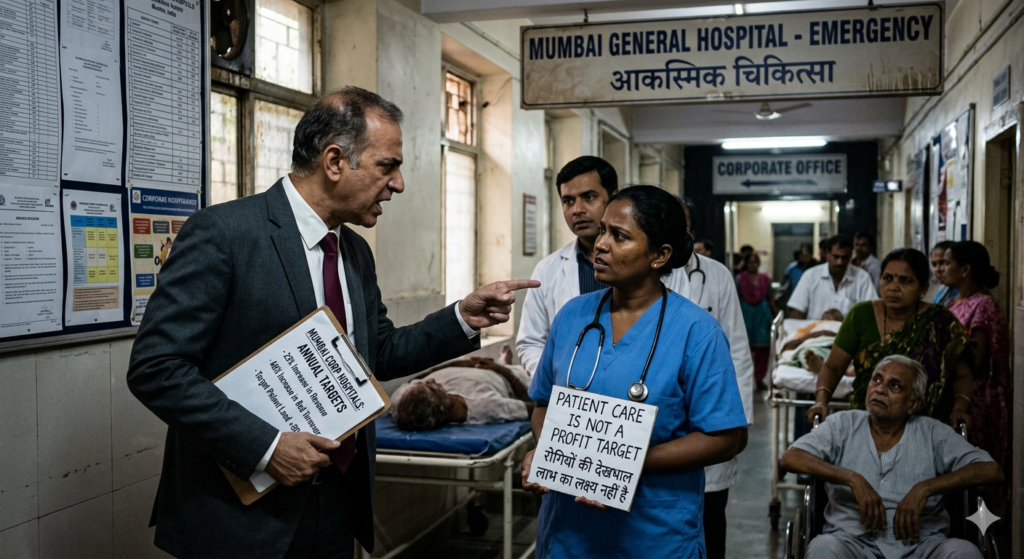
Inside many corporate hospitals in Mumbai, doctors are given monthly revenue targets. These are sometimes called “diagnostic targets” or “revenue commitments.”
A doctor explains the logic: first, the hospital pays a handsome salary, but then expects you to earn back that salary even through unnecessary procedures like kidney biopsies.
This creates a structural conflict of interest. A doctor who does not recommend enough tests, procedures, or surgeries risks poor performance reviews. One who over-recommends thrives.
A pathologist reported that of 150 doctors he contacted, only 3 or 4 were willing to refer patients for investigations without demanding kickbacks. “I am able to manage only because I have other sources of livelihood,” he said.
The Scale of Unnecessary Surgeries in India
How common are unnecessary surgeries in India’s corporate hospitals? The data is damning. A 2015 study by Medi Angels, a Mumbai-based second-opinion service, analysed over 12,500 cases and found that 44% of recommended surgeries were unnecessary or avoidable, often driven by financial incentives.
Nearly half.
That is not a statistical outlier. That is a pattern. A report based on interviews with 78 doctors across Bangalore, Chennai, Delhi, Kolkata, Mumbai, Nashik, Pune, and other towns documented unnecessary angioplasties earning doctors commissions of ₹30,000–40,000, fake cataract surgeries, needless pathological tests, and chemotherapy bills inflated from ₹25,000 to ₹65,000 to exploit the desperation of cancer patients.
The Stenting Scandal: Putting Metal in Hearts for Money
Cardiac stents are used to open blocked arteries. In the right situation, they save lives. In the wrong hands they are profit centres. In India, cardiologists in several corporate hospitals have been accused of recommending stent procedures when medication or lifestyle changes would have been medically sufficient.
Reports from doctors across multiple cities documented unnecessary angioplasty procedures that earned referring physicians commissions of ₹30,000 to ₹40,000 per case. The pattern is well-documented globally too. Unnecessary stenting exposes patients to serious risks. Studies show that about 3 percent of patients experience serious complications from stent procedures, while unnecessary stenting consumes taxpayer money and raises insurance premiums.
When the Indian government capped stent prices in 2017, hospital revenues fell immediately, revealing just how dependent some institutions had become on stent-related income.
The Hysterectomy Scam: Women Paying With Their Bodies
Of all the abuses in India’s commercialised healthcare system, the unnecessary hysterectomy epidemic is perhaps the most viscerally shocking. A hysterectomy is the surgical removal of the uterus. It is a major procedure with lifelong consequences. Medical consensus recommends it only as a last resort typically for women above 45 when other treatments have failed. And yet: Thousands of women across India are having their wombs removed in operations that campaigners and medical experts say are unnecessary and performed solely to generate profits for private doctors.
In India, about 6 percent of women between the ages of 30 and 45 have undergone hysterectomies a deeply troubling statistic given that the procedure is generally not advisable for women in this age group.
How It Happens
Women in rural areas visit private doctors for common complaints heavy menstrual bleeding, back pain, white discharge. After a single ultrasound, many are told they risk developing cancer and need surgery immediately. One woman recalled being pressured into the procedure within hours of her first appointment, without being allowed to consult her family.
Independent doctors confirmed that a single ultrasound cannot justify a hysterectomy. A doctor at one clinic admitted that he does not always order biopsies before performing the surgery meaning if the tissue is discarded, there is no way to verify whether the procedure was medically necessary.
The Scale of the Crisis
An expert committee set up by the Karnataka government in 2015 found that 2,258 hysterectomy procedures were conducted in just 30 months in a single district Kalaburagi. Over 40 percent of these women were below the age of 35. A nexus between private hospitals, laboratories, and local government officials has kept this business booming, despite public awareness of the scandal.
Maharashtra and Mumbai’s corporate hospitals have not been immune. The Thomson Reuters Foundation investigation that exposed this crisis prompted India’s health ministry to take notice. Six government taskforces were formed following a national consultation with human rights campaigners, gynaecologists, medical experts, and state officials to address the unnecessary hysterectomy crisis including tracking cases nationwide and raising village-level awareness.
Package Billing: The Art of Making Everything Cost More
Corporate hospitals in Mumbai are also masters of package billing, bundling multiple procedures, diagnostics, and medicines into pre-set “packages” that maximise revenue while obscuring what patients are actually paying for.
Common tactics include:
- Medicine mark-ups: Hospitals routinely mark up medicine costs in patient bills to five or ten times the maximum retail price. In some cases, patients are administered medicines they never actually received.
- Inflated minor procedures: For small procedures and surgeries, it is not uncommon to inflate bills many times over what is medically warranted. One doctor cited a minor inguinal hernia procedure for which the patient was charged ₹1.5 lakh.
- Unnecessary diagnostics: Ordering multiple scans, blood panels, and tests many irrelevant to the patient’s condition to drive up billings.
The Referral Commission Culture (Cut Practice)
In Mumbai and across India, a parallel economy operates beneath the surface of medical referrals.
When a general physician sends a patient to a specialist or a corporate hospital, they often receive a commission a percentage of whatever the hospital earns from that patient. This is called “cut practice.” In 2014, a prominent Mumbai hospital faced action from the Maharashtra Medical Council for offering financial incentives to doctors for patient referrals.
By 2025, the problem has only grown. An investigative report using video and audio recordings documented doctors being offered ₹50,000 for kidney surgeries, ₹40,000 for knee replacements, and even commissions tied to patient deaths. Fifteen hospitals came under investigation following the expose.
The referral system leads to inflated bills, unnecessary diagnostic tests, forced procedures, and deliberate misguidance of patients a betrayal of trust against the most vulnerable people.
How Revenue Targets Corrupt Clinical Judgment
The pressure in corporate hospitals is not always explicit. Sometimes it’s structural. A doctor hired on a high salary is expected to generate returns. Monthly review meetings track revenue generation. Departments that underperform face questions. Departments that “perform” even through over-treatment are rewarded.
Anti-corruption watchdog Transparency International found that the Indian healthcare sector is the second most corrupt institution that an ordinary citizen encounters second only to the police. This is not about a few bad doctors. It is about a system that has redesigned the doctor-patient relationship around financial metrics.
Mumbai-Specific Incidents: What Has Been Documented
Lilavati Hospital Scandal
One of Mumbai’s most prestigious medical institutions, Lilavati Hospital, was rocked by a sensational scandal involving fraud allegations, renewing discussions about healthcare accountability in the city.
Hiranandani Hospital Kidney Trafficking
The Hiranandani Hospital case in Mumbai in 2016 saw the CEO, medical director, and three doctors arrested for organ trafficking, trafficking kidneys from poor rural women using forged marriage documents. The case implicated a prestigious institution at the highest levels of its administration.
Viral Video on Unnecessary Surgeries
In 2023, a video circulating on social media alleged widespread unnecessary surgeries and profit-driven treatments at multiple Mumbai hospitals. Hospital officials dismissed it as defamatory but the allegations echoed decades of documented systemic concerns.
The Regulatory Failure: Why MCI Couldn’t Stop It
The Medical Council of India (MCI) was India’s primary regulatory body for medical practice from 1933 until its dissolution in 2020, when it was replaced by the National Medical Commission (NMC).
The MCI was chronically underpowered to address institutional corruption:
- It could act against individual doctors but not hospital corporations
- Complaints took years to resolve
- Penalties were rarely severe enough to deter behaviour
The NMC inherited many of these structural weaknesses. Meanwhile: The Advertising Standards Council of India reported 190 instances of misleading advertisements by clinics and hospitals including lofty service claims, promises to cure chronic conditions, and inadequate disclosure of actual treatment costs. Hospitals market aggressively. They face minimal accountability for what happens inside.
The Ayushman Bharat Wake-Up Call
India’s flagship health insurance scheme, Ayushman Bharat (AB-PMJAY), exposed just how deep the rot goes. Under Ayushman Bharat, 1,114 hospitals have been de-empanelled for fraud, 1,504 penalised with ₹122 crore in fines, and 549 suspended as of 2025. During COVID-19, ₹562 crore in fake claims were detected, including inflated bills in states like Punjab and Haryana.
When public money entered the system through insurance, hospitals found new ways to exploit it. Fraud followed patients and taxpayers.
Are All Corporate Hospitals the Same?
No. This is important to say clearly. Many doctors within corporate hospital systems maintain strong ethical standards and advocate for their patients despite institutional pressures. Some hospitals have invested in genuine patient safety infrastructure and transparent billing.
The problem is systemic incentives not universal individual character. A good doctor placed inside a bad incentive structure will face relentless pressure to compromise. The question patients must ask is not just “Is my doctor good?” but “What does my hospital reward?”
What Patients in Mumbai Can Do Right Now
1. Demand a Second Opinion
For any recommended surgery or high-cost procedure, seek a second opinion from a doctor at a different hospital. Services like Medi Angels in Mumbai exist specifically for this.
2. Request Itemised Bills
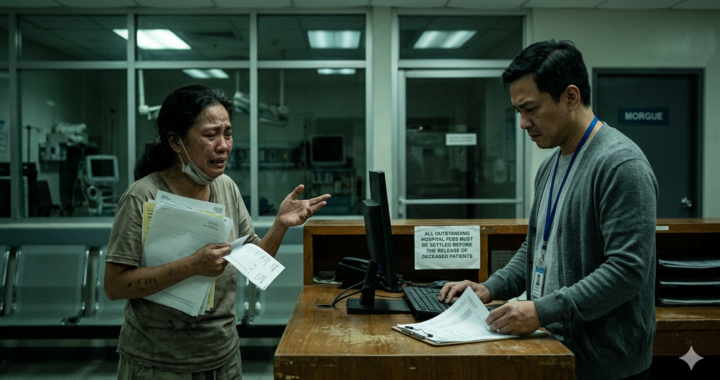
Never accept a “package” bill without an itemised breakdown. Under the Consumer Protection Act, you have the right to see what you’re being charged for.
3. Ask These Questions Before Any Surgery
- Is this surgery the only option, or can medication manage this?
- What happens if I wait 2–4 weeks?
- What are the risks of the procedure?
- How many of these procedures has this surgeon performed?
4. Check Doctor Affiliations
Understand whether your referring doctor has financial ties to the specialist or hospital they are sending you to. Cut practice is illegal but widespread.
5. File a Complaint If You Suspect Fraud
- National Medical Commission (NMC): nmc.org.in
- Maharashtra Medical Council: mahmedcouncil.org
- Consumer Forum: File under the Consumer Protection Act 2019
- National Health Authority (AB-PMJAY fraud): nhp.gov.in
What Needs to Change: A Policy Perspective
India’s healthcare commercialisation problem will not fix itself. Structural reforms are needed:
- Price Transparency Mandates: All hospitals should be required to publish standard procedure costs publicly before admission.
- Ban on Volume-Based Doctor Incentives: Salary structures that reward doctors for generating revenue must be made illegal.
- Mandatory Second-Opinion Access: For elective surgeries, patients should have a statutory right to a second opinion at no additional cost.
- Stronger NMC Powers: The National Medical Commission needs authority to investigate and penalise hospital corporations, not just individual practitioners.
- Independent Patient Advocate Offices: Maharashtra should establish government-funded patient advocacy offices in every district.
- Hysterectomy and Stenting Audit Requirements: Any hospital performing above-average rates of these procedures should face mandatory external audit.
Expert Voices on the Crisis
“The hospital pays you a handsome salary, but then expects you to earn it back even through unnecessary procedures.” Anonymous doctor quoted in a report on Indian healthcare corruption
“Cut practice leads to inflated bills, unnecessary tests, forced procedures, and deliberate misguidance of patients a betrayal of trust against vulnerable people.” Patient rights complaint filed with the National Human Rights Commission, 2025
“The lure of money has prompted unethical doctors and hospitals to perform surgeries even when they are not needed.” Deccan Herald editorial on India’s hysterectomy epidemic
Frequently Asked Questions
Are corporate hospitals in Mumbai safe?
Many are. But patients must be aware that institutional revenue pressures exist. Always ask for second opinions on major procedures and demand itemised billing.
What is ARPOB and why does it matter?
ARPOB stands for Average Revenue Per Occupied Bed. It is the primary financial metric corporate hospitals track. When a hospital is under pressure to increase ARPOB, that pressure flows down to doctors sometimes influencing clinical decisions.
Is unnecessary surgery common in India?
Research by Medi Angels found that 44% of recommended surgeries in a study of 12,500 cases were avoidable. This is a systemic, documented problem not a rare occurrence.
What replaced the Medical Council of India?
The MCI was dissolved in 2020 and replaced by the National Medical Commission (NMC), which has broader regulatory powers but enforcement remains weak.
Is cut practice (referral commission) illegal?
Yes. It violates the Indian Medical Council (Professional Conduct, Etiquette and Ethics) Regulations, 2002. Despite this, it remains widespread and largely unpunished.
What can I do if a Mumbai hospital overcharged me?
You can file a complaint with the Maharashtra Medical Council, the National Consumer Disputes Redressal Commission, or the National Health Authority if you were treated under Ayushman Bharat.
Conclusion: The Patient Is Not the Priority
Mumbai’s corporate hospitals are among the most technically sophisticated medical facilities in Asia. Their equipment is world-class. Their lobbies are immaculate. Their marketing is polished. But inside many of these institutions, a quiet war is being fought between what medicine is supposed to be, and what corporate management demands it become.
Patients who walk in vulnerable and trusting deserve to know that the system around them is not always working in their interest. Revenue targets do not care about patient outcomes. ARPOB doesn’t feel pain. Package billing doesn’t know your name.
Until India’s regulatory framework catches up with the scale of healthcare commercialisation, informed patients are their own best defence. Know your rights. Demand transparency. Seek second opinions. Your health is not a revenue opportunity. Do not let any hospital treat it as one.