
You visit a private lab in Lahore or Karachi. You hand over your blood sample. You pay Rs 3,000 to Rs 7,000. A few hours later, you receive a printed report. You trust it. Your doctor trusts it. Your treatment is based on it. But what if that report was generated using a diagnostic kit that had already expired or was a counterfeit relabeled as a trusted brand?
This is not a hypothetical scenario. It is happening right now across Pakistan’s major cities. Pakistan’s pharmacists have formally warned authorities that counterfeit and substandard diagnostic reagents often relabeled as branded products are misleading medical professionals and causing misdiagnoses and improper treatments that could be fatal.
This article breaks down how the fraud works, who is most at risk, what Pakistani authorities are doing about it, and most importantly how you can protect yourself and your family.
What Are Diagnostic Kits and Why Do They Expire?
Diagnostic kits are the chemical tools laboratories use to detect diseases, infections, hormones, and other medical markers in blood, urine, or other samples. Common examples include kits for dengue fever, hepatitis B and C, malaria, diabetes (HbA1c), typhoid, HIV, and COVID-19.
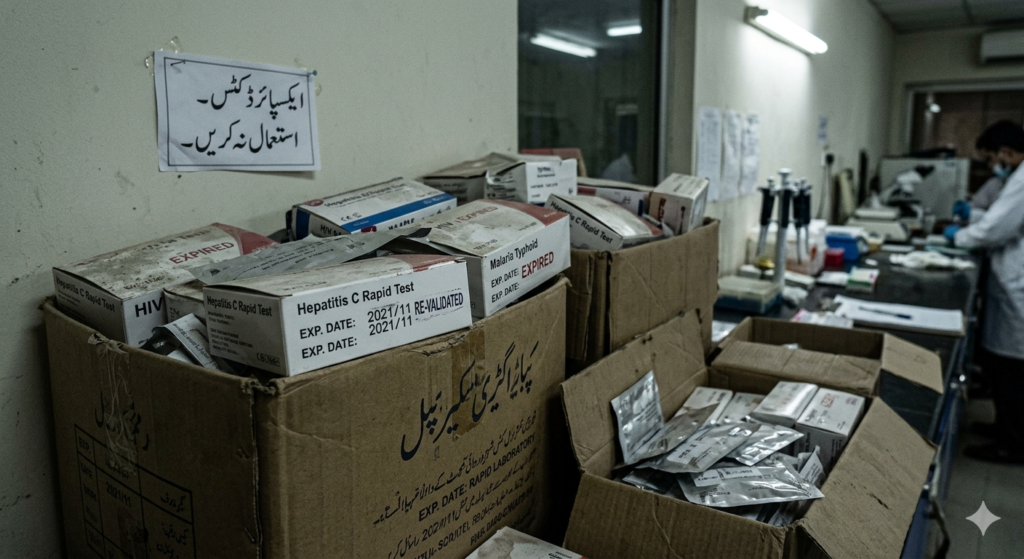
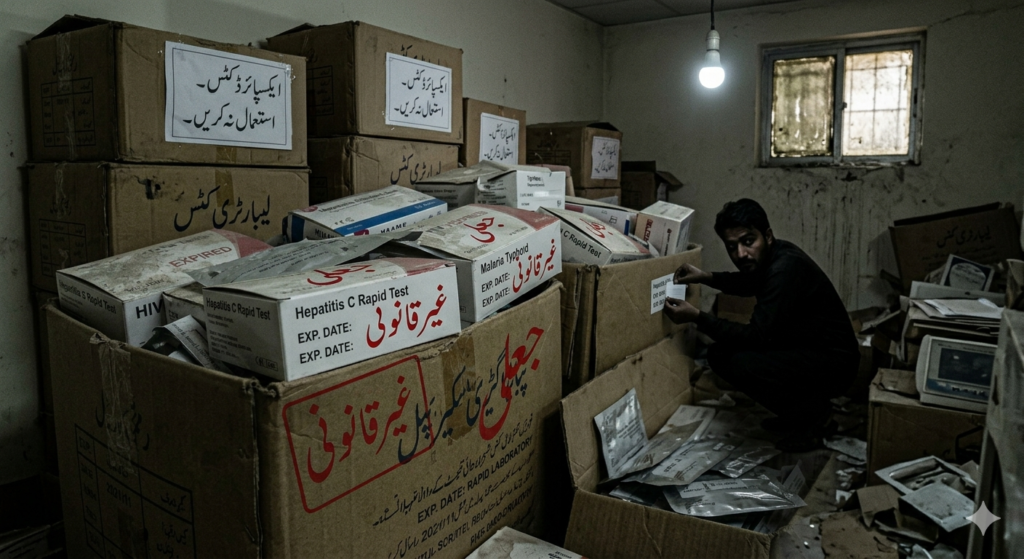
Like medicines, diagnostic kits contain biological or chemical reagents that degrade over time. Once a kit passes its expiry date:
- The chemical reactions it triggers become unreliable
- Results can show false positives (flagging disease that isn’t there)
- Results can show false negatives (missing a disease that is present)
- The margin of error increases significantly
A 2019 study conducted in Pakistan revealed that even standard rapid diagnostic devices provide only about 70 per cent accurate results with a 30 per cent chance of error under normal conditions. That figure gets worse when a kit is expired, stored improperly, or counterfeit.
The Scale of the Problem in Pakistan
Substandard Kits Are Widespread
Pakistan’s diagnostic lab sector is poorly regulated and highly fragmented. The problem of expired and substandard kits is not an isolated incident in one city it spans the entire country.
Nearly 80 per cent of testing kits imported from different countries are substandard and do not produce accurate results. While a few large hospitals use high-standard kits produced by multinational companies, the results of low-quality kits used by most health facilities are only about 50 per cent accurate.
The COVID-19 Wake-Up Call
The pandemic exposed the depth of this crisis in ways that were impossible to ignore. It was often observed that the results of COVID tests radically differed from one laboratory to another. Tests performed by the same lab gave different reports the next day a COVID test could turn out positive one day and negative the very next.
The reason? Dr. Saeed Khan, Professor of Pathology at Dow University Ojha campus, reported that there is no uniform policy for COVID testing, so small laboratories import cheap kits which produce dubious results.
Dengue and Malaria Testing: A Dangerous Gamble
Vector-borne disease diagnosis is another critical failure point. In Karachi, almost every lab charges its own rates for dengue, malaria, and other blood tests far beyond the reach of poor patients. Many labs use low-cost rapid kits for screening, leading to questionable reports that doctors use for treatment decisions, sometimes putting patients’ lives at risk.
Patients who test negative on an expired or substandard kit may not receive timely treatment. Patients who test positive when they are not may be subjected to unnecessary and expensive drugs with potential side effects.
How the Fraud Actually Works
Understanding the mechanics of this fraud helps you recognize red flags. There are several distinct forms:
Using Genuinely Expired Kits
Labs purchase legitimate kits but continue using them past the manufacturer’s expiry date. Storage costs money, and restocking costs more. Some labs simply keep using kits they have. There is minimal risk of being caught because patients rarely know what kit was used on their sample.
Counterfeit and Relabeled Kits
This is the more alarming fraud. Counterfeit and substandard diagnostic reagents often relabeled as branded products are being sold across Pakistani markets, misleading medical professionals. A Chinese or unregistered kit gets a fake label from a trusted European or American brand. Labs purchase these cheaply and charge patients for premium testing.
Unlicensed Manufacturing
Pakistan Pharmacists Association has raised alarms about illegal imports, unlicensed manufacturing, and fraudulent labeling of diagnostic kits and chemical reagents. Some kits are manufactured domestically without any regulatory approval, using unknown formulations.
Unregistered Imports
Pakistan relies heavily on imported medical devices. However, regulatory exemptions that previously allowed unregistered medical devices to enter the country expired on December 31, 2024, creating both a shortage crisis and an enforcement gap that bad actors exploit.
Ghost Pathologist Signatures
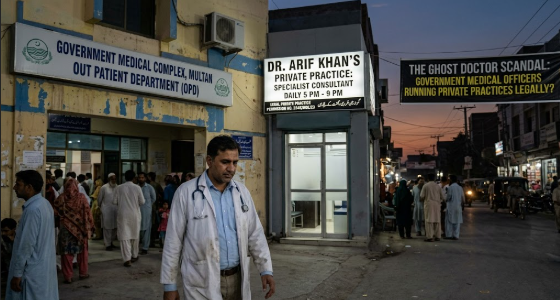
The fraud does not stop at the kits. In many settings, laboratory technicians use the electronic signature of a pathologist who for financial considerations agrees to sign reports that were not prepared under direct supervision. Pathologists often have associations with multiple laboratories, and while norms dictate their physical presence during testing, there are no specific guidelines on the maximum number of laboratories a pathologist can be affiliated with simultaneously. This practice extends beyond small cities, reaching into larger urban areas.
Which Cities Are Most Affected?
The problem exists nationwide, but the following cities have the highest density of unregulated labs:
Karachi
Pakistan’s largest city has thousands of private labs many operating without proper licensing. Hundreds of labs continue operating without registration and with inadequately trained staff, creating difficulties for patients. The Health Department has remained silent regarding the use of substandard kits and overcharging, allowing the medical sector to exploit poor families without fear of action.
Lahore
The Punjab provincial capital has seen crackdown calls directed specifically at its wholesale markets for diagnostic reagents. The WHO has previously inspected Punjab-based drug testing laboratories, highlighting compliance gaps.
Islamabad / Rawalpindi
While the capital region has a higher density of accredited labs, the twin cities’ peripheral and lower-income areas are served by smaller, less regulated facilities.
Faisalabad, Multan, and Peshawar
Tier-2 cities have significant populations relying on small, unregulated labs with even less oversight than major metros. The WHO conducted inspection reports specifically noting labs in Multan under its compliance monitoring program.
The Human Cost: What Wrong Results Actually Mean
Missed or Delayed Treatment
A false negative for dengue or malaria can mean a patient goes untreated for days. In dengue, delayed treatment can lead to dengue hemorrhagic fever a potentially fatal complication.
Unnecessary Treatment
A false positive leads to patients taking drugs they do not need. Antimalarials, antibiotics, and antivirals all carry side effects and costs. In resource-poor households, unnecessary medication spending can be financially devastating.
Cascading Misdiagnosis
When clinicians do not trust results, they either delay treatment, repeat tests, or rely on assumptions. “This is how misdiagnosis happens. And this is why patient outcomes do not improve even after spending so much on healthcare,” according to medical experts. The absence of a central regulatory body that enforces strict quality assurance measures has left the sector to function in silos, without checks or balances.
Erosion of Public Trust
Each false result in any direction corrodes public confidence in the healthcare system. This has measurable consequences during disease outbreaks, when people need to trust test results quickly.
What Are Pakistan’s Regulators Doing?
DRAP’s January 2025 Crackdown
The most significant recent development was a nationwide enforcement action. In response to mounting concerns over the use of substandard diagnostic chemicals, DRAP initiated a nationwide crackdown on January 31, 2025, aimed at curbing illegal imports, unlicensed manufacturing, and unethical practices in the diagnostic reagent sector. The directive calls for DRAP’s field force to carry out extensive inspections across markets, importers, and wholesale distributors dealing with diagnostic reagents.
DRAP directed federal and provincial health authorities to inspect markets, importers, and wholesale distributors dealing in diagnostic reagents, following a letter from the Pakistan Pharmacist Association asking DRAP to ensure quality reagents in labs and take action against illegal practices.
Provincial Healthcare Commissions
The Punjab Healthcare Commission, Sindh Healthcare Commission, and their counterparts in KP and Balochistan are the primary regulators for labs at the provincial level. However, while these commissions have been formed, experts say none are delivering adequate oversight. “There is no central body monitoring the quality assurance,” health professionals have stated firmly.
PNAC Accreditation
The Pakistan National Accreditation Council (PNAC) provides ISO 15189 accreditation for medical laboratories the international standard for diagnostic quality. Only a small fraction of Pakistan’s labs hold this credential.
The Regulatory Gap
The core structural problem is multi-layered:
- No uniform national testing policy for infectious disease diagnostics
- No mandatory pre-market registration enforced for all imported kits
- No real-time surveillance system for lab kit quality
- Inadequate staffing of drug inspectors relative to the number of labs
- No cap on how many labs a pathologist can be affiliated with simultaneously
A Comparison: How Pakistan Stacks Up Against Standards
| Standard | International Best Practice | Pakistan’s Reality |
| Kit Registration | Mandatory before import or sale | Exemptions frequently granted; enforcement inconsistent |
| Expiry Enforcement | Labs audited for in-date reagents | Rarely inspected; self-policing culture |
| Pathologist Oversight | Present during testing | Often absent; signature sold for fee |
| Lab Accreditation | ISO 15189 standard | Minority of labs hold accreditation |
| Patient Recourse | Clear complaint mechanism | Limited; no accessible redress system |
| Result Accuracy Standard | 95%+ for approved kits | As low as 50–70% for cheap/expired kits |
How to Protect Yourself: A Practical Patient Guide
You cannot always know whether a lab is using expired kits. But you can significantly reduce your risk with the following steps.
1. Choose Accredited Labs
Prefer labs that are ISO 15189 accredited (PNAC-listed) or affiliated with recognized hospital chains. Major accredited networks operating across Pakistani cities include Islamabad Diagnostic Centre (IDC), Dr. Essa Laboratory, Excel Lab, and Chughtai Lab. These chains have more to lose reputationally and invest more in quality control.
2. Ask Directly About Kit Brands and Expiry
This feels uncomfortable, but you have every right to ask. A reputable lab will have no objection to telling you the brand of kit being used for your test. If a lab staff member refuses or becomes evasive, treat that as a red flag.
3. Cross-Check Critical Results
If you receive a result for a serious condition dengue, hepatitis, typhoid, HIV, or cancer markers do not act on a single test from a single lab. Get a confirmatory test from a second, preferably accredited, facility. For life-altering diagnoses, this is non-negotiable.
4. Check the Lab’s Registration
You can ask to see the lab’s registration certificate from your provincial healthcare commission. Unregistered labs are operating outside the law. If a lab cannot produce its registration documents, leave.
5. Be Skeptical of Unusually Low Prices
Pricing far below the standard market rate for a test is a warning sign. Quality reagents, equipment maintenance, and qualified staff all cost money. A blood test being offered at a fraction of competitor prices is likely cutting corners somewhere.
6. Report Suspected Fraud
If you suspect a lab used expired or substandard kits, report it to:
- Punjab Healthcare Commission: 0800-99000 (toll-free)
- Sindh Healthcare Commission: 021-99205823
- DRAP Complaint Portal: www.dra.gov.pk
- Pakistan Pharmacists Association: For professional escalation
Red Flags: Warning Signs of a Substandard Lab
Watch out for these indicators when visiting a private diagnostic facility:
- No visible registration certificate on the wall
- No qualified pathologist on-site during testing hours
- Unsanitary sample collection area
- Test results delivered unusually fast (under 1–2 hours for tests requiring longer processing)
- Staff unable to explain which equipment or kit brand is used
- Prices dramatically lower than comparable labs
- No printed kit lot number or reference range on your report
- Results that wildly contradict your symptoms or a doctor’s clinical assessment
What the Medical Community Is Saying
Healthcare professionals across Pakistan have increasingly spoken out about this crisis. Medical experts quoted in investigative reporting describe the situation as “deeply flawed at the root,” noting that a culture of profit over precision has taken hold in the private diagnostic sector. The absence of mandatory quality benchmarks has made it easy for bad actors to operate for years without consequence.
The solution proposed by most specialists goes beyond individual enforcement raids. What Pakistan needs is:
- A mandatory national digital registry of all diagnostic labs
- Pre-shipment testing of imported diagnostic kits by DRAP
- Mandatory ISO 15189 accreditation pathway for all labs above a minimum size
- Strict limits on the number of labs a single pathologist can be affiliated with
- Whistleblower protections for lab staff who report irregularities
- Patient-accessible, digitally verifiable lab certification databases
Frequently Asked Questions
What is an expired diagnostic kit? An expired diagnostic kit is a medical test reagent used past its manufacturer-specified date. The chemicals inside degrade after expiry, making test results unreliable. Results may show false positives, false negatives, or simply random readings unrelated to the patient’s actual condition.
How common are expired diagnostic kits in Pakistani labs? Very common in unregulated private labs. Pakistan’s pharmacist association and health experts have formally flagged the problem at the national level. DRAP launched a nationwide crackdown in January 2025 specifically addressing expired and counterfeit diagnostic reagents in markets and labs across all provinces.
Can expired kits cause harm beyond a wrong test result? Yes. A false negative on a dengue or malaria test can delay treatment and lead to serious complications. A false positive can cause unnecessary drug treatment with side effects. In chronic disease monitoring such as for diabetes or hepatitis consistently inaccurate results can lead to years of wrong treatment.
Which tests in Pakistan are most likely to be affected? Dengue NS1 antigen and antibody tests, malaria rapid tests, hepatitis B and C screening, blood glucose and HbA1c tests, typhoid (Widal test), and COVID-19 antigen tests have all been associated with substandard kit use in Pakistani labs.
How can I verify a lab is using valid, registered kits? Ask the lab technician to show you the kit packaging with the lot number and expiry date before your sample is processed. You can also request the brand name of the kit and verify it against DRAP’s list of registered diagnostic devices.
What should I do if I think I received a wrong result from an expired kit? Get your test repeated at an accredited lab immediately. Do not change your treatment based on a single suspicious result. Report the lab to your provincial healthcare commission and DRAP’s complaint portal.
Is this fraud illegal in Pakistan? Yes. Using expired or counterfeit medical devices violates Pakistan’s Medical Devices Rules 2017. Labs can be fined, shut down, and their operators prosecuted. However, enforcement remains inconsistent across provinces.
Are government hospital labs safer than private labs? Government hospital labs are subject to different oversight mechanisms and generally use centrally procured kits, which reduces but does not eliminate the risk of expired kits. Quality varies significantly between facilities. Accredited government labs affiliated with major teaching hospitals tend to be more reliable.
What is DRAP doing about this problem? DRAP issued a nationwide directive in January 2025 ordering field inspections of all markets, importers, and distributors dealing in diagnostic reagents. The action followed formal warnings from the Pakistan Pharmacists Association. Enforcement is ongoing but faces significant resource constraints.
How can I find an accredited lab in my city? Check the Pakistan National Accreditation Council (PNAC) website at pnac.gov.pk for a list of ISO 15189-accredited medical laboratories. PNAC maintains an active list of certified facilities by city. You can also look for labs affiliated with internationally recognized quality programs.
Key Takeaways
- Expired and counterfeit diagnostic kits are being used in private labs across Pakistan’s major cities including Karachi, Lahore, Islamabad, Faisalabad, and Multan.
- The fraud takes multiple forms: genuinely expired kits, relabeled counterfeits, unlicensed reagents, and ghost pathologist signatures.
- Studies and health experts estimate accuracy rates as low as 50–70% for cheap or substandard kits far below the international standard.
- DRAP launched a nationwide crackdown in January 2025, but systemic regulatory gaps remain.
- Patients can protect themselves by choosing accredited labs, asking about kit brands, cross-checking critical results, and reporting suspected fraud.
- The deeper solution requires mandatory lab accreditation, a national digital registry, pre-import kit testing, and meaningful enforcement not just periodic raids.
Take Action Now
Your health depends on accurate information. If you are due for a lab test, take five minutes to check whether your chosen facility is PNAC-accredited or registered with your provincial healthcare commission before you go.
If you or someone you know has received contradictory or suspicious test results, do not ignore them. Get a second test from an accredited facility. And if you believe a lab is using expired or counterfeit kits, report it. Your complaint could protect the next patient from a diagnosis that sends them in entirely the wrong direction.
Pakistan’s diagnostic fraud crisis will not end without public pressure, professional accountability, and regulatory enforcement working together. Patients who are informed and who speak up are the most powerful force for change.