
You associate high blood pressure with your grandparents, not with your 20s. So the number on the cuff at your last checkup probably caught you off guard.
The uncomfortable truth is this: hypertension is no longer a disease of middle-age. Recent data shows nearly one in four young adults, ages 18 to 39, have high blood pressure, and many don’t know they have it.Data from 2017 to 2020 show that nearly 1 in 4 young adults ages 18 to 39 has high blood pressure. It’s often called a “silent” condition because it seldom shows any obvious symptoms until it’s already begun to damage your arteries, heart or kidneys.
This guide breaks down exactly what drives high blood pressure in younger people, how it’s different from the hypertension your doctor talks about in older patients, and what you can actually do about it starting today.
Key Takeaways
- Young-adult hypertension is common. It affects roughly 1 in 4 to 1 in 8 adults under 40, depending on the study population.
- Lifestyle factors dominate. Obesity, high sodium intake, alcohol, smoking, stress, and inactivity are the leading modifiable causes.
- Genetics and biology matter too. Family history, sex, race, and certain medications can raise your risk regardless of lifestyle.
- Secondary causes are more likely in young people than in older adults, meaning an underlying condition — not just habits — is sometimes to blame.
- It’s reversible for many. Diet, exercise, sleep, and stress management can lower blood pressure without medication in many younger patients.
What Counts as High Blood Pressure? (Quick Reference)
Before diving into causes, it helps to know what the numbers actually mean. Blood pressure is measured in millimeters of mercury (mm Hg) and written as systolic (top number) over diastolic (bottom number).
| Category | Systolic (mm Hg) | Diastolic (mm Hg) |
|---|---|---|
| Normal | Less than 120 | and less than 80 |
| Elevated | 120–129 | and less than 80 |
| Stage 1 Hypertension | 130–139 | or 80–89 |
| Stage 2 Hypertension | 140 or higher | or 90 or higher |
| Hypertensive Crisis | Higher than 180 | and/or higher than 120 |
If your top and bottom numbers fall into different categories, your blood pressure is categorized as the higher category
. A single elevated reading doesn’t mean you have high blood pressure — blood pressure naturally fluctuates by 10 to 20 mmHg throughout the day, and things like caffeine, exercise, anxiety and dehydration can temporarily boost the numbers. Most doctors diagnose hypertension by taking average of several readings on different days.
Why Is High Blood Pressure Rising in Young Adults?
For decades, hypertension was thought of as a “older person’s disease.” That’s changing fast. Hypertension is common among young people, affecting 1 in 8 adults between the ages of 20 and 40, and this number is likely to increase as lifestyle behaviors change and diagnostic thresholds for hypertension decrease.
Several forces are converging:
- Diets have shifted toward processed, sodium-heavy, convenience foods.
- Physical activity has dropped, especially among people in desk jobs or remote work.
- Chronic stress from academic pressure, job instability, and financial strain has become normalized.
- Screening happens less often in young adults, who rarely visit a doctor unless something feels wrong.
This last point matters more than people realize. <cite index=”7-1″>Many young adults in college or early careers don’t get regular blood pressure checks, especially when they feel healthy and show no symptoms</cite>. That means high blood pressure can quietly progress for years before anyone catches it.
The Main Causes of High Blood Pressure in Young Adults
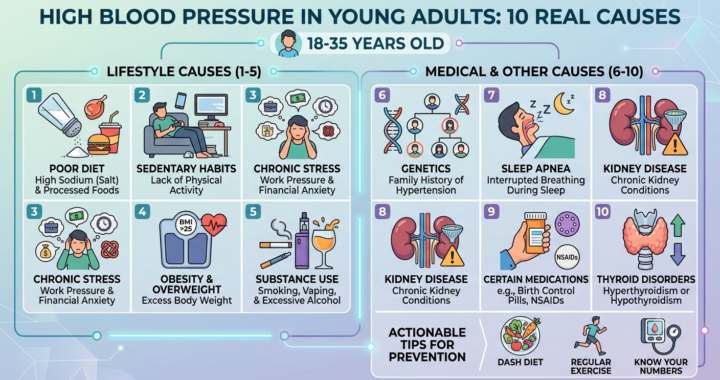
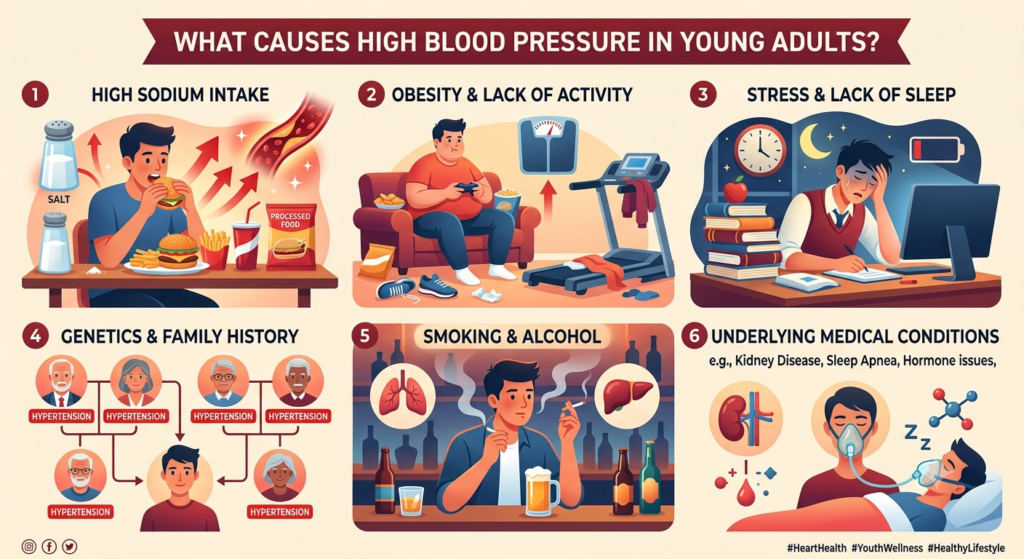
There’s rarely a single cause. Most cases result from a combination of genetics, habits, and biology stacking on top of each other. Here’s what the research points to.
1. Excess Weight and Obesity
Carrying extra weight is one of the strongest predictors of high blood pressure at any age, but its effect shows up early. <cite index=”1-1″>A body mass index greater than 25, or a waist-to-hip ratio greater than 0.85, is a recognized risk factor for hypertension in young adults</cite>.
Fat tissue is not just a passive storage depot; it is metabolically active. Obesity-related fat makes stress hormones that might raise blood pressure. That’s why weight gain and blood pressure tend to increase together.
2. High Sodium, Low Potassium Diets
Fast food, packaged snacks, and restaurant meals are convenient — and loaded with sodium. <cite index=”4-1″>Eating foods high in salt and low in potassium regularly raises your risk of high blood pressure</cite>. Certain groups, <cite index=”4-2″>including Black people, older adults, and people with chronic kidney disease, diabetes, or metabolic syndrome, are more sensitive to dietary salt</cite>, meaning the same plate of food can move their numbers more than someone else’s.
3. Physical Inactivity
<cite index=”7-2″>Many young adults aren’t getting the recommended 150 minutes of moderate exercise per week</cite>. A sedentary lifestyle weakens the heart’s efficiency, stiffens blood vessels over time, and compounds the effects of poor diet and excess weight.
4. Alcohol Consumption
Drinking regularly, even moderately, can push blood pressure upward. <cite index=”1-2″>Research involving young adults in Kenya found that avoiding alcohol reduced hypertension risk by roughly 70%</cite> — a striking reminder of how much this one habit can move the needle.
5. Smoking and Tobacco Use
<cite index=”5-2″>Smoking and chewing tobacco raise blood pressure immediately and damage the lining of artery walls</cite>. Over time, <cite index=”5-3″>this damage causes arteries to narrow and forces the heart to pump harder</cite>. A 2020 study of young adults in Bangladesh identified tobacco smoking as a major modifiable risk factor for hypertension in this age group.
6. Chronic Stress
Stress doesn’t just feel bad — it has a measurable cardiovascular effect. <cite index=”5-4″>Stress can trigger a short but dramatic spike in blood pressure</cite>, and when that stress becomes chronic — from school, unstable work, or financial pressure — <cite index=”7-3″>it can cause hormonal imbalances that elevate blood pressure over time</cite>.
7. Genetics and Family History
You can’t out-diet your DNA entirely. <cite index=”5-5″>Some families carry a higher inherited risk of hypertension</cite>. If a parent or sibling developed high blood pressure young, your own risk is meaningfully higher — which makes early screening especially worthwhile.
8. Race and Ethnicity
<cite index=”5-6″>Hypertension is particularly common among African Americans and often develops at an earlier age</cite>, with a higher likelihood of complications such as heart attack, stroke, and kidney disease. This disparity is well documented and reflects a mix of genetic, social, and healthcare-access factors.
9. Certain Medications
Certain common prescriptions have a side effect of increased blood pressure. Some of the medications that can be linked to increased blood pressure include birth control pills with estrogen, some antidepressants, and certain nonsteroidal anti-inflammatory drugs (NSAIDs)
. There are also gender differences here — young women may have an added risk from hormonal contraceptives and pregnancy-related hypertension, whereas young men are statistically more likely to smoke and drink.
10. Illegal Drug Use
<cite index=”1-4″>Anabolic-androgenic steroids, cocaine, amphetamines, and MDMA can raise blood pressure, at least temporarily</cite>. <cite index=”5-7″>Cocaine in particular is the most common drug linked to hypertension in young adults, working by narrowing blood vessels (vasoconstriction)</cite>.
11. Underlying Medical Conditions (Secondary Hypertension)
In this respect the young adult differs markedly from the older patient. Most adults have high blood pressure with no single identifiable cause – this is called primary or essential hypertension and develops gradually over years
. But some cases are caused by an underlying condition, called secondary hypertension, that tends to appear suddenly and often produces higher readings than primary hypertension.
In young adults, secondary causes are proportionally more common and worth ruling out, including:
- Kidney disease or abnormalities
- Thyroid disorders
- Obstructive sleep apnea
- Hormonal conditions
<cite index=”9-2″>In some cases, hypertension in young people stems from kidney disease, thyroid disorders, or obstructive sleep apnea</cite>. If your blood pressure spikes suddenly rather than creeping up gradually, your doctor may screen for these conditions specifically.
Primary vs. Secondary Hypertension: What’s the Difference?
| Feature | Primary Hypertension | Secondary Hypertension |
|---|---|---|
| Cause | No single identifiable cause; develops from combined lifestyle and genetic factors | Caused by an underlying condition (kidney, thyroid, hormonal, sleep apnea) |
| Onset | Gradual, over years | Often sudden |
| Severity | Typically moderate | Can be more severe |
| Who it affects | Most adults overall | More common proportionally in younger patients |
| Treatment approach | Lifestyle changes, sometimes medication | Treat the underlying condition first |
Symptoms to Watch For
High blood pressure earns its “silent killer” reputation honestly. <cite index=”9-3″>It rarely causes noticeable symptoms until it reaches dangerously high levels, sometimes 180/120 mmHg or higher</cite> — <cite index=”9-4″>by which point irreversible damage to the arteries, heart, or organs may already have occurred</cite>.
A few popular myths. Headache with blood pressure. <cite index=”15-2″>A common misunderstanding is that having high blood pressure causes headaches. However, headaches with blood pressure happen at a crisis level, which is at least 180/120 mmHg.</cite> So, you do not experience headaches due to an increased and or stage 1 level of blood pressure.
Call 911 immediately if your blood pressure reads above 180/120 mmHg and you experience any of the following:
- Chest pain
- Shortness of breath
- Back pain
- Numbness or weakness
- Vision changes
- Difficulty speaking
These can signal a hypertensive emergency and active organ damage.
Why It Matters More Than You Think — Even in Your 20s
It’s tempting to shrug off a slightly high reading when you feel fine. But <cite index=”3-2″>higher blood pressure at a young age is associated with abnormalities on heart and brain imaging and increases the likelihood of cardiovascular events by middle age</cite>. In other words, the damage compounds silently for decades before it becomes a heart attack, stroke, or kidney problem in your 40s or 50s.
Despite this, <cite index=”3-3″>diagnosis rates are lower and treatment is often delayed in young people</cite> compared with older adults — partly because doctors and patients alike still think of hypertension as an “old person’s disease.”
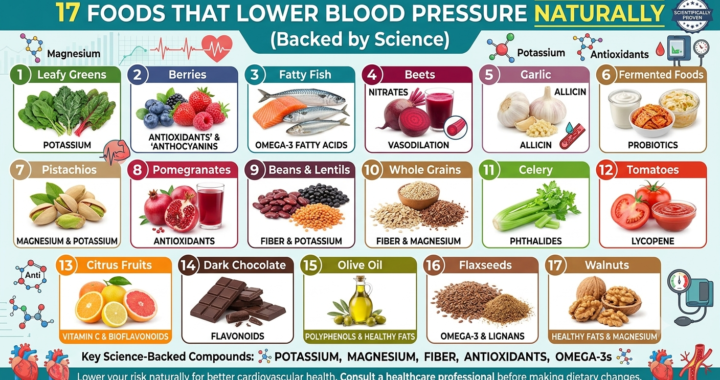
How to Lower Blood Pressure Naturally
The encouraging news: for most young adults, lifestyle changes work — and they work faster than you might expect.
Ranked by typical impact on systolic blood pressure:
- Follow the DASH diet. <cite index=”15-3″>The DASH diet (rich in fruits, vegetables, whole grains, and low-fat dairy) can lower systolic blood pressure by 8 to 14 mmHg</cite>.
- Exercise regularly. <cite index=”15-4″>Regular exercise can lower systolic blood pressure by 5 to 8 mmHg</cite>. Aim for the recommended 150 minutes of moderate activity per week.
- Cut sodium intake. <cite index=”15-5″>Reducing dietary sodium can lower systolic pressure by 5 to 6 mmHg</cite>.
- Limit alcohol. <cite index=”15-6″>Reducing alcohol intake can lower systolic pressure by 3 to 5 mmHg</cite>.
- Quit smoking and avoid recreational drug use.
- Manage stress through sleep, therapy, movement, or mindfulness practices.
<cite index=”15-7″>Combined, these interventions can lower systolic blood pressure by 15 to 25 mmHg</cite> — often enough to move someone from Stage 1 hypertension back into the normal range without medication.
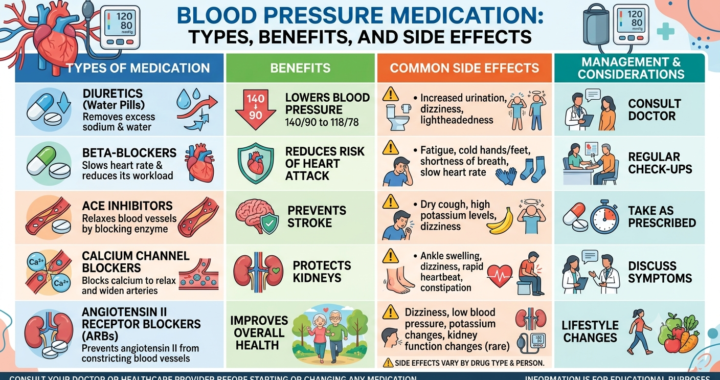
When Medication Becomes Necessary
Lifestyle changes are the first line of treatment, but they’re not always enough on their own.
- Elevated blood pressure: Lifestyle changes only; recheck every 3–6 months.
- Stage 1 hypertension: <cite index=”10-1″>Your healthcare provider should prescribe lifestyle changes and may consider adding medication based on your risk of heart disease or stroke — medication should be added if you have diabetes, heart failure, or kidney disease</cite>.
- Stage 2 hypertension: <cite index=”10-2″>Medication and lifestyle changes together are typically prescribed, and you may need more than one medication to reach a healthy range</cite>.
How to Get Diagnosed
Blood pressure is measured with a cuff around your upper arm, after sitting for five minutes. A one-time measurement won’t diagnose high blood pressure. A diagnosis of hypertension, however, is typically made using the average of readings on two or more separate visits.
11 11 14 If your physician is suspicious about secondary hypertension-especially if the numbers went up dramatically or are surprisingly high for your age-you might be sent for blood tests, a urine test, imaging of your kidneys and hormones, and a sleep study.
If you don’t have a physician on staff, a validated monitor that can be used at home is a smart step. Record blood pressure readings every day at the same time, and over a period of at least a week, so you can pick up a clear pattern, not just a temporary spike.
Frequently Asked Questions
What is considered high blood pressure for someone in their 20s or 30s? The same thresholds apply regardless of age. A reading of 130/80 mmHg or higher on repeated checks is classified as Stage 1 hypertension, and 140/90 mmHg or higher is Stage 2. There’s no separate “young adult” cutoff.
Can stress alone cause high blood pressure in young people? Stress alone can cause temporary spikes, and chronic stress can contribute to sustained high blood pressure over time by triggering hormonal changes. It’s rarely the only factor, but it often compounds other risks like poor diet or lack of sleep.
Is high blood pressure in young adults reversible? Often, yes — especially when it’s caused primarily by lifestyle factors. Many young adults with elevated or Stage 1 readings can return to a normal range through diet, exercise, weight loss, and reduced alcohol and sodium intake, without needing medication.
Does birth control cause high blood pressure? Combined hormonal contraceptives that contain estrogen can raise blood pressure in some users. If you’re on the pill and notice elevated readings, talk to your provider about alternative options.
Can you have high blood pressure and feel completely fine? Yes. This is the defining feature of hypertension — it typically causes no symptoms until it reaches dangerously high levels or has already caused organ damage. Regular checks are the only reliable way to catch it early.
Should young adults get their blood pressure checked regularly? Yes. Most guidelines recommend a blood pressure check at least once every one to two years starting in your teens, and more often if you have risk factors like obesity, a family history of hypertension, or an existing diagnosis of elevated blood pressure.
What’s the difference between elevated blood pressure and hypertension? Elevated blood pressure (120–129 systolic, under 80 diastolic) is a warning stage — not yet a diagnosis of hypertension, but a signal to make changes before it progresses. Hypertension begins at 130/80 mmHg.
The Bottom Line
High blood pressure in young adults isn’t rare, and it isn’t just about genetics or bad luck. It’s usually the sum of everyday factors — what you eat, how much you move, how much you drink, how you handle stress, and sometimes an underlying condition you don’t know about yet.
The good news is that it’s one of the most controllable health risks you’ll face in your 20s and 30s. A single blood pressure check takes two minutes and could change the trajectory of your health for decades.
If you haven’t had your blood pressure checked in the last year, make that appointment this week. And if you already know your numbers are creeping up, start with one change — cutting sodium, adding a daily walk, or cutting back on alcohol — rather than trying to overhaul everything at once.