
17 Foods That Lower Blood Pressure Naturally
This guide breaks down exactly which foods lower blood pressure, why they work at a biological level, how much to eat, and how to build them into meals you’ll actually enjoy. We’ll also cover the foods working against you, a sample weekly menu, and answers to the questions people search for most.
You won’t find vague “eat healthier” advice here. You’ll find specific foods, specific amounts, and the science behind each one.
How Diet Affects Blood Pressure: The Quick Science
Before the food list, it helps to understand why certain foods work. Three mechanisms do most of the heavy lifting:
- Sodium-potassium balance. Your kidneys manage blood pressure partly by balancing sodium and potassium. Too much sodium — and too little potassium — causes your body to retain fluid, which raises pressure inside your blood vessels. Research shows the ratio of sodium to potassium in your diet predicts blood pressure more accurately than sodium intake alone.
- Nitric oxide production. Foods rich in dietary nitrates (like beets and leafy greens) convert into nitric oxide in your body. Nitric oxide relaxes and widens blood vessels, which lowers resistance and reduces pressure.
- Mineral-driven vessel relaxation. Magnesium and calcium help the smooth muscle in your artery walls relax instead of constrict, easing the force your heart has to pump against.
Diets built around these principles — most notably the DASH diet (Dietary Approaches to Stop Hypertension) — have been proven in clinical trials to lower systolic blood pressure by 8–14 mm Hg, an effect comparable to some first-line medications.
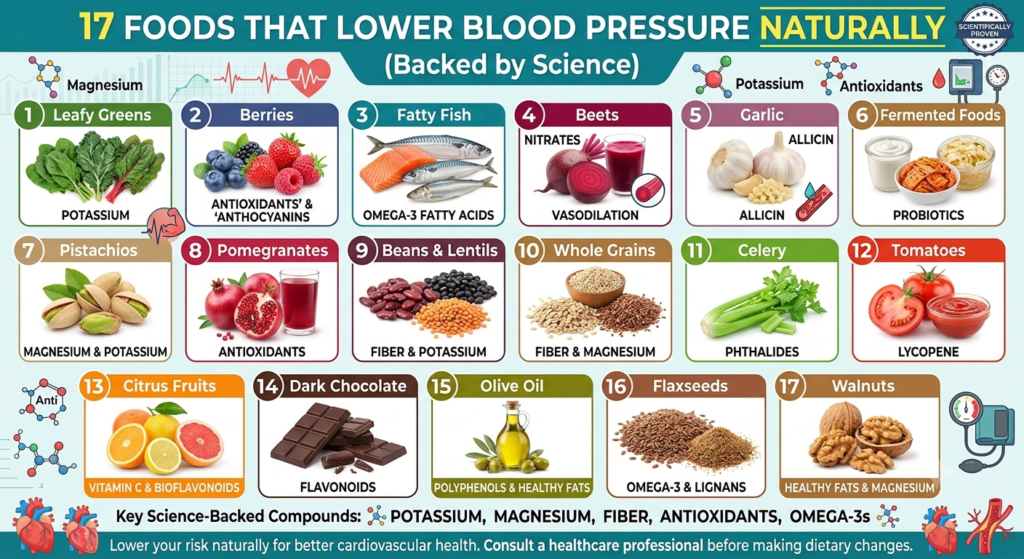
17 Foods That Help Lower Blood Pressure
1. Beets and Beet Juice
Beets are among the most nitrate-dense foods you can eat. Once converted to nitric oxide, those nitrates relax blood vessels and can produce measurable drops in systolic pressure within a few hours of drinking beet juice.
How to use it: One cup of beet juice or roasted beets, 3–4 times a week. Roast with olive oil to soften the earthy taste, or blend into a smoothie with apple and ginger.
2. Leafy Greens (Spinach, Kale, Swiss Chard, Collard Greens)
Leafy greens deliver a rare combination of potassium, magnesium, and nitrates in a single low-calorie package. Spinach in particular has been shown in clinical research to improve blood vessel function in healthy adults.
How to use it: Aim for 1–2 cups of raw greens (or ½ cup cooked) daily. Sauté with garlic and a squeeze of lemon instead of salt.
3. Bananas
One medium banana contains about 420 mg of potassium, which helps your kidneys flush out excess sodium and eases tension in vessel walls.
How to use it: One banana a day fits easily into breakfast or as a pre-workout snack.
4. Berries (Blueberries and Strawberries)
Berries are rich in anthocyanins, plant compounds with antioxidant properties linked to improved blood vessel flexibility and lower blood pressure with regular consumption.
How to use it: ½–1 cup daily, fresh or frozen, stirred into oatmeal or yogurt.
5. Oats
Oats are high in soluble fiber and low in sodium — a favorable combination for both blood pressure and cholesterol.
How to use it: ½–1 cup of dry oats prepared with low-fat or plant milk. Skip the added sugar; use cinnamon and fruit instead.
6. Unsweetened Yogurt
Yogurt supplies calcium, potassium, and magnesium together. A 2021 study associated regular yogurt consumption with improved blood pressure outcomes in people with hypertension.
How to use it: One serving (about ¾ cup) of plain or Greek yogurt daily, topped with berries and a few nuts.
7. Fatty Fish (Salmon, Mackerel, Sardines)
Omega-3 fatty acids slow the buildup of plaque in blood vessels and support healthy blood pressure regulation over time.
How to use it: Two servings per week, roughly 3–4 ounces each, grilled or baked rather than fried.
8. Garlic
Garlic contains allicin, a compound with a mild ACE-inhibitor-like effect that can help relax blood vessels.
How to use it: 1–2 fresh cloves daily, crushed and left to sit for 10 minutes before cooking to maximize allicin activation.
9. Kiwifruit
One clinical study found that eating two kiwifruit daily for eight weeks was linked to lower blood pressure, likely due to their combined vitamin C, potassium, and antioxidant content.
How to use it: Two kiwis a day, sliced into a fruit salad or plain yogurt.
10. Pomegranate
Pomegranate juice is rich in polyphenols that reduce oxidative stress and support the inner lining of blood vessels (the endothelium), which plays a direct role in regulating pressure.
How to use it: ½ cup of 100% pomegranate juice (unsweetened) or a handful of fresh arils a few times a week.
11. Watermelon
Watermelon is high in citrulline, an amino acid your body converts to arginine, which fuels ongoing nitric oxide production and vessel relaxation.
How to use it: 1–2 cups as a snack, especially in warmer months.
12. Beans and Lentils
Legumes are rich in potassium, magnesium, and fiber, and they’re naturally low in sodium — a full house of blood pressure–friendly nutrients.
How to use it: ½–1 cup, 3–4 times a week, added to soups, salads, or grain bowls.
13. Avocado
Avocados provide potassium and magnesium along with heart-healthy monounsaturated fats.
How to use it: ¼–½ avocado a day, sliced onto toast, salads, or eggs in place of butter or mayo.
14. Nuts (Especially Pistachios and Almonds)
Nuts supply magnesium, potassium, and healthy fats. Pistachios in particular have shown favorable effects on blood pressure in controlled studies, likely related to their impact on vascular resistance.
How to use it: A small handful (about 1 ounce) daily, unsalted.
15. Low-Fat Dairy (Milk, Cheese)
Calcium plays a role in helping blood vessels contract and relax properly. Low-fat and fat-free dairy provide calcium without the saturated fat load of full-fat versions.
How to use it: 2–3 servings daily, choosing fat-free or low-fat milk, cheese, or cottage cheese.
16. Dark Chocolate (70% Cacao or Higher)
Flavanols in dark chocolate can modestly support nitric oxide production and vessel flexibility.
How to use it: A small square (about 1 ounce) a few times a week — this is a treat, not a staple.
17. Hibiscus Tea
Hibiscus is rich in anthocyanins and has shown ACE-inhibitor-like effects in multiple clinical trials, making it one of the more evidence-backed beverages for blood pressure support.
How to use it: One cup of unsweetened hibiscus tea daily, hot or iced.
Quick-Reference Table: Nutrients and Serving Sizes
| Food | Key Nutrient | Suggested Daily/Weekly Amount |
|---|---|---|
| Beets | Nitrates | 1 cup, 3–4x/week |
| Leafy greens | Potassium, magnesium, nitrates | 1–2 cups daily |
| Bananas | Potassium | 1 daily |
| Berries | Anthocyanins | ½–1 cup daily |
| Oats | Soluble fiber | ½–1 cup daily |
| Yogurt | Calcium, potassium | ¾ cup daily |
| Fatty fish | Omega-3s | 2 servings/week |
| Garlic | Allicin | 1–2 cloves daily |
| Kiwifruit | Vitamin C, potassium | 2 daily |
| Pomegranate | Polyphenols | ½ cup juice, 3x/week |
| Watermelon | Citrulline | 1–2 cups as needed |
| Beans/lentils | Potassium, magnesium, fiber | ½–1 cup, 3–4x/week |
| Avocado | Potassium, healthy fats | ¼–½ daily |
| Nuts | Magnesium, potassium | 1 oz daily |
| Low-fat dairy | Calcium | 2–3 servings daily |
| Dark chocolate | Flavanols | 1 oz, 2–3x/week |
| Hibiscus tea | Anthocyanins | 1 cup daily |
The DASH Diet: The Eating Pattern Behind Most of These Foods
Every food on this list fits naturally into the DASH (Dietary Approaches to Stop Hypertension) eating plan, developed and endorsed by the National Heart, Lung, and Blood Institute. DASH isn’t a restrictive diet — it’s a framework built around:
- Fruits and vegetables (4–5 servings each daily)
- Whole grains over refined grains
- Low-fat or fat-free dairy
- Lean protein, fish, and legumes
- Nuts and seeds a few times a week
- Limited sodium (ideally 1,500 mg or less daily)
- Minimal added sugar and saturated fat
Clinical trials on DASH have consistently shown blood pressure reductions of 8–14 mm Hg systolic, making it one of the most well-studied dietary interventions for hypertension available.
Foods and Habits That Raise Blood Pressure (What to Limit)
Adding good foods matters less if you’re also loading up on the ones working against you. Watch out for:
- Processed and packaged foods — the single biggest source of hidden sodium in the average diet
- Deli meats and cured meats — high in sodium and preservatives
- Canned soups and sauces — often exceed a full day’s sodium target in one serving
- Fried foods — high in unhealthy fats that contribute to weight gain and arterial stiffness
- Excess alcohol — more than one to two drinks a day can raise blood pressure over time
- Added sugar and sugary drinks — linked to weight gain, a major driver of high blood pressure
- Excess caffeine — can cause short-term spikes, though effects lessen with regular consumption
Practical tip: Read nutrition labels and aim to keep sodium under 1,500–2,300 mg per day. Cooking at home is the single most effective way to control this number, since most sodium in the average diet comes from processed and restaurant food, not the salt shaker.
Sample 7-Day Blood Pressure–Friendly Meal Plan
| Day | Breakfast | Lunch | Dinner | Snack |
|---|---|---|---|---|
| Mon | Oatmeal with berries and walnuts | Lentil soup, side salad | Baked salmon, sautéed spinach, quinoa | Banana |
| Tue | Greek yogurt with kiwi | Turkey and avocado wrap, whole grain | Grilled chicken, roasted beets, brown rice | Handful of almonds |
| Wed | Whole grain toast with avocado | Bean and vegetable chili | Baked cod, steamed kale, sweet potato | Hibiscus iced tea |
| Thu | Smoothie: spinach, banana, milk | Quinoa salad with chickpeas | Stir-fried tofu, garlic, broccoli | Berries |
| Fri | Oatmeal with cinnamon and banana | Grilled fish tacos, cabbage slaw | Lentil curry, brown rice | Dark chocolate square |
| Sat | Veggie omelet, whole grain toast | Leafy green salad with salmon | Roast chicken, roasted vegetables | Pomegranate juice |
| Sun | Greek yogurt parfait | Vegetable soup, whole grain roll | Baked salmon, quinoa, steamed greens | Watermelon slices |
Frequently Asked Questions
What foods lower blood pressure quickly?
Nitrate-rich foods act fastest. Beet juice and spinach begin the nitrate-to-nitric-oxide conversion within 30–45 minutes, which can produce a measurable drop in systolic pressure. Pairing a nitrate-rich food with a potassium-rich food, like beets with bananas or avocado, stacks both mechanisms for a stronger short-term effect. That said, “fast” doesn’t mean “instead of medication” — for anyone diagnosed with hypertension, food is a complement to medical treatment, not a replacement.
What is the number one food to lower blood pressure?
There’s no single “best” food, but beets have the strongest evidence for a fast-acting effect due to their exceptionally high nitrate content, while bananas and leafy greens have the broadest long-term research support through potassium and magnesium.
Can drinking water lower blood pressure?
Staying hydrated supports healthy blood volume and vessel function, and dehydration can cause blood vessels to constrict. Water isn’t a treatment for hypertension, but chronic dehydration can make blood pressure harder to manage.
How long does it take for diet to lower blood pressure?
Some foods, like beets, can produce measurable effects within hours. But a full dietary pattern like DASH typically shows meaningful, sustained reductions within 2 to 8 weeks of consistent adherence.
Are bananas or oranges better for blood pressure?
Both are excellent potassium sources. Bananas offer slightly more potassium per serving (about 420 mg), while oranges add vitamin C and fiber. Either fits well into a blood pressure–friendly diet.
Is coffee bad for high blood pressure?
Caffeine can cause a temporary spike in blood pressure, but this effect is usually short-lived and diminishes with regular consumption. Most people with hypertension can safely have moderate coffee intake (around 3–4 cups daily) unless a doctor advises otherwise.
What foods should I avoid completely with high blood pressure?
No food needs to be eliminated entirely for most people, but processed meats, canned soups, fast food, and heavily salted snacks should be limited as much as possible, since they’re the leading sources of excess sodium.
Can high blood pressure be reversed with diet alone?
For some people with stage 1 hypertension, sustained dietary and lifestyle changes can bring blood pressure back into a normal range without medication. For others, especially those with more severe or longstanding hypertension, diet significantly improves control but doesn’t fully replace medication. This should always be guided by a healthcare provider.
Key Takeaways
- Nearly half of U.S. adults have high blood pressure, and diet is one of the most powerful tools available to manage it.
- Potassium, magnesium, calcium, and dietary nitrates are the four nutrients doing most of the work — found in beets, leafy greens, bananas, berries, fish, nuts, and legumes.
- The DASH diet is the most clinically proven eating pattern for lowering blood pressure, often rivaling medication in effect size.
- Cutting sodium matters, but raising potassium intake matters just as much — the ratio between the two is what really counts.
- Small, consistent changes beat occasional perfect days. Add one or two of these foods to your routine this week rather than overhauling your entire diet overnight.