
Intermittent Fasting: Benefits, Risks, and a Beginner’s Guide That Actually Works
You skip breakfast most days already. Maybe it happens by accident, not by choice.
Intermittent fasting turns that accident into a strategy. Millions of people now eat on a schedule instead of counting every calorie. It sounds simple, and in many ways it is. But simple does not always mean safe or right for everyone.
This guide will explain how intermittent fasting works in your body. You will discover all the scientifically proven benefits of this technique. You will also know the drawbacks often omitted by most websites. After that, you will get an easy-to-follow beginner plan to try out.
No hype. No magic pill claims. Just what the evidence says, explained in plain language.
What Is Intermittent Fasting?
Intermittent fasting is an eating pattern, not a diet in the traditional sense. It does not tell you what to eat. It tells you when to eat.
You cycle between two windows:
- A fasting window, where you consume no calories
- An eating window, where you eat normally
Water, black coffee, and unsweetened tea may be consumed during the eating window without invalidating the fast. When the body begins to use its fat stores rather than stored sugar for fuel, certain biological changes occur. The transition usually happens anywhere between 12 to 16 hours of fasting.
Intermittent fasting is different from calorie counting because it relies on timing. It is one of the reasons why many newbies are drawn to this approach.
How Intermittent Fasting Works in the Body
When you stop eating for several hours, your insulin levels drop. Lower insulin makes it easier for your body to access stored fat for energy.
Metabolic switching begins after about 12 hours where your body shifts from using glucose to using fat for energy. This is also the time when autophagy kicks in, which refers to the repair mechanism where your body eliminates damaged cells and recycles them.
Longer fasting periods may also increase the release of human growth hormone that is responsible for helping in weight loss while preserving muscle. These benefits do not involve any harsh fasting at all. All the researched benefits so far have been achieved through moderate fasting periods that will be discussed later in this article.
Popular Intermittent Fasting Methods
There is no single correct way to fast. The right method depends on your schedule, health status, and personal preference.
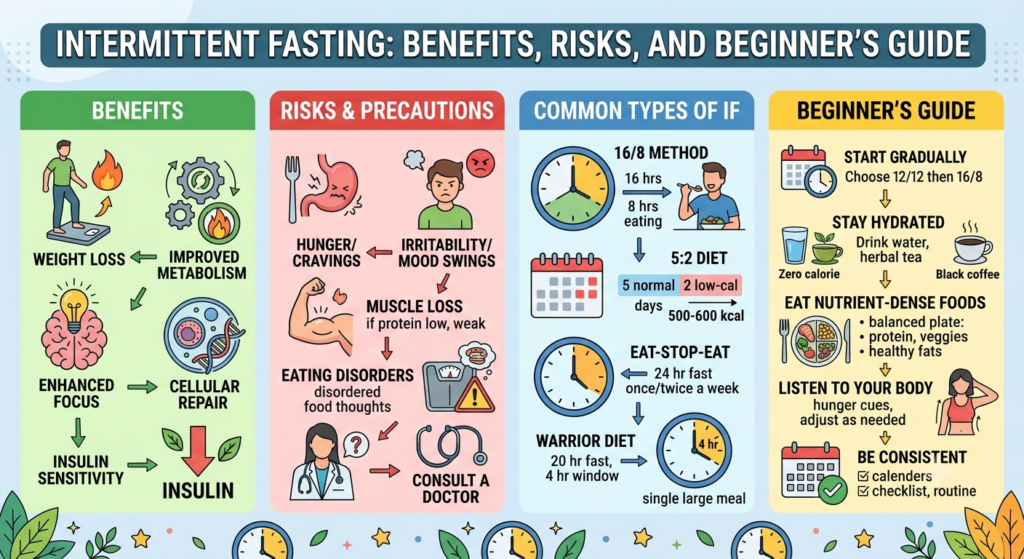
| Method | How It Works | Best For |
|---|---|---|
| 16:8 | Fast 16 hours, eat within an 8 hour window | Beginners, daily consistency |
| 14:10 | Fast 14 hours, eat within a 10 hour window | Easing in gradually |
| 5:2 | Eat normally 5 days, limit to 500 to 600 calories on 2 non consecutive days | People who prefer full eating days |
| Eat Stop Eat | One or two 24 hour fasts per week | Experienced fasters |
| Alternate Day Fasting | Alternate between normal eating days and fasting or very low calorie days | Short term, closely monitored use |
The 16:8 method is the most common starting point. Most people find it fits naturally around sleep, since several fasting hours happen while you sleep anyway.
Proven Benefits of Intermittent Fasting
Research on intermittent fasting has grown quickly over the past decade. Here is what the evidence currently supports.
Weight Loss and Fat Burning
Fasting windows naturally reduce the time available for eating. This often lowers total calorie intake without any deliberate restriction. Lower insulin levels during fasting also support fat burning over fat storage.
Improved Blood Sugar Control
Intermittent fasting can reduce insulin resistance and lower fasting blood sugar. Some research shows measurable improvements within 8 to 12 weeks, which is meaningful for people managing prediabetes or working to lower their type 2 diabetes risk.
Heart Health Support
Some studies link intermittent fasting to improvements in blood pressure and cholesterol levels. These changes may support cardiometabolic health over time, though researchers are still working out exactly why.
Cellular Repair and Longevity Signals
Fasting activates autophagy, the cellular cleanup process mentioned earlier. Animal studies suggest this process may support longevity and reduce inflammation, though human longevity data is still limited.
Brain Function
Some research points to protective effects for brain health during fasting periods, particularly around inflammation and cellular stress. This area is still developing, so treat it as promising rather than proven.
Simplicity Compared to Traditional Dieting
There is no calorie counting and no food restriction. You choose your window and eat normally within it. For many beginners, that simplicity is the biggest advantage of all.
Real Risks and Side Effects You Should Know
Most articles rush past this section. It deserves real attention.
Common Short Term Side Effects
- Hunger and irritability, especially in the first two weeks
- Headaches and dizziness
- Fatigue and trouble concentrating
- Constipation
- Sleep disruption
Most of these effects fade within the first month as your body adjusts.
Who Should Avoid Intermittent Fasting
Certain groups should not fast without medical supervision, or should avoid it altogether:
- People with a current or past eating disorder
- Pregnant or breastfeeding women
- People under 18
- Anyone taking medication for diabetes
- People with a history of low blood sugar, known as hypoglycemia
- People with a history of heart disease
If you fall into any of these groups, talk to a healthcare provider before starting.
The Heart Health Debate
Studies have also suggested that having extremely short eating windows, especially those below eight hours, may be associated with a risk of developing heart diseases. These results are still debatable, and scientists have yet to learn what causes it. If you have ever had heart disease before, it is best to consult your physician before trying out this diet plan.
Muscle and Bone Loss
Some of the risks associated with intermittent fasting are not unique to fasting itself. They are linked to rapid weight loss in general. Losing weight quickly, by any method, can lead to some muscle and bone loss alongside fat loss. Staying active and eating enough protein during your eating window can help protect against this.
Dry Fasting Is Not the Same Thing
However, there is also a way to limit both food intake and liquid consumption at the same time. It is referred to as “dry fasting,” and it is harmful to one’s health. The process of intermittent fasting involves drinking water and sometimes black coffee and tea.
A Beginner’s Step by Step Guide to Starting Intermittent Fasting
Step 1: Choose Your Method
Start with 14:10 or 16:8. Both are beginner friendly and flexible enough to fit most schedules.
Step 2: Pick Your Eating Window
Match your window to your daily routine. If you are not a breakfast person, try noon to 8 p.m. If you prefer eating earlier, try 9 a.m. to 5 p.m.
Step 3: Ease In Gradually
Do not jump straight into a 16 hour fast on day one. Start with a 12 hour fast for a few days, then extend it by an hour every few days until you reach your target window.
Step 4: Stay Hydrated
Drink plenty of water throughout your fasting window. Black coffee and plain tea are also fine and can help curb hunger.
Step 5: Eat Real Food During Your Window
Fasting does not cancel out poor nutrition. Focus on protein, fiber, vegetables, and healthy fats during your eating window. This keeps you fuller longer and supports muscle maintenance.
Step 6: Watch for Warning Signs
Stop and reassess if you experience severe dizziness, fainting, extreme fatigue, or irregular heartbeat. These are signs your body needs a different approach.
Step 7: Be Patient and Consistent
Most people notice initial changes within 2 to 4 weeks. Sticking with a schedule long enough to judge results matters more than fasting perfectly on day one.
Intermittent Fasting and Exercise
You can exercise while fasting, but ease into it. Light activity like walking or yoga is a safe starting point. As your body adapts, many people successfully add moderate cardio or strength training during fasting windows.
If you lift weights or do intense training, consider scheduling your workouts closer to the end of your fasting window. This lets you refuel with protein shortly after.
Common Mistakes Beginners Make
- Overeating during the eating window to compensate for hours without food
- Choosing an extreme schedule too soon, like a 20 hour fast in week one
- Ignoring hunger signals that suggest something is wrong, not just normal adjustment
- Skipping protein and fiber, leading to excess hunger later
- Starting intermittent fasting without medical clearance despite a relevant health condition
Key Takeaways
- Intermittent fasting is an eating pattern based on timing, not food restriction
- The 16:8 method is the most beginner friendly starting point
- Benefits may include weight loss, better blood sugar control, and support for heart and brain health
- Risks include hunger, headaches, fatigue, and potential concerns for certain groups, including people with heart disease
- Long term effects are still being studied, so moderation and medical guidance matter
- Ease in gradually, stay hydrated, and prioritize nutrient dense food during eating windows
Frequently Asked Questions
Is intermittent fasting effective for weight loss?
Yes, for many people. It naturally reduces the time available for eating, which often lowers total calorie intake and supports fat loss.
How long does it take to see results from intermittent fasting?
Most people notice initial changes within 2 to 4 weeks. Blood sugar improvements have been observed in some studies within 8 to 12 weeks.
Can I drink water during intermittent fasting?
Yes. Water is always allowed during fasting windows. Black coffee and plain tea without added sugar or cream are generally fine too.
Is intermittent fasting safe to do every day?
For most healthy adults, daily methods like 16:8 are considered safe. People with certain health conditions should check with a healthcare provider first.
Who should avoid intermittent fasting?
People with a history of eating disorders, pregnant or breastfeeding women, people under 18, those on diabetes medication, and people with a history of low blood sugar or heart disease should avoid fasting without medical supervision.
Can I exercise while fasting?
Yes. Beginners should start with light activity like walking or yoga. More intense training can often be added once your body adapts.
What breaks a fast?
Any calorie intake breaks a fast, including sugar, cream, and most sweeteners. Plain water, black coffee, and plain tea do not break a fast.
Does intermittent fasting cause muscle loss?
Rapid weight loss from any method can lead to some muscle loss. Eating enough protein and staying active during your eating window helps protect muscle mass.
Is intermittent fasting linked to heart disease risk?
Some studies have raised concerns about very short eating windows and heart disease risk, though findings are not conclusive. Anyone with existing heart disease should consult a doctor before starting.
What is the easiest intermittent fasting method for beginners?
The 16:8 method is generally considered the easiest starting point, since much of the fasting window overlaps with sleep.
Ready to Start?
Intermittent fasting isn’t a quick fix, nor is it meant for everyone. However, for many healthy individuals, it provides a simple and effective way to help with weight control and metabolism.
Begin with a baby step. Choose an interval of 12 hours this week, slowly increasing its duration and noting how your body feels. In case of any pre-existing medical conditions, consult your physician first.