
25 Weight Loss Tips That Are Scientifically Proven
Most weight loss advice online is recycled, exaggerated, or flat out wrong. Detox teas, “miracle” fat burners, and 500 calorie diets promise fast results, then leave you heavier than when you started.
Real weight loss doesn’t work like that. It’s built on a small set of habits that research has tested again and again, in labs, hospitals, and long term studies involving thousands of people.
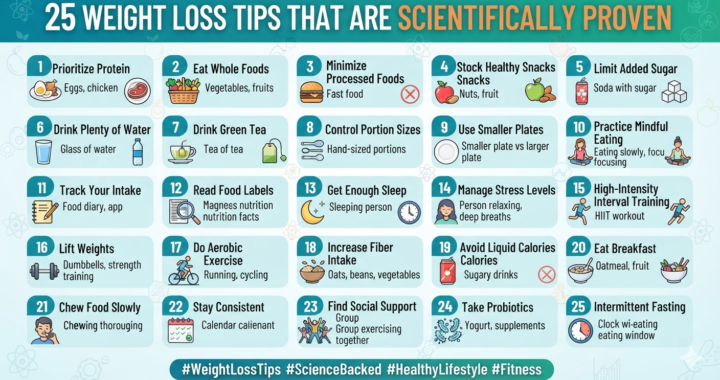
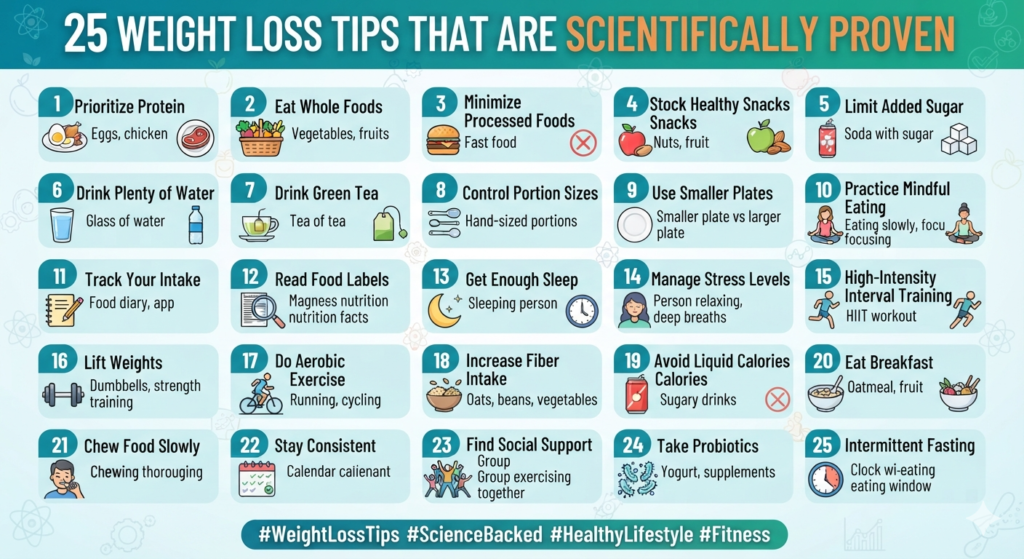
This guide breaks down 25 of those habits. Each one is grounded in nutrition science, not internet trends. You’ll learn what to eat, how to move, how to sleep, and how to think about food in a way that actually sticks.
You don’t need to do all 25 at once. Pick a few, build consistency, then add more as they become second nature.
How Weight Loss Actually Works
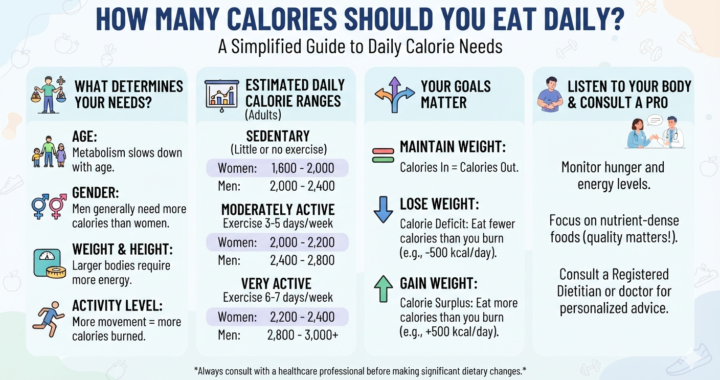
Weight loss comes down to energy balance. When you burn more calories than you consume, your body taps into stored fat for fuel. This is called a calorie deficit.
But calories in versus calories out is only part of the story. Hormones, sleep, stress, gut bacteria, and muscle mass all influence how easily your body loses fat and how likely you are to keep it off.
That’s why two people eating the same 1,500 calorie diet can see very different results. The tips below address both sides of the equation: the math of calories and the biology that makes sticking to that math possible.
What Are the Most Effective Weight Loss Tips?
If you only have time for a handful of changes, research points to these as having the strongest, most consistent evidence:
- Eat more protein at every meal
- Cut back on added sugar and ultra processed food
- Strength train two to three times a week
- Prioritize seven to nine hours of sleep
- Track your food intake, even loosely
Now let’s go deeper into all 25 strategies, grouped by category so you can find what fits your life.
Nutrition and Diet Tips
1. Eat More Protein at Every Meal
Protein is the most filling macronutrient. It blunts hunger hormones and keeps you satisfied for longer than carbs or fat.
Higher protein diets also help preserve lean muscle while you lose fat, which keeps your metabolism from slowing down as much during a calorie deficit.
Try this: Aim for a palm sized portion of protein (chicken, fish, eggs, tofu, or legumes) at breakfast, lunch, and dinner.
2. Cut Back on Added Sugar
Sugary drinks and snacks add calories without making you feel full. Studies consistently link high sugar intake with weight gain and a higher risk of type 2 diabetes.
Liquid sugar is the biggest offender. Soda, sweetened coffee, and juice slip past your body’s normal fullness signals.
Try this: Swap sugary drinks for water, black coffee, or unsweetened tea. This one change alone can cut hundreds of calories a day.
3. Fill Up on Fiber
Fiber slows digestion and helps you feel full on fewer calories. Soluble fiber, found in oats, beans, and chia seeds, forms a gel in your gut that reduces appetite.
Diets higher in fiber are linked to lower body weight and better long term weight maintenance.
Try this: Add a serving of vegetables, legumes, or whole grains to at least two meals a day.
4. Choose Whole Foods Over Ultra Processed Foods
Ultra processed foods are engineered to be easy to overeat. A controlled feeding study found people ate roughly 500 more calories a day, without noticing, when meals were ultra processed compared to minimally processed.
Try this: Build meals around foods that look close to their natural state: vegetables, fruit, eggs, meat, fish, and whole grains.
5. Practice Portion Awareness
Larger plates and packaging make people eat more without realizing it. This is called the portion size effect, and it’s been shown repeatedly in controlled trials.
Try this: Use smaller plates, and pre portion snacks into bowls instead of eating from the bag or box.
6. Eat Slowly and Chew Thoroughly
It takes about 20 minutes for your brain to register fullness. Eating quickly means you can overshoot that signal before your body catches up.
Research shows slower eaters consume fewer calories and report feeling more satisfied.
Try this: Put your fork down between bites, and aim to be one of the last people finished at the table.
7. Don’t Fear Healthy Fats
Fat isn’t the enemy. Unsaturated fats from olive oil, nuts, seeds, and fatty fish support hormone health and help you feel satisfied after meals.
Try this: Add a source of healthy fat to meals that feel too light or unsatisfying, like avocado on toast or olive oil on vegetables.
8. Consider Intermittent Fasting
Intermittent fasting restricts eating to a set window, such as 8 hours a day. Reviews of clinical trials show it can lead to weight loss similar to standard calorie restriction for people who find it easier to follow.
It isn’t magic, and it isn’t for everyone. It works because it often reduces overall calorie intake, not because of a special metabolic effect.
Try this: If you’re curious, start with a 12 hour overnight fast and extend gradually.
9. Track What You Eat, Even Loosely
People consistently underestimate how much they eat. Logging food, even for a few weeks, closes that gap and builds awareness that lasts after you stop tracking.
Studies on self monitoring found that people who tracked food intake lost significantly more weight than those who didn’t.
Try this: Use a free app to log meals for two to four weeks, then check in periodically after that.
10. Plan Meals Ahead of Time
Decision fatigue leads to impulsive, often less healthy choices. Planning meals in advance removes that pressure at the moment you’re hungriest.
Try this: Spend 15 minutes each weekend mapping out dinners for the week and writing a grocery list around them.
Exercise and Movement Tips
11. Strength Train Two to Three Times a Week
Resistance training builds and preserves muscle, which burns more calories at rest than fat tissue does. It also protects your metabolism during weight loss, when the body would otherwise burn through muscle for fuel.
Try this: Start with two full body strength sessions a week using bodyweight moves, dumbbells, or resistance bands.
12. Add Cardio for Extra Calorie Burn
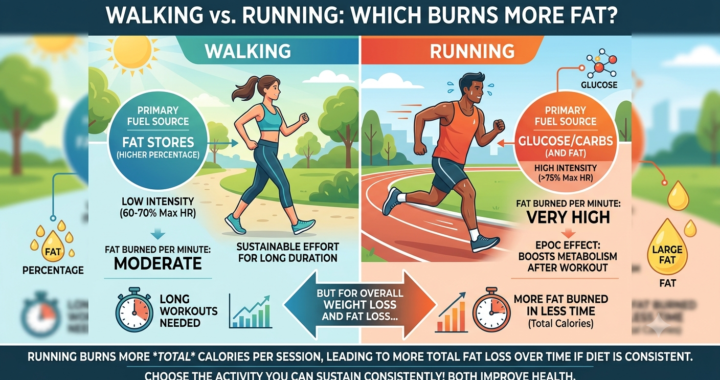
Cardiovascular exercise, like walking, cycling, or swimming, burns calories directly and supports heart health alongside weight loss.
Combining cardio with strength training produces better results than either one alone, according to most exercise research.
Try this: Aim for 150 minutes of moderate cardio a week, spread across several sessions.
13. Walk More Throughout the Day
Non exercise activity, like walking, taking stairs, or standing more, can add up to a meaningful chunk of daily calorie burn. Researchers call this NEAT, or non exercise activity thermogenesis.
Try this: Aim for 7,000 to 10,000 steps a day, and take short walking breaks every hour if you sit for work.
14. Try High Intensity Interval Training
HIIT alternates short bursts of intense effort with recovery periods. Studies show it can burn a similar or greater number of calories in less time compared to steady state cardio, and it may boost calorie burn slightly after the workout ends.
Try this: Try 20 minutes of HIIT, such as 30 seconds of effort followed by 90 seconds of rest, two times a week.
15. Stay Consistent Rather Than Intense
Sporadic, extreme workouts followed by weeks off produce worse long term results than moderate, steady activity. Consistency is the strongest predictor of exercise related weight loss in long term studies.
Try this: Choose a workout schedule you can realistically repeat for months, not just this week.
Sleep, Stress, and Mindset Tips
16. Prioritize Seven to Nine Hours of Sleep
Sleep deprivation disrupts ghrelin and leptin, the hormones that control hunger and fullness. Poor sleep is consistently linked to increased appetite, cravings for high calorie food, and higher body weight.
Try this: Set a consistent bedtime and wake time, even on weekends.
17. Manage Chronic Stress
Chronic stress raises cortisol, a hormone linked to increased appetite and abdominal fat storage. Stressed individuals are more likely to reach for high sugar, high fat comfort foods.
Try this: Build in short daily stress relief, like a walk, journaling, or five minutes of deep breathing.
18. Practice Mindful Eating
Mindful eating means paying attention to hunger cues, flavors, and fullness instead of eating on autopilot. Studies link this practice to reduced binge eating and better long term weight management.
Try this: Before eating, ask yourself how hungry you actually are on a scale of 1 to 10.
19. Set Realistic Goals
Losing 1 to 2 pounds a week, or 4 to 8 pounds a month, is considered a safe and sustainable pace by health authorities including the CDC. Faster loss usually reflects water weight and often isn’t maintainable.
Try this: Focus on weekly habits, like meals cooked at home or workouts completed, rather than only the number on the scale.
20. Build a Support System
Social support improves adherence to weight loss programs. People who have an accountability partner, group, or coach tend to stick with changes longer than those going it alone.
Try this: Share your goals with a friend, join an online community, or check in weekly with someone working toward similar goals.
Hydration and Everyday Habits
21. Drink Water Before Meals
Drinking water before a meal can reduce the amount you eat by creating a feeling of fullness. One study found dieters who drank water before meals lost more weight than those who didn’t.
Try this: Drink a full glass of water about 20 to 30 minutes before lunch and dinner.
22. Limit Liquid Calories
Smoothies, specialty coffees, and alcohol can contain as many calories as a full meal, without the same satisfying effect. Liquid calories are easy to underestimate.
Try this: Check the calorie count on your usual drink order, then look for a lower calorie swap you’d actually enjoy.
23. Get More Sunlight and Fresh Air
Morning light exposure helps regulate your circadian rhythm, which in turn supports healthy sleep and appetite hormones. Time outdoors is also linked to lower stress, which indirectly supports weight control.
Try this: Spend 10 to 15 minutes outside within an hour of waking up.
24. Cook More Meals at Home
Home cooked meals tend to be lower in calories, sugar, and sodium than restaurant or takeout meals, and they give you full control over ingredients and portions.
Try this: Pick one night this week to cook a simple meal you’d normally order in.
25. Be Patient and Consistent
Weight regain after fast weight loss is common because rapid diets are hard to sustain and often trigger compensatory hunger. Long term studies show that gradual, habit based weight loss is far more likely to stay off.
Try this: Judge progress over months, not days, and treat setbacks as data, not failure.
Weight Loss Tips at a Glance
| Category | Top Tip | Why It Works |
|---|---|---|
| Nutrition | Eat more protein | Increases fullness, preserves muscle |
| Exercise | Strength train weekly | Protects metabolism during a deficit |
| Sleep | Get 7 to 9 hours | Balances hunger hormones |
| Hydration | Drink water before meals | Reduces calorie intake naturally |
| Mindset | Set realistic goals | Improves long term adherence |
How Fast Should You Expect to Lose Weight?
Most health organizations, including the CDC, recommend a pace of 1 to 2 pounds per week, or roughly 4 to 8 pounds per month. This typically comes from a daily calorie deficit of 500 to 1,000 calories.
Losing weight faster than this is possible in the short term, but it often reflects water weight rather than fat, and it raises the risk of muscle loss, nutrient deficiencies, and rebound weight gain.
Common Mistakes That Slow Weight Loss
- Skipping meals, which often leads to overeating later
- Relying on a single “superfood” instead of overall diet quality
- Cutting calories too aggressively, which slows metabolism over time
- Ignoring sleep and stress while focusing only on diet and exercise
- Expecting linear progress instead of natural week to week fluctuation
Frequently Asked Questions
How much weight can I realistically lose in a month?
Most people can safely lose 4 to 8 pounds a month, based on a pace of 1 to 2 pounds per week. Heavier individuals may see faster results early on, largely from water weight.
What is the single most effective weight loss tip?
There isn’t one universal answer, but a sustained calorie deficit built on higher protein intake, more fiber, and regular strength training has the strongest and most consistent research support.
Can I lose weight without exercise?
Yes. Diet has a larger direct impact on weight loss than exercise alone. That said, exercise, especially strength training, helps preserve muscle and supports long term weight maintenance.
Do I need to count calories to lose weight?
Not necessarily, but tracking food intake, even loosely, is one of the most well supported habits for successful weight loss because it improves awareness of portion sizes and hidden calories.
Is intermittent fasting better than regular calorie counting?
Research suggests intermittent fasting produces similar weight loss results to standard calorie restriction. It tends to work well for people who find a set eating window easier to follow than counting every calorie.
Why did my weight loss stall?
Plateaus are normal and often happen because your calorie needs drop as you lose weight, or because portion sizes have quietly crept up. Reassessing your intake and activity level usually restarts progress.
Are cheat days bad for weight loss?
An occasional higher calorie meal isn’t harmful for most people and can support long term adherence. Problems arise when “cheat days” become frequent enough to offset your weekly calorie deficit.
Key Takeaways
- Weight loss ultimately depends on a calorie deficit, but sleep, stress, and hormones influence how sustainable that deficit is.
- Protein, fiber, and whole foods support fullness and make a calorie deficit easier to maintain.
- Strength training protects muscle and metabolism during weight loss, and pairs well with regular cardio.
- Sleep and stress management aren’t optional extras. They directly affect hunger and cravings.
- A pace of 1 to 2 pounds per week is realistic, sustainable, and backed by health authorities.