

Nearly Half of Adults Face This Decision
Here’s a number that might surprise you: <cite index=”14-1″>roughly 48% of U.S. adults have high blood pressure, affecting close to 120 million people</cite>. That means almost every other person you know is either taking a blood pressure medication or should be talking to their doctor about one.
Yet most people leave the pharmacy with a bottle of pills and a lot of unanswered questions. What does this drug actually do? Why did my doctor pick this one instead of another? What side effects should worry me — and which ones will just fade?
This guide will address these questions in layman’s terms. The reader will get familiar with the six major categories of blood pressure medicine, how they work, their pros, side effects, and how the doctor chooses the right drug depending on the patient’s condition. Information about safety of the drug for pregnant women, possible drug interactions, and what can be done in case the medicine does not work as expected is also provided.
This article serves for informational purposes only. It cannot be used as a substitute for your physician’s advice.
What Is Blood Pressure Medication and How Does It Help?
Blood pressure medications, also called antihypertensives, lower the force of blood pushing against your artery walls. <cite index=”2-1″>Their goal is to protect your heart and prevent serious problems like heart failure, heart attack, kidney failure, or stroke.</cite>
High Blood Pressure Does Not Show Any Symptoms Most Of The Time. This is precisely the reason why it is known as a “silent disease”. Most people do not start treating their condition until it has done some harm to them.
The encouraging part: blood pressure is one of the most treatable chronic conditions there is. Medication, combined with lifestyle changes, brings most people’s numbers into a safer range.
Quick Snapshot: Who’s Affected
| Statistic | Figure |
|---|---|
| U.S. adults with hypertension | <cite index=”14-1″>About 48.1%, or 119.9 million people</cite> |
| Adults 60+ with hypertension | <cite index=”9-1″>More than 7 in 10</cite> |
| Adults with hypertension who have it under control | <cite index=”8-1″>Around 22–26%</cite> |
| Adults unaware they have it | About 1 in 6 |
Blood pressure control lagging behind diagnosis is one reason doctors emphasize both medication and regular monitoring — a pill only helps if it’s actually bringing your numbers down.
The 6 Main Types of Blood Pressure Medication
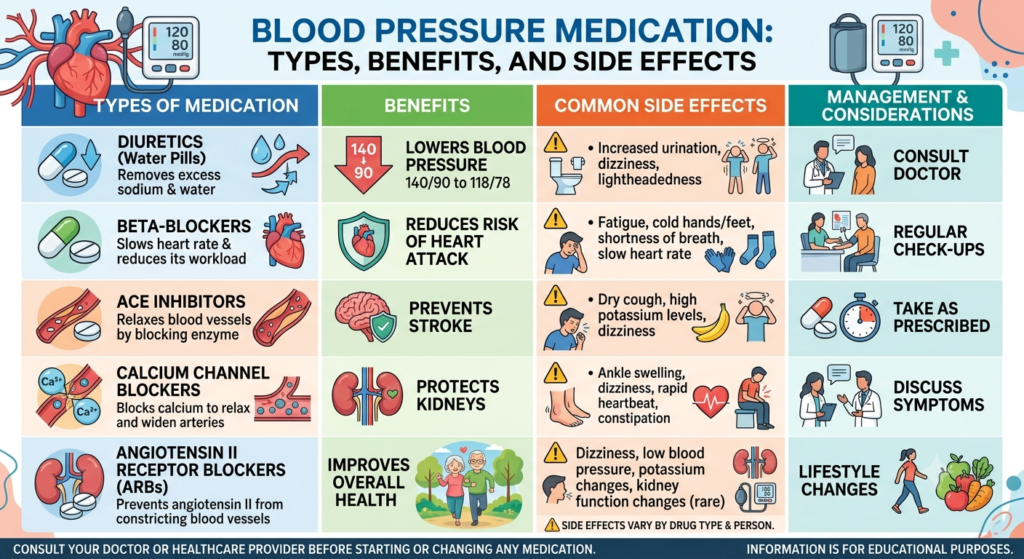
<cite index=”1-1″>Doctors generally choose from six main types of medicine to lower blood pressure: ACE inhibitors, ARBs, calcium-channel blockers, diuretics, beta-blockers, and alpha blockers.</cite> Some people need just one; many need a combination.
Here’s a breakdown of each class, in plain terms.
1. ACE Inhibitors
How they work: ACE inhibitors block an enzyme that narrows blood vessels. Relaxed vessels mean lower pressure and less strain on the heart.
Common names: Lisinopril, enalapril, ramipril, captopril
Benefits:
- Especially protective for people with diabetes or kidney disease
- <cite index=”1-1″>Also used to treat heart failure</cite>
- Well-studied, widely prescribed as a first-line option
Common side effects:
- <cite index=”1-1″>A persistent, irritating dry cough</cite>
- Dizziness, especially when starting treatment
- Elevated potassium levels in some people
Good to know: ACE inhibitors aren’t recommended during pregnancy. If the cough becomes bothersome, your doctor may switch you to an ARB instead.
2. ARBs (Angiotensin Receptor Blockers)
How they work: ARBs work on the same pathway as ACE inhibitors but block a different step, which is why they don’t usually cause the same cough.
Common names: Losartan, valsartan, olmesartan, irbesartan
Benefits:
- Similar heart and kidney protection to ACE inhibitors
- Better tolerated by people who develop an ACE inhibitor cough
Common side effects:
- <cite index=”1-1″>Occasional dizziness</cite>
- Rarely, elevated potassium
- Not recommended during pregnancy
3. Calcium Channel Blockers
How they work: <cite index=”6-1″>These medications slow the entry of calcium into the muscle cells of blood vessel walls, which reduces the strength of muscle contractions</cite> and widens the vessels.
Common names: Amlodipine, nifedipine, diltiazem, verapamil
Benefits:
- <cite index=”1-1″>Also used to treat angina (chest pain)</cite>
- Effective for older adults and people of African-Caribbean or African-American descent
- Available in fast-acting and long-acting forms
Common side effects:
- Swelling in the ankles or feet
- Flushing or headache
- Constipation (more common with verapamil)
4. Diuretics (“Water Pills”)
How they work: <cite index=”6-1″>Diuretics help the body eliminate excess salt and water by increasing urine output</cite>, which reduces fluid buildup in blood vessels.
Common names: Hydrochlorothiazide, chlorthalidone, indapamide
Benefits:
- Inexpensive and widely available
- Often used as a first-choice treatment, especially in older adults
- Frequently combined with other drug classes for added effect
Common side effects:
- <cite index=”6-1″>Increased urination and, in some cases, decreased libido</cite>
- <cite index=”3-1″>Potassium loss (hypokalemia), which can affect muscle function including the heart</cite>
- Dehydration if fluid intake isn’t adjusted
5. Beta-Blockers
How they work: <cite index=”5-1″>Beta-blockers lower the heart rate, which in turn lowers blood pressure, and some also help relax blood vessels for an added effect.</cite>
Common names: Metoprolol, atenolol, bisoprolol, carvedilol
Benefits:
- <cite index=”1-1″>Also used to treat angina</cite>
- Helpful for people with certain heart rhythm issues or a history of heart attack
Common side effects:
- Fatigue and cold hands or feet
- <cite index=”6-1″>Slower heart rate</cite>
- <cite index=”3-1″>May be less effective as a stand-alone treatment for hypertension in adults over 60, though still useful if heart disease is also present</cite>
6. Alpha-Blockers
How they work: Alpha-blockers relax blood vessels by blocking receptors that would otherwise cause them to narrow.
Common names: Doxazosin, prazosin, terazosin
Benefits:
- Can also ease symptoms of an enlarged prostate in men
- Sometimes used alongside other medications when blood pressure remains high
Common side effects:
- A sudden drop in blood pressure on standing up (orthostatic hypotension), causing dizziness
- Headache or weakness
Other Medication Types You May Encounter
Beyond the six main classes, a few additional options exist for harder-to-treat or specific cases:
- Central agonists (clonidine, methyldopa) — <cite index=”4-1″>can cause severe dry mouth, constipation, or drowsiness, and stopping them abruptly can cause blood pressure to spike</cite>
- Vasodilators (hydralazine, minoxidil) — <cite index=”3-1″>usually reserved for severe hypertension and typically not used alone</cite>
- Peripheral adrenergic inhibitors — <cite index=”3-1″>generally used only when other medications haven’t worked</cite>
At-a-Glance Comparison Table
| Medication Class | Best For | Main Side Effect to Watch |
|---|---|---|
| ACE Inhibitors | Diabetes, kidney disease, heart failure | Dry cough |
| ARBs | Same as ACE inhibitors, cough-sensitive patients | Dizziness |
| Calcium Channel Blockers | Older adults, angina | Ankle swelling |
| Diuretics | First-line, cost-conscious treatment | Low potassium |
| Beta-Blockers | Heart disease, past heart attack | Fatigue, cold extremities |
| Alpha-Blockers | Enlarged prostate + high BP | Dizziness on standing |
How Doctors Choose the Right Medication for You
There is no single “best” medication for blood pressure for all patients. Your doctor will consider how likely you are to develop side effects, along with any other health problems, family history, and other medications you use when making a choice for you.
A few patterns worth knowing:
- If you have diabetes or kidney disease: ACE inhibitors or ARBs are often preferred for their protective effect on the kidneys.
- If you’re of African-American or African-Caribbean descent: <cite index=”3-1″>Thiazide diuretics or calcium channel blockers are usually recommended first, sometimes combined with an ACE inhibitor or ARB.</cite>
- If you’re over 60: <cite index=”3-1″>A diuretic, calcium channel blocker, ACE inhibitor, or ARB tends to work well, while beta-blockers may be less effective alone.</cite>
- If you have angina or a past heart attack: Beta-blockers or calcium channel blockers may do double duty.
- If you’re pregnant or planning to be: <cite index=”2-1″>Methyldopa, labetalol, and nifedipine are generally considered safer options, but many other antihypertensives aren’t safe for a developing fetus.</cite>
Bottom line: <cite index=”1-1″>Reaching your exact target blood pressure isn’t always possible, but any reduction in high blood pressure still provides real benefit.</cite> Don’t get discouraged if your first medication needs adjusting.
Side Effects: What’s Normal and What Needs Attention
Every medication carries some risk of side effects, and blood pressure drugs are no exception. Most are mild and improve within a few weeks as your body adjusts.
Mild, Common Side Effects
- Dizziness or lightheadedness, especially early on
- Fatigue
- Mild swelling in the legs or feet
- Headache
When to Call Your Doctor Right Away
- Serious dizziness, fainting or a rapid / irregular heartbeat Swelling in your face, lips or throat (an allergic reaction may have been caused)
- Low blood pressure:Confusion , blurred vision and feeling extremely weak .
- A cough that you cannot seem to shake, which causes disruptions to your sleeping or everyday routinesAching muscles or cramming could mean you have low potassium
Talk to your doctor if side effects worry you. Your doctor can put you on another medication, or a lower dose of what you’re already taking. Don’t quit a blood pressure pill altogether without checking first; the more suddenly you quit certain medications, especially beta blockers and central agonists, you can run the risk of a severe and even dangerous blood pressure increase.
Drug Interactions and Safety Considerations
Blood pressure medications can interact with other drugs, supplements, and even certain foods. A few notable ones:
- Vasodilators and erectile dysfunction drugs: <cite index=”6-1″>Combining medications like sildenafil, tadalafil, or vardenafil with a vasodilator can cause a dangerously sharp drop in blood pressure.</cite>
- NSAIDs (ibuprofen, naproxen): Can reduce the effectiveness of several blood pressure drug classes and strain the kidneys.
- Potassium supplements or salt substitutes: Risky when combined with ACE inhibitors or ARBs, since both can raise potassium levels.
- Grapefruit juice: Can interfere with how some calcium channel blockers are processed by the body.
Always check with your pharmacist before adding a new supplement, over-the-counter medication, or herbal product to your routine.
Can You Take More Than One Blood Pressure Medication?
Yes – people commonly use two or more blood pressure medicines at once, but using multiples can reduce pressure below a person’s target range, so a medicine called “lowering your dose” may be useful. Drug classes are also combined because they act using other methods, and a patient’s medicine regimen often does a better job regulating pressure than the highest single dose of an medicine. The blood pressure medicines may be bought as single pills (including such things as diuretic, calcium channel blocker and ACE inhibitor).
Lifestyle Changes That Work Alongside Medication
Medication does the heavy lifting, but lifestyle habits make it work better and may eventually let you and your doctor lower your dose:
- Cut back on sodium — aim for less than 2,300 mg per day, ideally closer to 1,500 mg.
- Move regularly — 150 minutes of moderate activity a week is a widely recommended target.
- Limit alcohol — heavy drinking raises blood pressure over time.
- Manage stress — chronic stress keeps blood pressure elevated.
- Maintain a healthy weight — even modest weight loss can lower blood pressure.
- Quit smoking — nicotine temporarily spikes blood pressure with every cigarette.
- Monitor at home — a home blood pressure cuff helps you and your doctor track real progress between visits.
Frequently Asked Questions
What is the safest blood pressure medication to take?
There’s no single “safest” option for everyone — safety depends on your health history, other medications, and any existing conditions. ACE inhibitors, ARBs, calcium channel blockers, and diuretics all have strong safety records when properly monitored by a doctor.
What is the newest and most effective blood pressure medication?
Newer combination pills and longer-acting formulations aim to improve consistency and reduce side effects, but effectiveness still comes down to matching the right class to the right patient. Ask your doctor whether a newer option fits your specific case.
Which blood pressure medication has the least side effects?
ARBs are often noted for being well tolerated, largely because they don’t cause the dry cough associated with ACE inhibitors. Still, individual response varies, and “fewest side effects” depends on your body’s reaction.
Can blood pressure medication be stopped once it’s under control?
Sometimes, but only under medical supervision. <cite index=”1-1″>Most people need to take blood pressure medication for life</cite>, since high blood pressure is usually a chronic condition rather than something that’s cured. Stopping abruptly can cause blood pressure to rebound sharply.
Do blood pressure medications cause weight gain?
Some, particularly certain beta-blockers, are associated with modest weight gain in some people. Diuretics, by contrast, don’t typically cause weight gain. Talk to your doctor if you notice unexpected changes.
Can I take blood pressure medication with over-the-counter cold or pain medicine?
Decongestants can raise blood pressure and should generally be avoided. NSAIDs like ibuprofen can also interfere with certain blood pressure drugs. Acetaminophen is usually a safer choice for pain relief, but check with your pharmacist first.
Is it safe to take blood pressure medication during pregnancy?
<cite index=”2-1″>Methyldopa, labetalol, and nifedipine are considered acceptable options during pregnancy, but many other antihypertensives carry risks for a developing fetus.</cite> Anyone pregnant or planning pregnancy should discuss their specific medication with their doctor well in advance.
Do blood pressure medications lower heart rate?
<cite index=”2-1″>Some do — beta-blockers, in particular, are known to slow the heart rate.</cite> This is often intentional and beneficial, though it’s worth monitoring if you feel unusually fatigued or lightheaded.
What happens if I miss a dose?
Take it as soon as you remember, unless it’s almost time for your next dose — in that case, skip the missed one. Never double up to make up for a missed dose without checking with your doctor or pharmacist first.
How long does it take for blood pressure medication to work?
Many medications start lowering blood pressure within a few hours to a few days, but it can take 2 to 4 weeks to see the full effect and for your doctor to judge whether the dose needs adjusting.
Key Takeaways
- <cite index=”14-1″>Nearly half of U.S. adults have high blood pressure</cite>, making medication a common — and often lifelong — part of managing health.
- There are six main medication classes: ACE inhibitors, ARBs, calcium channel blockers, diuretics, beta-blockers, and alpha-blockers, each working differently.
- The “right” medication depends on your other health conditions, ethnicity, age, and pregnancy status — not a one-size-fits-all answer.
- Most side effects are mild and manageable, but some signs (fainting, swelling, irregular heartbeat) call for immediate medical attention.
- Never stop or switch blood pressure medication without talking to your doctor first — sudden changes can be dangerous.
- Medication works best paired with lifestyle changes like reduced sodium, regular exercise, and consistent home monitoring.
Your next step: If you’re currently on blood pressure medication and experiencing side effects, or if you haven’t had your blood pressure checked recently, schedule a conversation with your doctor. Bring a list of every medication and supplement you take — it’s the single best way to make sure your treatment plan is both effective and safe.


[…] physical symptoms of anxiety are usually the most difficult, since they can mimic a health crisis almost identically. […]