
High Cholesterol Symptoms: Can You Actually Feel It?
You feel fine. No chest pain, no dizziness, nothing unusual. So your cholesterol must be okay — right?
Not necessarily.
High cholesterol is one of the few serious health conditions that can exist for years without a single symptom. It doesn’t ache. It doesn’t show up as a rash or a fever. Most people who have it don’t know until a blood test — or a heart attack — reveals it.
It’s an unfortunate fact on which this article is founded. About one in nine American adults have high total cholesterol, and many more Americans have near-high cholesterol, according to the CDC. Some may even go around thinking that everything is all right.
In the following passage, you will be provided with a medically sound answer to the question “can you feel high cholesterol?,” its subtle symptoms when some form of damage has occurred, who is most likely to get this disease, and the actions that should be taken.
Can You Feel High Cholesterol? The Short Answer
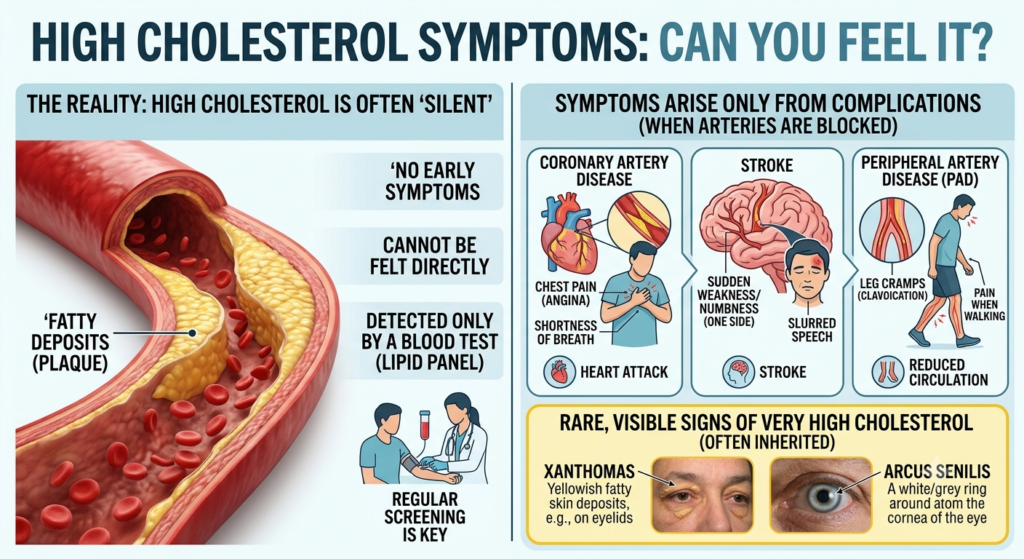
High cholesterol does not produce any symptoms on its own because it quietly accumulates in the walls of your blood vessels, and there is nothing in your nervous system that can recognize it. Therefore, doctors refer to it as “a silent disease.”
It is likely that what you will encounter are the symptoms that occur due to the damage of your arteries; chest pain, leg pain, or breathing difficulties but only because atherosclerosis will occur as a result of cholesterol buildup.
This is kind of like rust forming inside of your pipes. You will not be able to see the rust, but you will know something is wrong when your pipes are too narrow for water to pass through.
Why High Cholesterol Doesn’t Cause Symptoms
Cholesterol is a waxy, fat-like substance your body needs to build cells, produce hormones, and make vitamin D. Problems start when there’s too much of the “bad” kind circulating in your blood.
Here’s what happens internally:
- LDL cholesterol builds up in the inner walls of your arteries.
- It combines with other substances to form plaque.
- Plaque gradually narrows and stiffens the artery.
- Blood flow becomes restricted, reducing oxygen delivery to organs and tissues.
None of these steps uses any pain receptors. Your arteries do not have any nerves that tell you “too much cholesterol.” You won’t start feeling anything until the flow of blood through your artery becomes too restricted, usually by at least 70% or a plaque causes an embolism.
That’s why the CardioSmart program of the American College of Cardiology points out that a heart attack or a stroke may be your very first indication that you have high cholesterol levels.
Indirect Signs That May Signal a Cholesterol-Related Problem
These aren’t symptoms of high cholesterol on its own. They’re signs that plaque buildup may have already started affecting blood flow — which is why they typically appear later, not early.
1. Chest Pain or Pressure (Angina)
A squeezing, tight, or heavy feeling in the chest, especially during exertion or stress, can mean your heart muscle isn’t getting enough oxygen-rich blood. This is one of the most recognized signs of coronary artery disease caused by cholesterol plaque.
2. Shortness of Breath
If narrowed arteries reduce blood flow to the heart, your body may struggle to keep up with normal activity — leaving you winded walking up stairs or during light exercise.
3. Leg Pain, Cramping, or Numbness When Walking
Known as claudication, this happens when plaque restricts blood flow to the legs — a condition called peripheral artery disease (PAD). The pain typically eases with rest and returns with activity.
4. Numbness, Weakness, or Tingling in Limbs
Reduced circulation to the arms or legs can cause a pins-and-needles sensation or unexplained weakness, particularly on one side of the body.
5. Dizziness or Lightheadedness
When plaque limits blood flow to the brain, you may feel dizzy. If this comes with slurred speech, facial drooping, or vision changes, treat it as a medical emergency — these are stroke warning signs.
6. Fatigue
When your heart has to work harder to push blood through narrowed arteries, you may feel unusually tired — even after adequate rest.
7. Xanthomas (Yellowish Skin Bumps)
These are fatty deposits that form under the skin, often on the elbows, knees, eyelids, or buttocks. They’re more common in people with very high cholesterol (300+ mg/dL) or genetic conditions like familial hypercholesterolemia.
8. Corneal Arcus (A Ring Around the Iris)
A pale, grayish-white ring around the colored part of the eye can indicate cholesterol deposits. It’s common with age but is considered a warning sign of abnormal lipid levels when it appears in adults under 45.
9. Irregular Heartbeat (Palpitations)
Skipped beats or a fluttering sensation can occur when cholesterol-related artery narrowing affects the heart’s rhythm. Combined with high cholesterol, arrhythmias raise the risk of heart failure and stroke.
10. Erectile Dysfunction
Reduced blood flow doesn’t only affect the heart and legs. In men, narrowed arteries can also impair blood flow needed for erections, sometimes appearing before other cardiovascular symptoms do.
Important: Each of these symptoms can also be associated with something that is not related to cholesterol – stress, dehydration, lack of sleep, or other factors. Do not diagnose yourself. If any of these symptoms have become recurrent or troubling, consult your physician.
Quick Reference: Symptom vs. What It Actually Means
| What You Might Notice | What’s Likely Happening | Urgency |
|---|---|---|
| Chest tightness during activity | Reduced blood flow to heart (angina) | See a doctor soon |
| Sudden numbness, slurred speech, facial drooping | Possible stroke | Call emergency services immediately |
| Leg cramping when walking, relieved by rest | Peripheral artery disease | Schedule an appointment |
| Yellow bumps on skin | Xanthomas from very high cholesterol | Get a lipid panel |
| Grayish ring around iris (under 45) | Corneal arcus, possible lipid disorder | Get tested |
| Persistent fatigue | Heart working harder against narrowed arteries | Discuss with your doctor |
| Chest pain + nausea + sweating + shortness of breath | Possible heart attack | Call emergency services immediately |
High Cholesterol Symptoms in Women vs. Men
Symptoms and risk patterns can differ by sex:
- Women more often report vague symptoms like fatigue, “brain fog,” or breathlessness rather than classic chest pain — which can delay diagnosis. Risk also tends to climb after menopause, when estrogen’s protective effect on cholesterol declines.
- Men are more likely to develop high cholesterol earlier in life and more frequently report classic chest pain or pressure.
Because symptoms in women are easier to dismiss as stress or tiredness, routine screening matters even more for women who don’t fit the “typical” symptom picture.
Who’s at Risk — Even Without Symptoms
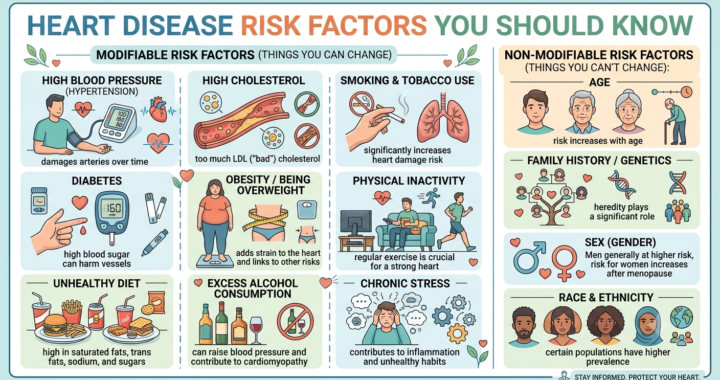
You can have high cholesterol regardless of age, weight, or how healthy you look. Key risk factors include:
- Diet high in saturated fat, trans fat, and processed foods
- Physical inactivity
- Smoking, which lowers HDL (“good”) cholesterol
- Obesity or excess weight, especially around the waist
- Age — risk rises for men after 45 and for women after 55
- Family history, including familial hypercholesterolemia (FH), a genetic condition causing dangerously high LDL from birth
- Diabetes, thyroid disorders, and certain kidney or liver conditions
- Excessive alcohol use
If several of these apply to you, don’t wait for symptoms. Ask your doctor about testing now.
The Only Reliable Way to Know: A Lipid Panel
Since symptoms are unreliable, a simple blood test called a lipid panel is the only accurate way to check your cholesterol. It measures:
- Total cholesterol
- LDL (“bad” cholesterol)
- HDL (“good” cholesterol)
- Triglycerides
What the Numbers Mean
| Category | Total Cholesterol | LDL | HDL |
|---|---|---|---|
| Desirable | Below 200 mg/dL | Below 100 mg/dL | 60 mg/dL or higher (protective) |
| Borderline high | 200–239 mg/dL | 130–159 mg/dL | 40–59 mg/dL |
| High | 240 mg/dL or above | 160 mg/dL or above | Below 40 mg/dL (a risk factor) |
Ranges are general guidelines. Your doctor will interpret your results alongside your personal risk factors, such as age, blood pressure, and family history.
How Often Should You Test?
- Most healthy adults: every 4–6 years, starting around age 20
- People with diabetes, heart disease, or a family history of high cholesterol: more frequently, as advised by your doctor
- Children and teens: at least once between ages 9–11, and again between 17–21
You’ll typically be asked to fast for 9–12 hours beforehand for the most accurate results, although some newer tests don’t require fasting — ask your provider which applies to you.
What Untreated High Cholesterol Can Lead To
Left unmanaged, high cholesterol contributes to several serious conditions:
- Heart attack — from a ruptured plaque blocking blood flow to the heart
- Stroke — from a clot cutting off blood flow to the brain
- Peripheral artery disease — reduced circulation to the limbs, sometimes leading to tissue damage
- Coronary artery disease — long-term narrowing of the heart’s arteries
- Kidney disease — from restricted blood flow to the kidneys over time
The encouraging news: high cholesterol is one of the most manageable cardiovascular risk factors when caught early.
What to Do If You’re Diagnosed
A high cholesterol diagnosis isn’t a life sentence. Most people can bring their numbers down through a combination of lifestyle changes and, when needed, medication.
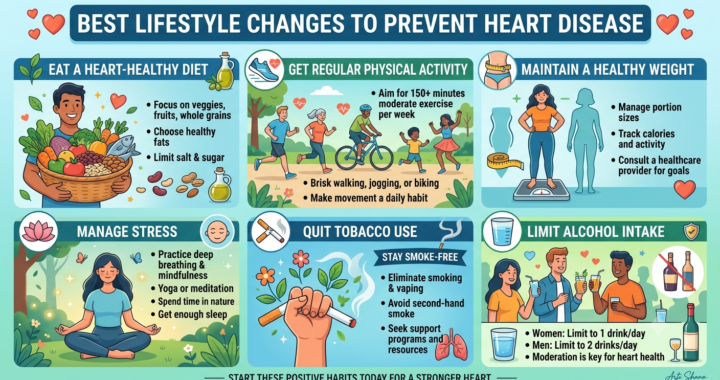
Lifestyle steps that make a measurable difference:
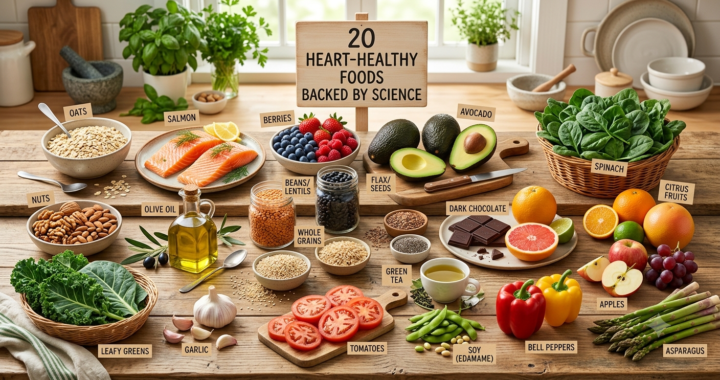
- Reduce saturated and trans fats; favor unsaturated fats (olive oil, nuts, avocado)
- Add soluble fiber (oats, beans, fruit) to help lower LDL
- Get at least 150 minutes of moderate exercise weekly
- Quit smoking — this alone can raise HDL within weeks
- Limit alcohol
- Maintain a healthy weight
When lifestyle changes aren’t enough, your doctor may recommend statins or other cholesterol-lowering medications. These are common, well-studied, and significantly reduce heart attack and stroke risk in people who need them.
Frequently Asked Questions
Can you feel high cholesterol in your body?
No. High cholesterol itself doesn’t cause any physical sensation. Any symptoms people associate with it — chest pain, leg cramping, fatigue — actually come from artery damage caused by cholesterol over time, not from the cholesterol itself.
What does high cholesterol feel like?
For most people, it doesn’t feel like anything. If artery blockage has progressed, you might notice chest tightness during activity, breathlessness, leg pain when walking, or fatigue. But these are late-stage signs, not early warnings.
What are the first signs of high cholesterol?
There typically aren’t any early signs. This is why it’s called a “silent” condition. The only reliable way to catch it early is a lipid panel blood test, before any symptoms develop.
How do I know if I have high cholesterol without a blood test?
You can’t know for certain without testing. Physical signs like xanthomas (skin bumps) or corneal arcus (a ring around the iris) can suggest very high levels, but many people with high cholesterol show no visible signs at all.
What cholesterol level is considered dangerous?
A total cholesterol level of 240 mg/dL or higher is considered high. LDL above 160 mg/dL is also concerning, particularly when combined with low HDL (below 40 mg/dL) or other risk factors like diabetes or smoking.
Can high cholesterol cause headaches or dizziness?
Cholesterol itself doesn’t directly cause headaches. But if plaque buildup reduces blood flow to the brain, dizziness can occur. Dizziness paired with slurred speech, weakness, or vision changes needs emergency care, since it may signal a stroke.
Does high cholesterol make you tired?
It can, indirectly. If your arteries are narrowed, your heart works harder to circulate blood, which can leave you feeling fatigued even without exertion. Fatigue alone isn’t a reliable sign, though, since it has many other causes.
At what age should you start checking your cholesterol?
Most guidelines recommend a first check between ages 9 and 11, another between 17 and 21, and then every 4 to 6 years in adulthood. People with risk factors like family history or diabetes may need more frequent testing at any age.
Is high cholesterol reversible?
Cholesterol levels can absolutely improve with diet, exercise, weight loss, and, when necessary, medication. While existing plaque may not fully disappear, lowering LDL and raising HDL reduces the risk of further buildup and future cardiovascular events.
Can you have high cholesterol and still be thin?
Yes. Cholesterol levels are influenced by genetics, diet, and liver function — not just body weight. Thin, active people can have high cholesterol, and people who are overweight can have normal levels. This is another reason testing matters more than appearance.
Key Takeaways
- High cholesterol has no direct symptoms — it’s a silent condition detectable only through a blood test.
- Warning signs like chest pain, leg cramping, or fatigue usually mean artery damage has already begun, not that cholesterol is simply “high.”
- Xanthomas and corneal arcus are visible signs, but they typically only appear with very high or genetic cholesterol conditions.
- Symptoms differ between men and women, and can be easy to dismiss as stress or aging.
- A lipid panel is the only reliable way to know your numbers — testing every 4–6 years is recommended for most healthy adults.
- High cholesterol is highly manageable through lifestyle changes and, when needed, medication.
Don’t wait to feel something before you check. If it’s been more than a few years since your last cholesterol test — or you’ve never had one — talk to your doctor about scheduling a lipid panel. It’s a quick, inexpensive test that can catch a silent risk before it becomes a loud emergency.