
Heart Disease Risk Factors You Should Know
Heart disease kills someone in the United States every 34 seconds. It remains the leading cause of death for men, women, and most racial and ethnic groups. Yet many of the biggest risk factors are silent. You could have one right now and not feel a thing.
That’s what makes this topic so important. Heart disease is not random. It builds slowly, often over decades, driven by a small set of well-documented risk factors. Some of these you cannot change. Most of them, you can.
This guide breaks down every major risk factor for heart disease, backed by data from the CDC and the American Heart Association. You will learn which factors matter most, which ones you can act on today, and how to find out where you stand.
What Counts as a Risk Factor for Heart Disease?
A risk factor is any condition, habit, or trait that raises your odds of developing cardiovascular disease. Having one risk factor does not guarantee you will develop heart disease. Having several, especially left unmanaged, stacks the odds against you.
Doctors group these factors into two broad categories:
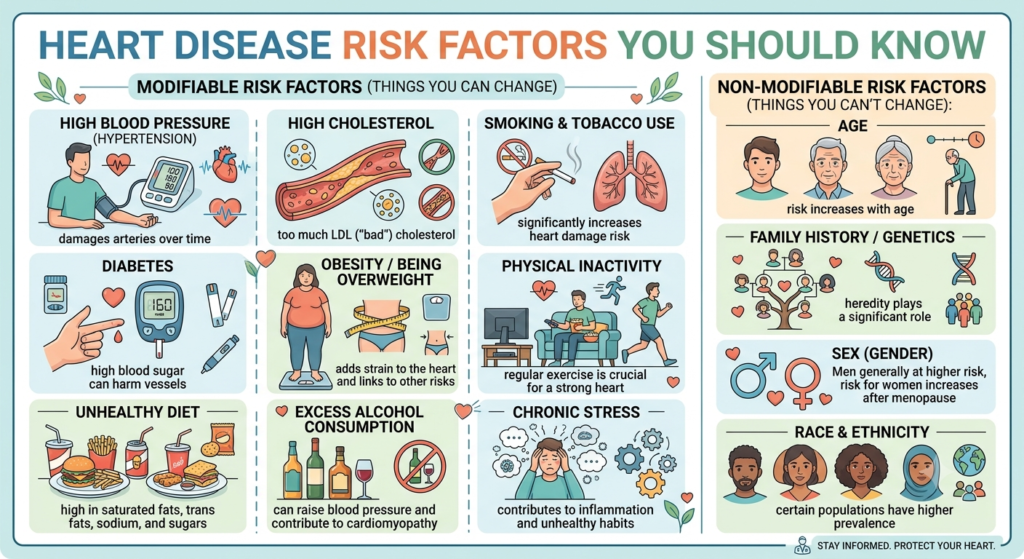
- Non-modifiable risk factors. Traits you are born with or that come with age. You cannot change these, but you should know them.
- Modifiable risk factors. Habits and health conditions you can influence through lifestyle changes, medication, or medical care.
Understanding both categories helps you build an accurate picture of your personal risk, instead of guessing.
Non-Modifiable Risk Factors
These factors are fixed, but they still shape how aggressively you should manage everything else on this list.
Age
Risk rises steadily after age 45 for men and age 55 for women. Blood vessels naturally stiffen over time, and plaque can build up for decades before symptoms appear.
Sex
Men tend to develop heart disease earlier in life. Women’s risk climbs sharply after menopause, when estrogen’s protective effect fades. Heart disease is still the leading cause of death in women overall.
Family History and Genetics
Your risk increases if a father or brother had heart disease before age 55, or a mother or sister before age 65. Inherited conditions like familial hypercholesterolemia can also raise cholesterol from birth.
Race and Ethnicity
The blacks in America suffer from higher incidences of high blood pressure and heart disease deaths compared to most other races. South Asians have a high risk of heart problems because of their genetic background and cholesterol and insulin response problems.
Modifiable Risk Factors: The Ones You Can Control
This is where prevention happens. The CDC names high blood pressure, high cholesterol, and smoking as the three biggest drivers of heart disease. Several other conditions compound that risk.
1. High Blood Pressure (Hypertension)
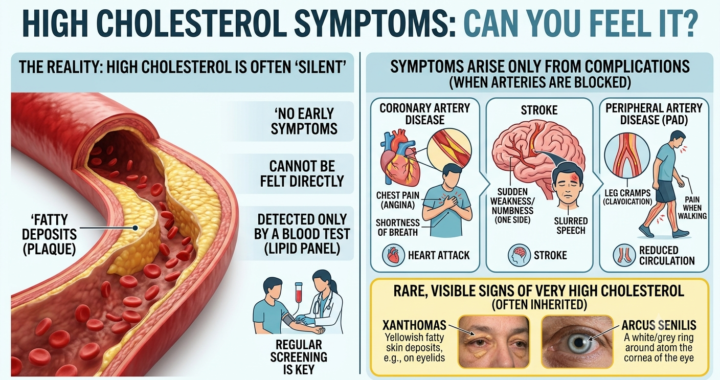
High blood pressure forces your heart to work harder and damages artery walls over time. It is often called a “silent killer” because it rarely causes symptoms until damage is done.
- Normal: below 120/80 mmHg
- Elevated: 120-129 systolic, below 80 diastolic
- High (Stage 1): 130-139 systolic or 80-89 diastolic
- High (Stage 2): 140/90 mmHg or higher
Nearly half of U.S. adults have high blood pressure, and many do not know it.
2. High Cholesterol
Cholesterol itself is not the enemy. The problem is imbalance. Too much LDL (“bad”) cholesterol builds plaque inside arteries. Too little HDL (“good”) cholesterol means less help clearing that plaque out.
| Cholesterol Type | Healthy Level | Why It Matters |
|---|---|---|
| LDL | Under 100 mg/dL | Builds artery-clogging plaque |
| HDL | 60 mg/dL or higher | Helps remove excess cholesterol |
| Triglycerides | Under 150 mg/dL | High levels linked to artery hardening |
| Total Cholesterol | Under 200 mg/dL | General screening marker |
3. Smoking and Nicotine Use
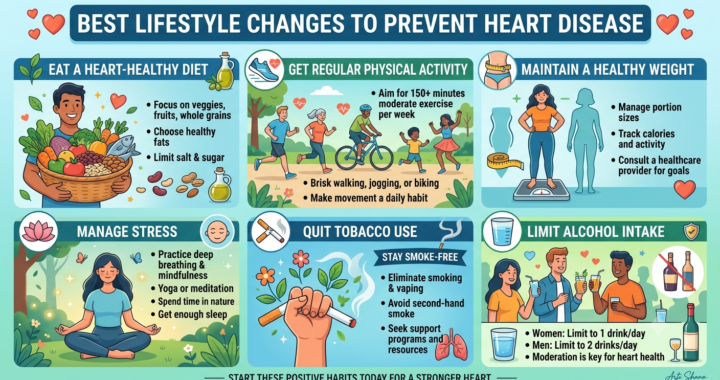
Smoking damages blood vessel linings, lowers oxygen in the blood, and raises blood pressure. Even secondhand smoke and vaping carry cardiovascular risk. Quitting smoking cuts heart disease risk significantly within just one to two years.
4. Diabetes and High Blood Sugar
High blood sugar damages blood vessels and nerves that control the heart over time. Adults with diabetes are roughly twice as likely to develop heart disease as those without it. Even prediabetes raises risk.
5. Obesity and Excess Body Weight
Carrying extra weight, especially around the abdomen, is linked to high blood pressure, high cholesterol, and diabetes. Body mass index (BMI) and waist circumference both help estimate this risk.
6. Physical Inactivity
A sedentary lifestyle weakens the heart muscle and contributes to weight gain, high blood pressure, and poor cholesterol. The American Heart Association recommends at least 150 minutes of moderate activity per week.
7. Unhealthy Diet
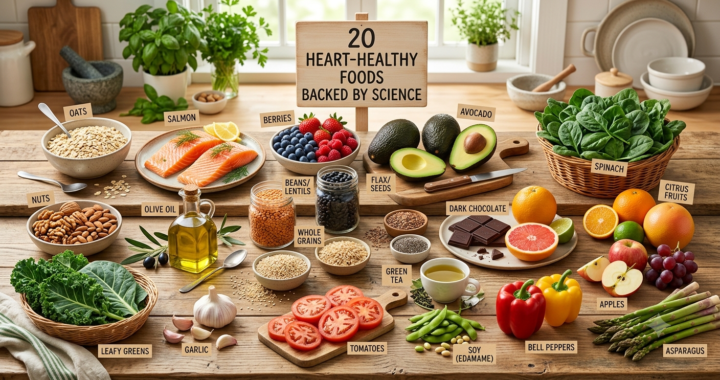
Diets high in sodium, added sugar, refined carbs, and saturated fat drive up blood pressure and cholesterol. A heart-healthy diet centers on vegetables, fruit, whole grains, lean protein, and healthy fats like olive oil.
8. Excessive Alcohol Use
Heavy drinking raises blood pressure and can weaken the heart muscle over time, a condition called cardiomyopathy. Moderation matters more than complete avoidance for most adults.
9. Chronic Stress
Ongoing stress raises cortisol and adrenaline, both of which strain the cardiovascular system. Stress also fuels other risk factors, including poor sleep, overeating, and smoking.
10. Poor Sleep
Adults who sleep less than seven hours a night, or who have untreated sleep apnea, face higher rates of high blood pressure and heart disease. Sleep is now recognized as a core pillar of heart health, not an afterthought.
Lesser-Known Risk Factors Worth Knowing
Beyond the classic list, research points to several additional contributors that often get overlooked.
- Chronic inflammation. Conditions like rheumatoid arthritis and lupus raise cardiovascular risk independent of traditional factors.
- Pregnancy complications. Preeclampsia and gestational diabetes signal higher lifetime cardiovascular risk for the mother.
- Air pollution. Long-term exposure to fine particulate matter is linked to higher rates of heart attack and stroke.
- Social and economic factors. Limited access to healthcare, healthy food, and safe places to exercise all shape heart disease rates across communities.
- Kidney disease. Reduced kidney function often travels alongside high blood pressure and raises cardiovascular risk.
Life’s Essential 8: The AHA Framework for Heart Health
The American Heart Association consolidated the most important, controllable factors into a single framework called Life’s Essential 8. Scoring well across these eight areas is strongly linked to a lower lifetime risk of heart disease.
| Component | Goal |
|---|---|
| Diet | Whole foods, vegetables, fruit, lean protein, healthy oils |
| Physical Activity | 150+ minutes moderate activity weekly |
| Nicotine Exposure | No smoking or vaping |
| Sleep | 7-9 hours nightly for adults |
| Body Weight | BMI under 25 |
| Blood Lipids | Healthy LDL, HDL, and triglyceride levels |
| Blood Glucose | Fasting glucose under 100 mg/dL |
| Blood Pressure | Below 120/80 mmHg |
Improving even one or two of these areas measurably lowers cardiovascular risk over time.
How to Find Out Your Own Risk
You do not need to guess. A few simple steps give you a clear picture.
- Get your numbers checked. Ask your doctor for blood pressure, cholesterol, and blood glucose readings at your next visit.
- Ask about a risk calculator. Tools like the ASCVD Risk Estimator combine your age, sex, cholesterol, blood pressure, and smoking status into a 10-year risk score.
- Review your family history. Share details about parents’ and siblings’ heart health with your doctor.
- Track your weight and waist size. Both are simple, useful markers your doctor can help you interpret.
- Discuss any new symptoms promptly. Chest discomfort, shortness of breath, or unusual fatigue deserve a conversation with a healthcare provider, not a guess.
Practical Steps to Lower Your Risk Starting Today
Small, consistent changes add up. Focus on the habits with the biggest payoff first.
- Take a walk for 30 minutes most days of the week.
- Replace soda with water.
- Eat one more serving of vegetables at dinnertime.
- Maintain regular sleeping and waking times.
- Make sure to get your blood pressure and cholesterol tested once a year.
- In case you smoke, seek advice from your physician on smoking cessation methods.
- Allow some time to relax and de-stress during work hours.
None of these require perfection. Progress compounds, and even modest improvements in blood pressure or weight translate into measurably lower heart disease risk.
Frequently Asked Questions
What is the number one risk factor for heart disease? High blood pressure is generally considered the single biggest risk factor, since it silently damages arteries over many years without symptoms.
Can heart disease be reversed? Some effects, like plaque buildup, can be slowed or partially reversed through aggressive lifestyle changes, medication, and in some cases procedures. Early action gives the best results.
At what age should I start worrying about heart disease? Risk factors can build from a young age, so heart-healthy habits matter in your 20s and 30s. Regular screening typically starts by age 20, with more frequent checks after 40.
Does stress really cause heart disease? Chronic stress raises blood pressure and often leads to other risk factors like poor sleep, overeating, or smoking, all of which contribute to heart disease over time.
Is heart disease hereditary? Family history raises your risk, but genetics are not destiny. Lifestyle choices still play a major role even for people with a strong family history.
What are the warning signs of heart disease? Common signs include chest pain or pressure, shortness of breath, fatigue, and pain spreading to the arm, jaw, or back. Women sometimes experience subtler symptoms like nausea or fatigue.
Can young people get heart disease? Yes. Rising rates of obesity, diabetes, and sedentary habits mean more younger adults are now developing risk factors earlier than previous generations.
Key Takeaways
Heart disease results from a combination of things that you cannot do anything about and those that you can. The following contribute to heart disease: hypertension, high cholesterol levels, smoking, diabetes, obesity, poor eating habits, lack of physical exercise, and lack of adequate rest.
The positive side: Most of the above factors react positively to simple and manageable interventions. Just start with one thing, then have your readings taken.