
Someone in the United States has a heart attack every 40 seconds. Many of them have no idea it’s happening — because they’re waiting for the crushing chest pain they’ve seen in movies, and it never comes.
And that’s the danger. “Heart attack isn’t always what you think it looks like. The signs can be so subtle, especially in women, that they can be confused for the flu, acid reflux or plain exhaustion. While men tend to have more “classic” symptoms, atypical warning signs still happen more often than people realize.
This guide describes exactly what a heart attack feels like for men and for women, why the symptoms are different, and what to do the minute you feel them. Such knowledge could save your life, or that of another.
Most Common Heart Attack Symptoms
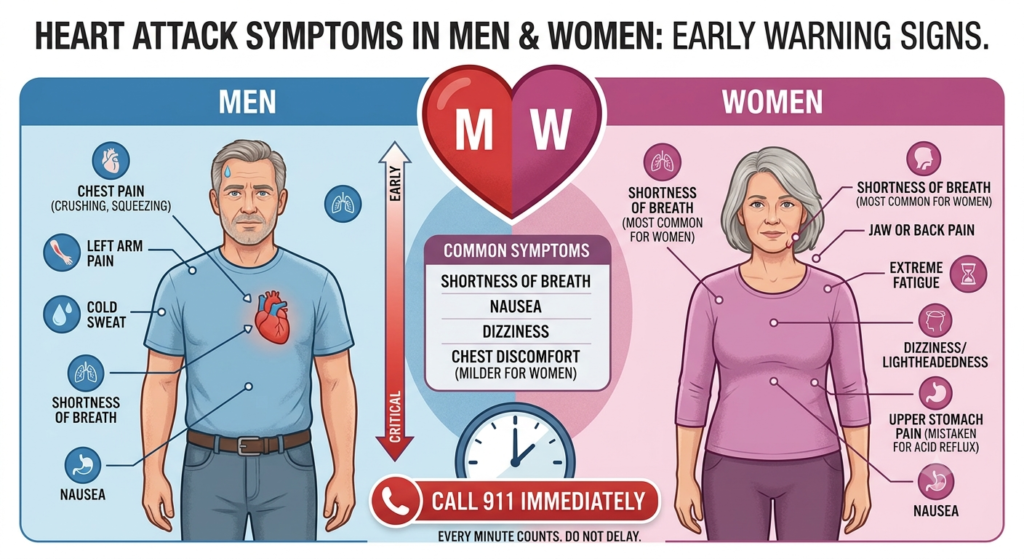
Chest pain or pressure is the single most reported symptom in both men and women. But it’s not the only one, and it’s not always present. Other frequent warning signs include:
- Pressure, squeezing, or tightness in the chest that lasts more than a few minutes
- Pain spreading to the arm, jaw, neck, back, or upper stomach
- Shortness of breath, with or without chest discomfort
- Cold sweat, nausea, or lightheadedness
- Unusual, unexplained fatigue
If you or someone near you has any combination of these, call 911 right away. Don’t wait to see if it passes.
Heart Attack Symptoms in Men
Men are somewhat more likely to experience the “textbook” heart attack presentation, though it’s rarely as clean as television makes it look.
Common symptoms in men include:
- Chest pain or pressure — often described as squeezing, burning, or a heavy weight on the chest
- Pain radiating to the left arm — a classic but frequently overlooked sign
- Shortness of breath — may appear before, during, or without chest pain
- Cold sweats — sudden, unexplained sweating with no physical exertion
- Jaw, neck, or upper back pain
- Nausea or lightheadedness
Men also tend to develop heart disease and have their first heart attack earlier in life than women. Data from the American Heart Association puts the average age of a first heart attack at around 65 for men, compared with about 72 for women. Contributing factors include abdominal obesity, smoking, and higher rates of unmanaged blood pressure in midlife.
Heart Attack Symptoms in Women
Women are just as likely as men to have chest pain during a heart attack — that’s an important myth to correct. What’s different is that women are more likely to have additional symptoms alongside it, which can muddy the picture and delay a correct diagnosis.
Symptoms more common in women include:
- Shortness of breath, sometimes without any chest discomfort at all
- Unusual fatigue, even from mild activity, that can build for days beforehand
- Nausea or vomiting
- Pain in the neck, jaw, shoulder, upper back, or upper abdomen
- Dizziness or a sudden cold sweat
- Heartburn-like discomfort that’s mistaken for indigestion
These symptoms overlap with common complaints – stress, the flu, acid reflux – so women tend to shrug them off or wait before seeking care. That lag counts. Women statistically are more likely to die from a heart attack than men, largely because they take longer to recognize and treat the symptoms.
Cardiologists are increasingly ditching the word ‘atypical’ to describe these symptoms in women, because they aren’t rare – they’re just less recognized by the public, and historically, by clinicians as well.
Men vs. Women: Symptom Comparison Table
| Symptom | More common in men | More common in women |
|---|---|---|
| Chest pain/pressure | Yes (classic presentation) | Yes (equally common, but may be milder) |
| Pain down the left arm | Very common | Less consistent |
| Shortness of breath | Common | Common, sometimes the only symptom |
| Nausea or vomiting | Occasional | Frequent |
| Unusual fatigue (days before) | Uncommon | Frequent early warning sign |
| Jaw, neck, or back pain | Occasional | Frequent |
| Cold sweat | Common | Common |
| Silent heart attack (no clear symptoms) | Occurs, especially with diabetes | More frequent overall |
Silent Heart Attacks: When There Are No Obvious Signs
Not every heart attack announces itself. A silent heart attack happens with mild or no noticeable symptoms, yet it still damages the heart muscle. Research suggests close to 1 in 3 heart attacks involve little or no chest pain, and this pattern shows up more often in:
- Women
- People with diabetes (nerve damage can dull pain signals)
- Older adults
“Silent Heart Attacks Are Usually Discovered Later On Through EKGs or Images Done for Some Other Reason.” This is another good reason why routine examinations and being aware of risk factors are important, even if you have no symptoms.
Why Do Symptoms Differ Between Men and Women?
The difference comes down to biology, not just perception.
Smaller blood vessels. Women tend to have smaller hearts and coronary arteries. Blockages often form in the tiny vessels that feed the heart, a condition called coronary microvascular disease, rather than in one large, easily identified artery. This produces a different pattern of pain.
Hormonal shifts. Estrogen offers some protective effect on the cardiovascular system before menopause. Once estrogen drops after menopause, a woman’s risk of heart disease rises sharply, often catching women and their doctors off guard.
Pain processing differences. Nerve involvement and pain referral patterns can vary by sex, which is part of why women more often feel pain in the jaw, back, or stomach instead of the classic chest clutch.
Risk Factors: Shared and Sex-Specific
Most heart attack risk factors apply to everyone, but a few are more tied to one sex than the other.
Shared risk factors:
- High blood pressure
- High LDL cholesterol
- Smoking or vaping
- Type 2 diabetes
- Obesity, especially abdominal fat
- Physical inactivity
- Family history of early heart disease
- Chronic stress
More common or unique to women:
- Preeclampsia or high blood pressure during pregnancy
- Gestational diabetes
- Menopause and declining estrogen
- Autoimmune conditions such as lupus, which raise cardiovascular risk
- Depression, which appears to affect women’s heart risk more strongly than men’s
More common or unique to men:
- Earlier onset of coronary artery disease
- Higher rates of abdominal obesity in midlife
- Testosterone-related changes affecting cholesterol and blood pressure over time
What to Do If You Suspect a Heart Attack
- Call 911 immediately. Don’t drive yourself unless there is truly no other option — paramedics can start treatment before you even reach the hospital.
- Sit down and stay calm. Try to remain still while waiting for help to reduce strain on the heart.
- Chew an aspirin only if previously advised by a doctor. Aspirin can interact with other medications, so don’t take it on your own if you haven’t been told it’s safe.
- Describe every symptom to responders, even ones that don’t seem heart-related. Mention risk factors like high blood pressure, high cholesterol, or a family history of early heart attacks.
- Don’t wait to “see if it passes.” Heart muscle starts dying within minutes of a blocked artery. Every minute of delay increases the damage.
Conditions That Can Mimic a Heart Attack
Not every chest symptom is a heart attack, but you should never try to self-diagnose in the moment. Conditions that can produce similar sensations include:
- Panic attacks — sharp, short-lived chest pain with rapid heartbeat and a sense of dread
- GERD or acid reflux — burning chest pain that can feel remarkably similar to cardiac pain
- Muscle strain — pain that worsens with movement or deep breathing
- Stroke — arm weakness or facial drooping points toward stroke rather than heart attack
Because these overlap so closely, emergency evaluation is the only reliable way to tell the difference.
Protecting Your Heart: Prevention Basics
You can’t change your age, sex, or family history, but most other risk factors are within your control.
- Check blood pressure, cholesterol, and glucose levels regularly
- Exercise daily or almost every day
- Have a diet of vegetables, grains, and protein sources
- Stop smoking and reduce alcohol consumption
- Control stress using sleep, exercise, or other strategies
- Find out from your physician what your individual score is, particularly after 40 or problems during pregnancy
Frequently Asked Questions
What is usually the first sign of a heart attack?
Chest pain, pressure, or tightness is the most common first sign in both men and women. It may come on suddenly or build gradually over minutes. In women, unusual fatigue or shortness of breath sometimes shows up first, even before chest discomfort.
Can you have a heart attack without chest pain?
Yes. This is sometimes called a silent heart attack, and it’s more common in women, older adults, and people with diabetes. Symptoms may be limited to fatigue, shortness of breath, nausea, or a vague sense that something is wrong.
How do heart attack symptoms in women differ from a panic attack?
Panic attacks typically bring sharp, localized chest pain that peaks quickly and eases within 10 to 20 minutes, often alongside intense fear. Heart attack symptoms tend to build, spread to the arm, jaw, or back, and come with physical signs like cold sweat or shortness of breath. When in doubt, seek emergency care rather than guessing.
What are early warning signs that appear days before a heart attack?
Some people notice unusual fatigue, mild chest discomfort, shortness of breath, or disrupted sleep for days or even weeks beforehand. These early signals are more frequently reported by women and are easy to dismiss as stress or being run down.
Are heart attack symptoms different for older adults?
Yes. Older adults, along with people who have diabetes, are more likely to experience subtle or silent symptoms rather than intense chest pain. Shortness of breath and confusion can be more prominent in this group.
When should I call 911 instead of waiting to see a doctor?
Call 911 immediately if symptoms last more than a few minutes, especially chest pressure combined with shortness of breath, sweating, nausea, or pain spreading to the arm, jaw, or back. Never wait for symptoms to resolve on their own or plan to drive yourself to the hospital.
Key Takeaways
- Chest pain is the most frequent symptom of a heart attack in men and women alike; however, this is not the only sign of the onset of heart attack.
- Women tend to have other, less-frequent signs such as weakness, nausea, and discomfort in the back or jaw area.
- Heart attacks can happen quietly without noticeable symptoms, particularly in women, elderly patients, and individuals with diabetes.
- Identifying the factors that make you susceptible to a heart attack and taking quick action will preserve your cardiac muscles and save your life.
- In case of uncertainty, contact 911 as it is always better to be safe than sorry.