
You’ve been drinking more water than usual. You’re up twice a night to pee. Your vision blurs when you read your phone. Easy to brush off as “just stress” or “getting older” except these are three of the most common early signs of diabetes, and over 11 million Americans currently have the condition without knowing it.
That’s not a small gap. It’s the difference between catching diabetes while it’s manageable and discovering it after it’s already damaged your kidneys, eyes, or nerves. An estimated 27.6% of adults with diabetes in the U.S. are undiagnosed about 11 million people.
This guide breaks down the early warning signs of diabetes, how symptoms differ between type 1 and type 2, which signs need emergency care, and exactly what to do if you recognize yourself in this list. It’s written to help you act, not panic.
Key Takeaways
- Frequent urination, excessive thirst, and fatigue are the three most common early diabetes symptoms.
- Type 1 diabetes symptoms appear fast sometimes within days or weeks. Type 2 develops slowly and can hide for years.
- Slow-healing cuts, tingling feet, blurry vision, and recurring infections are signs blood sugar has already been high for a while.
- Nausea, vomiting, fruity-smelling breath, and confusion are emergency warning signs — don’t wait, get medical care immediately.
- A simple blood test (A1C or fasting glucose) is the only way to confirm diabetes. Symptoms alone aren’t a diagnosis.
What Is Diabetes, in Plain Terms?
When you eat, your body turns food into glucose (sugar) for energy. Your pancreas releases insulin to move that glucose from your blood into your cells.
Diabetes happens when this system breaks down in one of two ways:
- Type 1 diabetes: Your pancreas makes little or no insulin. It’s an autoimmune condition, usually diagnosed in children or young adults, and requires daily insulin for life.
- Type 2 diabetes: Your body still makes insulin, but your cells stop responding to it properly (insulin resistance). This is the most common form, making up roughly 90–95% of all cases, and it’s strongly linked to lifestyle and genetics.
Either way, the result is the same: glucose builds up in your bloodstream instead of fueling your cells. That excess sugar is what causes nearly every symptom on this list.
The 12 Early Warning Signs of Diabetes
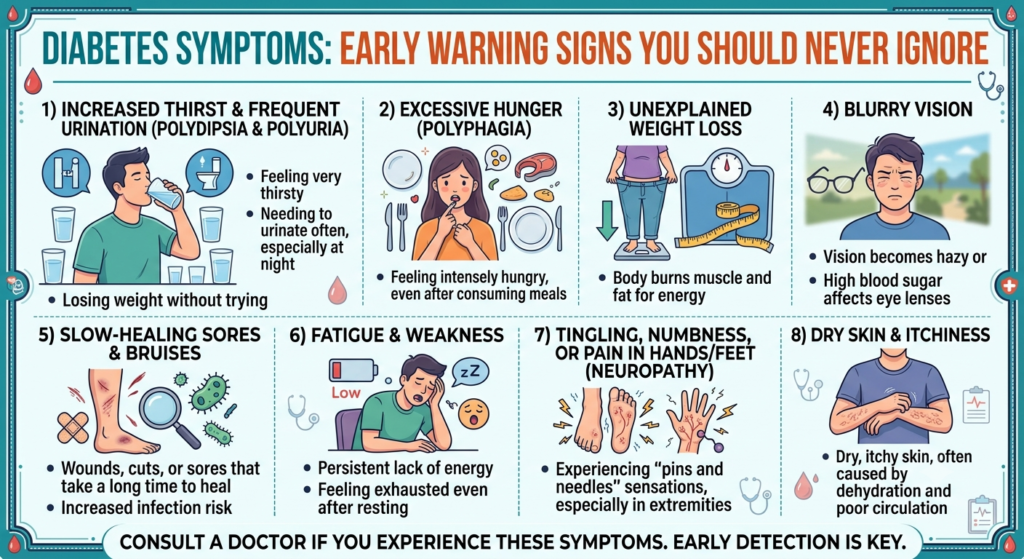
1. Frequent Urination (Polyuria)
When blood sugar rises, your kidneys work overtime trying to filter and flush out the excess glucose. The result: you urinate more often, especially at night. If you’re suddenly waking up two or three times to use the bathroom, it’s worth paying attention to.
2. Excessive Thirst (Polydipsia)
All that extra urination pulls fluid from your tissues, leaving you dehydrated. Your body responds by triggering intense thirst — even if you just drank a full glass of water minutes ago.
3. Constant Fatigue
Glucose is supposed to fuel your cells. When insulin isn’t doing its job, that fuel stays stuck in your bloodstream instead of reaching your muscles and organs. You end up running on empty, even after a full night’s sleep.
4. Unexplained Weight Loss
This one surprises people. If your body can’t use glucose for energy, it starts breaking down fat and muscle instead. Losing weight without dieting or exercising more is a red flag, particularly for type 1 diabetes.
5. Increased Hunger (Polyphagia)
Even after eating, you may feel hungry again quickly. Without enough working insulin, glucose can’t get into your cells — so your body keeps signaling that it needs more fuel, even though your blood sugar is already high.
6. Blurred Vision
High blood sugar pulls fluid from the lenses of your eyes, changing their shape and affecting your ability to focus. This usually improves once blood sugar is under control, but persistent high glucose over time can damage the retina’s blood vessels and lead to lasting vision problems.
7. Slow-Healing Cuts and Bruises
Notice that a small cut or blister is taking far longer than usual to heal? High blood sugar impairs circulation and immune function, which slows the body’s natural repair process. This is one of the more overlooked early diabetes symptoms.
8. Tingling or Numbness in Hands and Feet
Known as peripheral neuropathy, this happens when prolonged high blood sugar starts to damage small nerves, usually beginning in the feet. Tingling, burning, or numbness in your extremities should never be ignored, especially if it’s new.
9. Frequent Infections
High glucose levels create a favorable environment for bacteria and yeast, weakening your immune response. Recurring urinary tract infections, yeast infections, or skin infections — particularly in skin folds — are common early signs, especially in women.
10. Dry, Itchy Skin
Dehydration and poor circulation caused by high blood sugar can leave skin dry, itchy, and prone to irritation, particularly around the hands, feet, and legs.
11. Darkened Skin Patches (Acanthosis Nigricans)
Velvety, dark patches of skin — usually on the neck, armpits, or groin — can signal insulin resistance, a precursor to type 2 diabetes. This sign often appears before a formal diagnosis and is a strong reason to get tested.
12. Irritability and Mood Changes
Blood sugar swings affect brain function. Many people report feeling unusually irritable, anxious, or foggy-headed when glucose levels are out of range — a symptom that’s easy to dismiss as “just a bad week.”
Quick Reference: Symptoms at a Glance
| Symptom | Why It Happens | More Common In |
|---|---|---|
| Frequent urination | Kidneys flushing excess glucose | Type 1 & Type 2 |
| Excessive thirst | Fluid loss from urination | Type 1 & Type 2 |
| Fatigue | Glucose not reaching cells | Type 1 & Type 2 |
| Unexplained weight loss | Body burning fat/muscle for fuel | More common in Type 1 |
| Increased hunger | Cells starved of usable energy | Type 1 & Type 2 |
| Blurred vision | Fluid shifts in the eye lens | Type 1 & Type 2 |
| Slow-healing wounds | Reduced circulation, weak immunity | More common in Type 2 |
| Tingling hands/feet | Early nerve damage | Type 2, develops over time |
| Frequent infections | High glucose feeds bacteria/yeast | More common in Type 2 |
| Dark skin patches | Insulin resistance | Strongly linked to Type 2/prediabetes |
Type 1 vs. Type 2 Diabetes: How Symptoms Differ
The biggest difference isn’t which symptoms show up — it’s how fast.
Type 1 diabetes symptoms tend to appear suddenly, often over days or a few weeks, and they’re usually more severe. It’s most often diagnosed in children, teens, and young adults, though it can occur at any age. Because the body produces little to no insulin, symptoms can escalate quickly toward a dangerous complication called diabetic ketoacidosis (DKA) if untreated.
Type 2 diabetes tends to develop gradually, sometimes over several years, and the early signs can be so mild they go unnoticed. Type 2 diabetes often starts slowly and frequently begins to appear in a person’s mid-40s, though it’s increasingly diagnosed in younger adults due to rising obesity rates.
Early Signs in Women vs. Men
Most diabetes symptoms overlap between sexes, but a few patterns stand out:
- Women are more prone to recurring vaginal yeast infections and urinary tract infections as an early sign, along with symptoms during pregnancy (gestational diabetes) that can affect future type 2 risk.
- Men more often experience reduced muscle mass, lower energy, and in some cases, erectile dysfunction linked to nerve and blood vessel damage from prolonged high blood sugar.
When Diabetes Symptoms Become a Medical Emergency
Some symptoms signal that blood sugar has reached a dangerous level and require immediate medical attention — don’t wait for a scheduled appointment. Call your doctor or go to an emergency room if you experience:
- Persistent nausea or vomiting
- Severe abdominal pain
- Fruity-smelling breath
- Rapid, deep breathing
- Confusion, drowsiness, or difficulty staying awake
- Extreme weakness combined with the above symptoms
These can indicate diabetic ketoacidosis (more common in type 1) or a hyperosmolar hyperglycemic state (more common in type 2) — both are medical emergencies.
Who’s Most at Risk?
Anyone can develop diabetes, but certain factors raise your risk significantly:
- Being overweight or carrying excess weight around the abdomen
- A family history of diabetes
- Age 45 or older
- High blood pressure or abnormal cholesterol
- A sedentary lifestyle
- History of gestational diabetes or prediabetes
- Certain ethnic backgrounds, including Black, Hispanic, Native American, and Asian American populations, which carry higher documented risk
If two or more of these apply to you, regular screening matters even without symptoms — prediabetes and early type 2 diabetes often produce no warning signs at all.
How Diabetes Is Diagnosed
Symptoms alone can’t confirm diabetes — only a blood test can. Your doctor will typically use one or more of the following:
- A1C test — measures average blood sugar over the past two to three months. A1C of 6.5% or higher indicates diabetes.
- Fasting plasma glucose test — measures blood sugar after at least eight hours without eating. A reading of 126 mg/dL or higher indicates diabetes.
- Oral glucose tolerance test — measures blood sugar before and two hours after drinking a sugary solution.
- Random plasma glucose test — used when symptoms are severe and immediate testing is needed.
These tests are quick, widely available, and often covered by insurance as part of routine screening, especially after age 45 or if you have risk factors.
What to Do If You Notice These Symptoms
- Don’t self-diagnose based on symptoms alone. Many of these signs overlap with other conditions. A blood test is the only way to know for sure.
- Schedule a screening, even if symptoms feel mild. Catching prediabetes early gives you the best chance to reverse it through lifestyle changes.
- Track what you notice. Jot down when symptoms started, how often they occur, and any patterns — this helps your doctor make a faster, more accurate assessment.
- Don’t wait on emergency symptoms. Nausea, fruity breath, confusion, or rapid breathing need immediate care, not a wait-and-see approach.
- Ask about your risk factors, not just your symptoms. If you’re over 45, overweight, or have a family history, request screening even if you feel fine.
Frequently Asked Questions
What are the very first signs of diabetes? The earliest and most common signs are increased thirst, frequent urination, and unusual fatigue. These often appear together because they’re all driven by the same cause: glucose building up in the bloodstream.
Can you have diabetes with no symptoms at all? Yes. Type 2 diabetes and prediabetes frequently cause no noticeable symptoms in the early stages. This is why roughly 27.6% of adults with diabetes don’t know they have it until complications develop or routine bloodwork catches it.
How quickly do type 1 diabetes symptoms appear? Type 1 symptoms typically develop fast, often within a few days to a few weeks. They’re usually more intense than type 2 symptoms and can progress to a medical emergency if untreated.
What does diabetic fatigue feel like? It’s different from normal tiredness. People often describe it as a heavy, persistent exhaustion that doesn’t improve with rest or sleep, because the body’s cells aren’t getting the glucose they need for energy.
Is blurry vision always a sign of diabetes? Not always, but sudden or fluctuating blurry vision, especially alongside other symptoms like thirst or fatigue, is common enough that it’s worth mentioning to your doctor.
Can stress cause diabetes-like symptoms? Stress can cause fatigue, irritability, and even temporary blood sugar spikes, which can mimic some diabetes symptoms. That overlap is exactly why testing, not guessing, is the right next step.
What’s the difference between prediabetes and diabetes symptoms? Prediabetes usually has no symptoms at all, which is why screening matters even when you feel fine. By the time noticeable symptoms appear, blood sugar has often been elevated for a while.
How is diabetes diagnosed if I have symptoms? Your doctor will order an A1C test, fasting glucose test, or both. A single test is often confirmed with a second test on a different day unless symptoms and glucose levels are both clearly elevated.
Can diabetes symptoms come and go? Mild symptoms can fluctuate, especially early on, as blood sugar levels rise and fall throughout the day. This doesn’t mean the underlying condition is going away — it still needs to be evaluated.
What should I do if I think I have diabetes? Book an appointment with your doctor for blood sugar testing. If you’re experiencing severe symptoms like vomiting, confusion, or fruity breath, seek emergency care right away instead of waiting for an appointment.
The Bottom Line
Diabetes rarely announces itself loudly. It shows up as a little more thirst, a little more fatigue, a cut that heals a little slower than usual. Individually, these signs are easy to explain away. Together, they’re a pattern worth taking seriously.
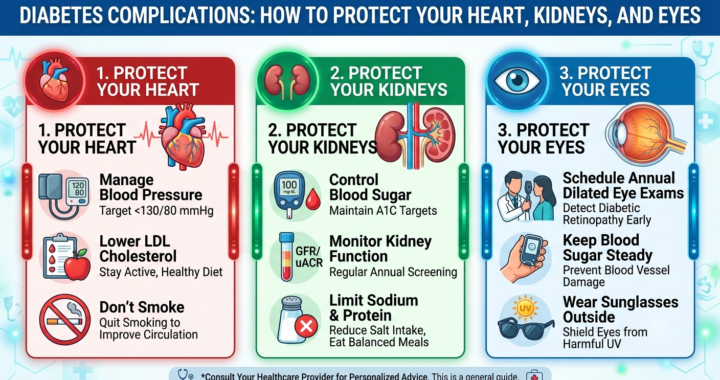
The good news: diabetes and prediabetes are among the most manageable chronic conditions when caught early. A simple blood test can give you a clear answer, and from there, you and your doctor can build a plan that protects your kidneys, eyes, nerves, and heart for the long run.
If any of these symptoms sound familiar, don’t wait for them to get worse. Book a screening with your doctor this week — early detection is still your best tool against diabetes.