
You’ve got your blood sugar numbers memorized. You know your A1C. But here’s what a lot of people with diabetes don’t hear enough about: the real danger isn’t just the number on your glucose meter it’s what high blood sugar quietly does to your blood vessels over time.
Diabetes is the leading cause of adult blindness, kidney failure, and non-traumatic lower-limb amputation in the United States. It also doubles to quadruples your risk of heart disease. That sounds alarming and it should get your attention but here’s the part that matters more: most of this damage is preventable, and much of it is reversible if you catch it early.
This guide breaks down exactly how diabetes affects your heart, kidneys, and eyes, what warning signs to watch for, and the specific, evidence-based steps that actually lower your risk. No fear-mongering. Just what you need to know and do.
Why Diabetes Affects So Many Organs at Once
It helps to understand the “why” before the “what.” Diabetes complications aren’t random — they all trace back to one root cause. Persistently high blood sugar damages the lining of your blood vessels. Over months and years, this damage:
- Makes blood vessels stiffer and narrower
- Encourages plaque buildup in larger arteries
- Weakens the tiny capillaries that feed your eyes, kidneys, and nerves
- Triggers inflammation that speeds up further damage
Doctors split diabetes complications into two categories:
| Type | What It Means | Organs Affected |
|---|---|---|
| Macrovascular | Damage to large blood vessels | Heart, brain, legs |
| Microvascular | Damage to small blood vessels | Eyes, kidneys, nerves |
Your heart, kidneys, and eyes are especially vulnerable because they rely on dense networks of blood vessels — large and small — to function. When those vessels are compromised, the organs they supply start to break down.
The encouraging news: research from major trials like the DCCT and UKPDS shows that keeping blood sugar, blood pressure, and cholesterol within target ranges dramatically cuts the risk of complications in all three organs — sometimes at the same time, with the same interventions.
Diabetes and Your Heart: The Connection Most People Underestimate
Heart disease is the number one cause of death for people with diabetes, yet it’s often the complication people worry about least — because it doesn’t always come with obvious symptoms.
How Diabetes Damages the Heart
High blood sugar contributes to heart problems in several ways:
- Accelerated plaque buildup in the coronary arteries (atherosclerosis)
- Higher LDL (“bad”) cholesterol and lower HDL (“good”) cholesterol
- Increased blood pressure, which forces the heart to work harder
- Nerve damage to the heart itself, which can mask warning signs of a heart attack — this is called “silent ischemia,” and it’s more common in people with diabetes than most realize
Warning Signs You Shouldn’t Ignore
- Chest tightness, pressure, or discomfort — even mild
- Shortness of breath with light activity
- Unusual fatigue
- Swelling in the ankles or legs
- Irregular heartbeat
Because diabetic nerve damage can dull chest pain, some heart attacks in people with diabetes happen with few or no classic symptoms. If something feels “off,” don’t wait it out.
How to Protect Your Heart
| Action | Target | Why It Matters |
|---|---|---|
| Blood sugar control | A1C under 7% (individualized) | Reduces vessel damage over time |
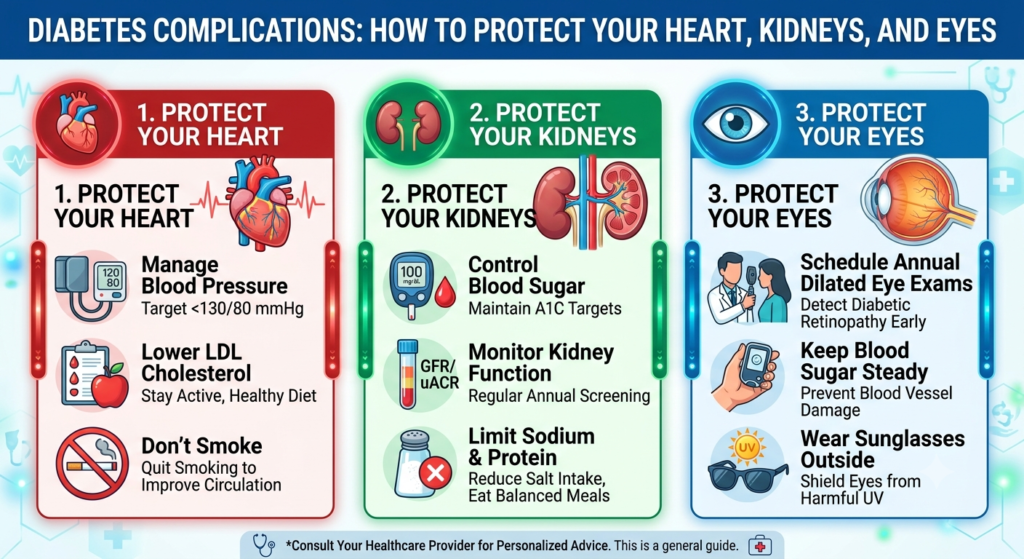
| Blood pressure | Under 130/80 mmHg | Lowers strain on the heart and arteries |
| LDL cholesterol | Under 70 mg/dL if high risk | Slows plaque buildup |
| Physical activity | 150 minutes/week moderate exercise | Improves circulation and insulin sensitivity |
| Smoking | Zero | Smoking multiplies cardiovascular risk in diabetes |
Many doctors now prescribe SGLT2 inhibitors or GLP-1 receptor agonists for people with type 2 diabetes — not just to manage blood sugar, but because large clinical trials show these medications directly reduce heart attack, stroke, and heart failure risk. If you haven’t discussed these options with your doctor, it’s worth asking whether you’re a candidate.
Diabetes and Your Kidneys: Catching Damage Before Symptoms Start
Your kidneys filter waste and extra fluid from your blood using millions of tiny blood vessel clusters. Diabetes is the leading cause of kidney failure in the U.S. — and the tricky part is that kidney damage from diabetes (called diabetic nephropathy) usually causes no symptoms until it’s advanced.
How Diabetes Damages the Kidneys
- High blood sugar scars the tiny filtering units (glomeruli) inside the kidneys
- Damaged filters start leaking protein (albumin) into the urine
- Over years, filtering capacity declines, eventually leading to chronic kidney disease or kidney failure
- High blood pressure — common in diabetes — speeds up the damage
The Stages of Diabetic Kidney Disease
Kidney damage progresses gradually, which is exactly why early testing matters:
- Hyperfiltration — kidneys work overtime, no symptoms
- Microalbuminuria — small amounts of protein leak into urine (often the first detectable sign)
- Macroalbuminuria — larger protein leakage, kidney function starts declining
- Declining GFR — kidneys filter less efficiently
- Kidney failure — may require dialysis or transplant
By the time swelling, fatigue, or changes in urination appear, significant damage has often already occurred. This is why annual screening is non-negotiable, not optional.
How to Protect Your Kidneys
- Get a urine albumin-to-creatinine ratio (UACR) test annually. This catches protein leakage years before symptoms show up.
- Get an eGFR blood test annually to track filtering capacity.
- Control blood pressure — ACE inhibitors or ARBs are often prescribed specifically because they protect kidney function, not just lower blood pressure.
- Limit sodium and moderate protein intake if you have existing kidney damage (ask your doctor or a renal dietitian for personalized targets).
- Avoid overuse of NSAIDs like ibuprofen, which can stress the kidneys.
- Ask about SGLT2 inhibitors — beyond heart benefits, this drug class has been shown to slow the progression of diabetic kidney disease.
Expert insight: Endocrinologists frequently point out that microalbuminuria is reversible if caught early and treated aggressively with blood pressure control and glycemic management. Once kidney function drops significantly, though, damage is largely permanent — which is exactly why the annual UACR test is one of the highest-value screenings a person with diabetes can get.
Diabetes and Your Eyes: Protecting Your Vision Before It’s at Risk
Diabetic eye disease is the leading cause of blindness in working-age adults. The most common form, diabetic retinopathy, develops when high blood sugar damages the tiny blood vessels in the retina — the light-sensitive tissue at the back of the eye.
Types of Diabetic Eye Disease
- Diabetic retinopathy — damaged retinal blood vessels leak fluid or blood, or grow abnormally
- Diabetic macular edema — swelling in the part of the retina responsible for sharp, central vision
- Cataracts — clouding of the eye’s lens; people with diabetes develop these earlier and more often
- Glaucoma — increased eye pressure that damages the optic nerve; diabetes roughly doubles this risk
Why Regular Eye Exams Matter So Much
Diabetic retinopathy often has no symptoms in its early stages. Vision typically stays normal until the disease has progressed significantly — at which point treatment becomes more complex and less effective.
This is the single biggest content gap in most advice you’ll find online: people wait for vision changes before booking an eye exam. By then, irreversible damage may have already occurred.
Recommended Eye Exam Schedule
| Situation | Recommended Frequency |
|---|---|
| Type 1 diabetes | Annual dilated eye exam starting 5 years after diagnosis |
| Type 2 diabetes | Annual dilated eye exam starting at diagnosis |
| Pregnant with diabetes | Exam in first trimester, then close monitoring |
| No retinopathy found | Every 1–2 years, per your eye doctor’s judgment |
| Retinopathy present | More frequent monitoring, as advised |
How to Protect Your Vision
- Book a dilated eye exam every year — this isn’t the same as a basic vision check at an optical store
- Keep blood sugar and blood pressure within your target range
- Manage cholesterol, since lipid levels also affect retinal blood vessels
- Don’t smoke
- Report any sudden vision changes — floaters, blurriness, dark spots, or difficulty seeing at night — to your doctor immediately
The good news: early-stage diabetic retinopathy can often be treated effectively with laser therapy or anti-VEGF injections, preserving vision that would otherwise be lost. Early detection is what makes these treatments so effective.
The Overlap: One Set of Habits Protects All Three Organs
Here’s something that gets lost in a lot of health content: you don’t need three separate plans for your heart, kidneys, and eyes. The same core habits protect all three, because they all share the same underlying cause — blood vessel damage from high blood sugar, high blood pressure, and high cholesterol.
The core protective checklist:
- Keep your A1C in your personalized target range (often under 7%, but ask your doctor)
- Keep blood pressure under 130/80 mmHg
- Keep LDL cholesterol controlled, especially if you’re at elevated cardiovascular risk
- Get moving — aim for 150 minutes of moderate activity weekly
- Don’t smoke, and get support to quit if you do
- Eat a diet built around vegetables, whole grains, lean protein, and healthy fats, with limited sodium and added sugar
- Take medications as prescribed, even when you feel fine
- Keep every screening appointment — annual UACR and eGFR tests, annual dilated eye exams, regular cardiovascular check-ins
Missing any one of these doesn’t just raise risk for one organ. It raises risk across the board.
A Simple Annual Screening Schedule
Use this as a checklist to bring to your next doctor’s visit:
| Screening | Frequency | Organ Protected |
|---|---|---|
| A1C test | Every 3–6 months | All organs |
| Blood pressure check | Every visit | Heart, kidneys, eyes |
| Lipid panel | Annually | Heart |
| UACR (urine albumin) | Annually | Kidneys |
| eGFR (blood test) | Annually | Kidneys |
| Dilated eye exam | Annually | Eyes |
| Foot exam | Annually (or more) | Circulation/nerves |
| Cardiovascular risk review | Annually | Heart |
If you’re not currently getting all of these, that’s a good starting point for your next appointment.
Frequently Asked Questions
Can diabetes complications be reversed?
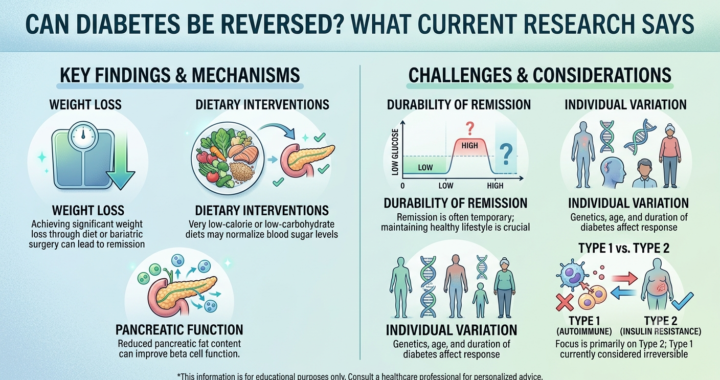
Some can, especially in early stages. Early-stage kidney damage (microalbuminuria) and early nerve or blood vessel changes can improve with tight blood sugar, blood pressure, and cholesterol control. Advanced complications, like significant kidney function loss or advanced retinopathy, are generally not reversible, which is why early detection matters so much.
What is the first organ usually affected by diabetes?
There’s no fixed order — it depends on individual risk factors. However, small blood vessel damage (to the eyes, kidneys, and nerves) often begins silently years before symptoms appear, which is why annual screening for all three starts at diagnosis for type 2 diabetes.
How often should a diabetic get their eyes checked?
At least once a year with a dilated eye exam. People with type 1 diabetes should start this five years after diagnosis; people with type 2 diabetes should start at the time of diagnosis, since type 2 often goes undetected for years before diagnosis.
What are the early signs of diabetic kidney disease?
Early diabetic kidney disease typically has no noticeable symptoms. The earliest detectable sign is small amounts of protein (albumin) in the urine, found through a UACR test — not through how you feel. This is why annual testing matters more than watching for symptoms.
Does controlling blood sugar really prevent complications?
Yes. Landmark long-term studies (DCCT for type 1 diabetes and UKPDS for type 2 diabetes) found that intensive blood sugar control significantly reduced the risk of eye, kidney, and nerve complications. Blood pressure and cholesterol control add further protection, especially for the heart.
What is the biggest risk factor for diabetic heart disease?
Uncontrolled blood sugar combined with high blood pressure and high LDL cholesterol is the biggest driver. Smoking, obesity, and physical inactivity compound the risk substantially.
Can diabetic retinopathy be treated?
Yes. Depending on severity, treatments include laser photocoagulation, anti-VEGF injections, or in advanced cases, vitrectomy surgery. Treatment is most effective when retinopathy is caught early through routine screening, before vision loss occurs.
How does diabetes cause kidney failure?
Persistently high blood sugar damages the tiny filtering units inside the kidneys over years, causing them to leak protein and gradually lose filtering capacity. Left unmanaged, this progresses through stages of chronic kidney disease and can eventually lead to kidney failure requiring dialysis or transplant.
Key Takeaways
- Diabetes complications in the heart, kidneys, and eyes all stem from the same cause: long-term blood vessel damage from high blood sugar.
- Many of these complications develop silently — you can’t rely on symptoms alone to catch them early.
- Annual screening (A1C, blood pressure, lipids, UACR, eGFR, and dilated eye exams) is your best early-warning system.
- The same core habits — blood sugar control, blood pressure control, cholesterol management, movement, and not smoking — protect all three organs at once.
- Early-stage damage is often preventable or even reversible. Advanced damage usually isn’t. Early action is what makes the biggest difference.
If it’s been more than a year since your last dilated eye exam, kidney function test, or full cardiovascular check-in, don’t wait for a symptom to show up. Book those appointments this week — it’s one of the most effective things you can do to protect your long-term health.