
You don’t need to give up your favorite meals to manage diabetes. You need to know which foods work with your body — and which ones work against it.
That’s the part most articles skip. They hand you a list of “good” and “bad” foods without explaining why those foods matter, or how to build them into meals you’ll actually enjoy.
This guide fixes that. You’ll find the science-backed foods that help steady blood sugar, the ones worth limiting, a simple plate method you can use tonight, and answers to the questions people search for most. Whether you have type 1, type 2, or prediabetes, this is a practical starting point — not a diet you’ll abandon in two weeks.
How Food Affects Blood Sugar (The Short Version)
Every food you eat falls into one of three macronutrient groups: carbohydrates, protein, or fat. Of the three, carbohydrates have the biggest and fastest effect on blood glucose, because your body breaks them down into sugar.
That doesn’t make carbs the enemy. It means which carbs you eat, how much, and what you pair them with determine how your blood sugar responds.
Two ideas matter here:
- Glycemic Index (GI) ranks how quickly a carbohydrate food raises blood sugar compared to pure glucose. High-GI foods (white bread, white rice, instant potatoes) spike blood sugar fast. Low-GI foods (lentils, oats, most vegetables) raise it slowly.
- Glycemic Load (GL) accounts for portion size too. A food can have a moderate GI but a low glycemic load if you eat a small serving — which is why portion control matters as much as food choice.
Fiber, protein, and healthy fat all slow digestion, which flattens the blood sugar curve after a meal. That’s the single biggest reason pairing foods works better than eating carbs alone.
The Diabetes Plate Method: The Easiest Place to Start
The American Diabetes Association recommends a simple visual framework instead of counting every gram. Take a standard 9-inch plate and divide it like this:
| Portion | What Goes There | Examples |
|---|---|---|
| ½ plate | Non-starchy vegetables | Broccoli, spinach, peppers, green beans |
| ¼ plate | Lean protein | Chicken, fish, tofu, eggs, beans |
| ¼ plate | Quality carbohydrates | Whole grains, starchy vegetables, fruit, low-fat dairy |
This method works because it naturally limits portion sizes of high-carb foods without requiring you to weigh or measure anything. It’s the fastest way to build a diabetes-friendly meal from whatever is in your kitchen.
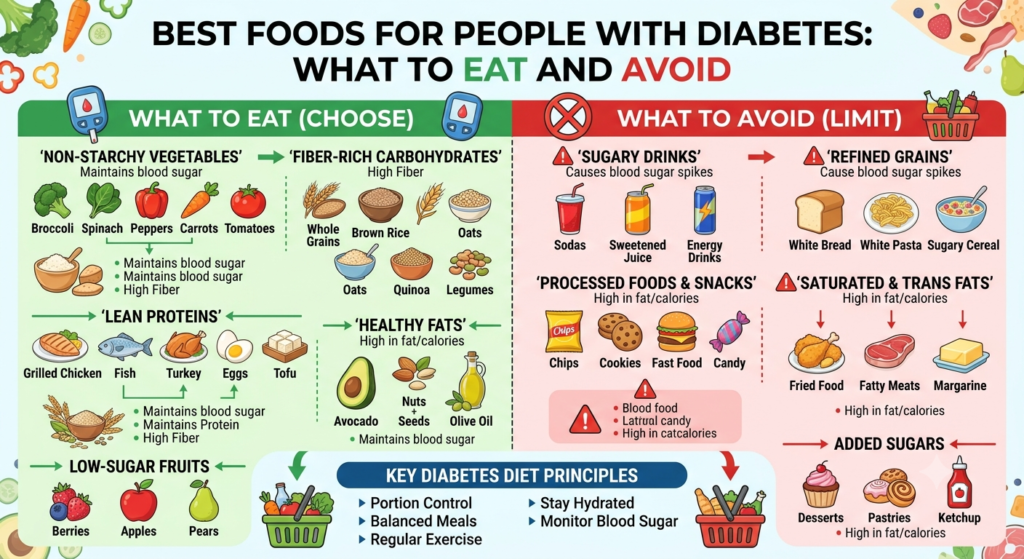
Best Foods for Diabetes (What to Eat)
1. Non-Starchy Vegetables
These are the foundation of nearly every diabetes eating pattern. They’re high in fiber and water, low in carbs, and packed with vitamins — so they fill you up without raising blood sugar much at all.
Best choices: spinach, kale, broccoli, cauliflower, asparagus, Brussels sprouts, cabbage, mushrooms, tomatoes, bell peppers, green beans, zucchini.
Tip: Roasting or grilling with olive oil adds flavor without added sugar or refined carbs.
2. Lean Proteins
Protein has minimal direct impact on blood sugar and helps you stay full longer, which reduces the temptation to snack on refined carbs.
Best choices: salmon, sardines, and other fatty fish; skinless poultry; eggs; plain Greek yogurt; cottage cheese; tofu, tempeh, and edamame; beans and lentils.
Fatty fish deserves a special mention — the omega-3s in salmon, mackerel, and sardines support heart health, which matters because diabetes raises cardiovascular risk.
3. Whole Grains (In Moderation)
Whole grains keep the fiber-rich bran and germ intact, which slows glucose absorption compared to refined grains.
Best choices: steel-cut or rolled oats, quinoa, barley, brown rice, farro, 100% whole-wheat bread.
Watch portions here — even whole grains are carbohydrates, so stick to about a fist-sized serving per meal unless your care team advises otherwise.
4. Legumes
Beans, lentils, and chickpeas are one of the best foods for diabetes because they combine fiber and plant protein in one package, which blunts their impact on blood sugar despite being carb-containing.
Best choices: black beans, chickpeas, lentils, kidney beans, split peas.
5. Nuts and Seeds
A small handful of nuts provides healthy fat, fiber, magnesium, and protein — a combination linked to better insulin sensitivity in research on nut consumption and metabolic health.
Best choices: almonds, walnuts, pistachios, chia seeds, flaxseed, pumpkin seeds.
Portion matters — nuts are calorie-dense, so aim for about a small handful (roughly 1 ounce) per serving.
6. Whole Fruit
Fruit is not off-limits. Whole fruit contains fiber that slows sugar absorption — very different from fruit juice, which delivers concentrated sugar with none of the fiber.
Best choices: berries, apples, pears, oranges, cherries, kiwi, peaches.
Pair fruit with a source of protein or fat, like an apple with almond butter, to further flatten the blood sugar response.
7. Healthy Fats
Monounsaturated and polyunsaturated fats help improve cholesterol levels, which matters since diabetes increases heart disease risk.
Best choices: olive oil, avocado, canola oil, nuts, and seeds.
8. Low-Fat Dairy and Alternatives
Plain, unsweetened dairy and fortified plant milks provide protein and calcium without the added sugar found in flavored versions.
Best choices: plain Greek yogurt, low-fat cottage cheese, unsweetened almond or soy milk.
Foods to Limit or Avoid With Diabetes
No single food needs to be eliminated forever, but these categories consistently work against blood sugar control and heart health — so they’re worth minimizing.
Sugar-Sweetened Beverages
Soda, sweetened coffee drinks, energy drinks, and fruit juice deliver a fast, concentrated dose of sugar with no fiber to slow it down. The ADA specifically recommends replacing these with water or unsweetened drinks.
Refined Grains and White Carbohydrates
White bread, white rice, and instant mashed potatoes have had most of their fiber removed, which is why they spike blood sugar quickly.
Fried and Ultra-Processed Foods
Deep-fried foods and heavily processed snacks combine refined carbs with unhealthy fats and excess sodium — a combination linked to poorer glycemic and cardiovascular outcomes.
Full-Sugar Sweets and Desserts
Candy, pastries, and baked goods pack added sugar and refined flour into small portions, making it easy to overconsume without much nutritional payoff.
Processed and Red Meat
Bacon, sausage, hot dogs, and deli meats are linked to higher cardiovascular risk. Current guidance suggests limiting these, not eliminating red meat entirely.
High-Sodium Packaged Foods
Canned soups, frozen dinners, and packaged snacks often carry hidden sodium, which raises blood pressure — a common complication alongside diabetes.
Trans Fats
Found in some margarines, shortening, and processed baked goods, trans fats raise LDL cholesterol and should be avoided as much as possible.
Quick-Reference Chart: Eat, Limit, Avoid
| Category | Best Choices (Eat Often) | Limit | Avoid or Minimize |
|---|---|---|---|
| Vegetables | Leafy greens, broccoli, peppers | Corn, peas, winter squash | — |
| Fruit | Berries, apples, citrus | Dried fruit, tropical fruit | Fruit juice, canned fruit in syrup |
| Grains | Oats, quinoa, brown rice | White rice, white pasta | Instant mashed potatoes, white bread |
| Protein | Fish, eggs, tofu, beans | Lean red meat | Bacon, sausage, deli meat |
| Fats | Olive oil, avocado, nuts | Butter | Trans fats, fried foods |
| Beverages | Water, unsweetened tea | Diet soda | Soda, sweetened juice, energy drinks |
| Dairy | Plain Greek yogurt, low-fat milk | Full-fat cheese | Sweetened flavored yogurt |
Sample One-Day Diabetes-Friendly Meal Plan
Breakfast: Veggie omelet (2 eggs + spinach + peppers) with a slice of whole-grain toast.
Lunch: Grilled chicken salad with mixed greens, chickpeas, cucumber, and olive oil vinaigrette.
Snack: Small apple with 1 tablespoon almond butter.
Dinner: Baked salmon, roasted broccoli, and ½ cup quinoa.
Dessert (optional): A handful of berries with plain Greek yogurt.
This plan follows the Diabetes Plate Method at every main meal — half vegetables, a quarter protein, a quarter quality carbs — while leaving room for a satisfying snack and dessert.
Does the Glycemic Index Really Matter?
Yes, but it’s one tool among several, not the whole picture. A food’s GI tells you how fast it raises blood sugar; glycemic load also factors in portion size, which is often more useful in real life. Pairing a higher-GI food with protein, fat, or fiber — like white rice with grilled chicken and vegetables — softens its impact. Focus on overall meal composition rather than memorizing exact GI numbers for every food.
Common Mistakes That Undo a Good Diabetes Diet
- Drinking calories. Juice, soda, and sweetened coffee add up fast and spike blood sugar quickly.
- Fearing all carbs. Cutting carbs too aggressively can backfire — fiber-rich carbs like vegetables, legumes, and whole grains are protective, not harmful.
- Skipping meals. Long gaps between meals can cause blood sugar swings, especially for people on insulin or certain medications.
- Ignoring portion size. Even healthy foods like nuts, whole grains, and fruit can raise blood sugar if portions are too large.
- Overlooking sodium. Many “diabetic-friendly” packaged foods are high in sodium, which raises cardiovascular risk.
Frequently Asked Questions
What is the best breakfast for a diabetic?
A breakfast built around protein and fiber works best — think eggs with vegetables, plain Greek yogurt with berries, or oatmeal topped with nuts. Avoid sugary cereals, pastries, and fruit juice, which spike blood sugar quickly on an empty stomach.
Can diabetics eat fruit?
Yes. Whole fruit — especially berries, apples, pears, and citrus — fits well into a diabetes diet because its fiber slows sugar absorption. Limit fruit juice, dried fruit, and very large portions of tropical fruit, which raise blood sugar faster.
What foods should diabetics avoid completely?
Very few foods must be eliminated entirely. The foods to minimize most are sugar-sweetened beverages, candy, pastries, deep-fried foods, and highly processed snacks, since these raise blood sugar quickly and offer little nutrition.
Is rice bad for diabetics?
White rice has a high glycemic index and can raise blood sugar quickly. Brown rice, quinoa, or barley are better choices because their fiber slows digestion. If you eat white rice, keep portions small and pair it with protein and vegetables.
How many carbs should a diabetic eat per day?
There’s no single carb target that fits everyone. Many adults do well with roughly 30–60 grams of carbohydrate per meal, but the right amount depends on activity level, medications, and personal blood sugar goals. A registered dietitian or diabetes educator can help set an individualized target.
What is the diabetes plate method?
It’s a simple visual meal-planning tool: fill half your plate with non-starchy vegetables, one quarter with lean protein, and one quarter with quality carbohydrates like whole grains, starchy vegetables, or fruit. It removes the need to count every gram of carbohydrate.
Are eggs good for diabetics?
Yes. Eggs are a low-carb, high-protein food that has minimal impact on blood sugar and helps with satiety. They fit well into most diabetes-friendly eating patterns.
Can diabetics eat potatoes?
Potatoes can fit into a diabetes diet in moderation, especially when eaten with the skin on for extra fiber and paired with protein. Instant mashed potatoes and large portions of fries should be limited, since they raise blood sugar faster.
What drinks are best for diabetics?
Water is the top choice, along with unsweetened tea and coffee. Sparkling water and low-calorie or no-calorie beverages are also fine in moderation. Sugar-sweetened drinks and fruit juice should be replaced with these options whenever possible.
Does cinnamon help control blood sugar?
Current evidence doesn’t support cinnamon, chromium, or other supplements as reliable tools for blood sugar control. The ADA notes that supplementation with herbs or spices for glycemic benefit isn’t currently recommended. Focus on overall diet quality instead.
Key Takeaways
- No single food controls diabetes — overall eating patterns matter more than any one “superfood” or forbidden item.
- Fiber, protein, and healthy fat slow blood sugar spikes, especially when paired with carbohydrate-containing foods.
- The Diabetes Plate Method is the simplest way to build a balanced meal: half vegetables, a quarter protein, a quarter quality carbs.
- Sugar-sweetened drinks and refined, processed foods do the most damage to blood sugar and heart health — they’re the best place to cut back first.
- Whole fruit, whole grains, legumes, and healthy fats all have a place in a diabetes-friendly diet when portioned appropriately.
Small, consistent changes to how you build your plate matter more than any short-term diet fad. Start with one meal today — swap a sugary drink for water, or add a serving of non-starchy vegetables — and build from there.