
More than 1 in 3 American adults has prediabetes right now. Eight out of ten of them have no idea.
That’s not a typo. It’s the strange, quiet nature of this condition. Prediabetes rarely announces itself with obvious symptoms. It builds slowly, often over years, while blood sugar creeps upward in the background. By the time most people feel anything, they’ve usually crossed the line into type 2 diabetes.
Here’s the good news: prediabetes is one of the few pre-disease states that’s genuinely reversible. Catch it early, make some targeted changes, and you can bring your blood sugar back to a normal range often without medication.
This guide walks through the subtle signs your body might be sending, who’s most at risk, exactly which tests confirm a diagnosis, and what to do the moment you get one. Think of it as the early-warning system nobody handed you.
What Is Prediabetes, Exactly?
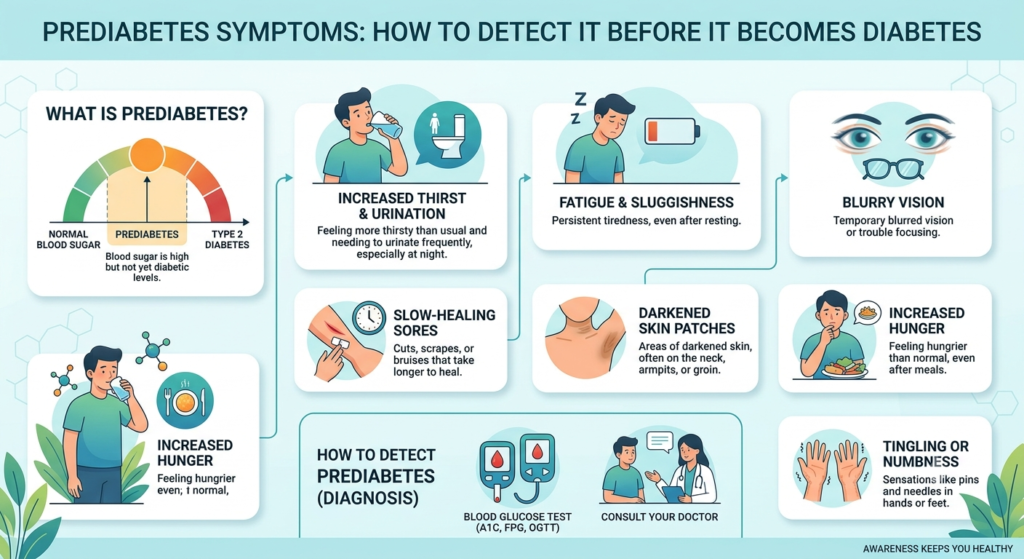
Prediabetes means your blood sugar (glucose) is higher than normal, but not high enough yet to be classified as type 2 diabetes.
It happens when your cells stop responding well to insulin the hormone that moves sugar out of your blood and into your cells for energy. This is called insulin resistance. Your pancreas compensates by pumping out more insulin. For a while, that keeps blood sugar close to normal. Eventually, it can’t keep up, and glucose starts building up in your bloodstream.
According to the CDC’s most recent National Diabetes Statistics Report, an <cite index=”4-1″>estimated 115.2 million Americans have prediabetes</cite>. Broken down by age, <cite index=”2-1″>prevalence runs about 36.1% among adults 18–44, 48.6% among adults 45–64, and 52.1% among adults 65 and older</cite>.
Left unaddressed, <cite index=”4-1″>prediabetes raises your risk of developing type 2 diabetes</cite>, along with heart disease and stroke. But there’s real leverage here: <cite index=”4-1″>losing weight through healthier eating and more physical activity can cut your risk of progressing to type 2 diabetes in half</cite>.
Why Prediabetes Symptoms Are So Easy to Miss
This is the part that trips people up. Prediabetes usually feels like nothing.
<cite index=”8-1″>You can have prediabetes for years without any symptoms at all, which means most people don’t find out until a serious health problem shows up.</cite> Blood sugar has to climb quite a bit above normal before your body starts sending noticeable signals. In the early-to-moderate range that defines prediabetes, glucose is elevated, but usually not enough to trigger the classic diabetes red flags think constant thirst or frequent urination.
That’s why prediabetes is sometimes called a “silent” condition. It doesn’t hurt. It doesn’t show up on a bathroom scale by itself. And it doesn’t come with a warning label.
This is also exactly why routine screening matters more than symptom-watching alone. If you wait to feel something before getting tested, you may already be dealing with full-blown type 2 diabetes.
9 Possible Signs of Prediabetes to Watch For
While prediabetes often causes no symptoms, some people do notice subtle changes as blood sugar creeps upward. None of these confirm prediabetes on their own only a blood test can do that but they’re worth paying attention to, especially if you have other risk factors.
1. Increased Thirst and a Dry Mouth
When blood sugar runs high, your kidneys work harder to filter it out, pulling extra water from your tissues. That can leave you feeling thirstier than usual, even after drinking plenty of fluids.
2. More Frequent Urination
This often goes hand-in-hand with increased thirst. As your kidneys flush out excess glucose, you produce more urine including more trips to the bathroom at night.
3. Fatigue That Doesn’t Add Up
When your cells resist insulin, glucose has a harder time getting into them for energy. The result can feel like unexplained tiredness, even after a full night’s sleep or a light day.
4. Blurred Vision
High blood sugar can pull fluid from the lenses of your eyes, temporarily affecting your ability to focus. This symptom tends to fluctuate with blood sugar levels and often improves once glucose stabilizes.
5. Darkened Patches of Skin (Acanthosis Nigricans)
Look for velvety, darkened skin in body folds the back of the neck, armpits, groin, or elbows. This is one of the more visible clues of insulin resistance and is worth mentioning to a doctor even if nothing else feels off.
6. Slow-Healing Cuts or Frequent Infections
Elevated blood sugar can impair circulation and immune response, which may slow down wound healing and make you more prone to infections, particularly skin and gum infections.
7. Tingling or Numbness in Hands or Feet
Nerve sensitivity to elevated glucose can sometimes cause mild tingling, numbness, or a “pins and needles” feeling in the extremities, even before a diabetes diagnosis.
8. Increased Hunger
Insulin resistance can trick your body into signaling hunger even when you’ve eaten enough, since glucose isn’t making it into your cells efficiently.
9. Unexplained Weight Changes
Some people notice gradual weight gain, particularly around the abdomen, as insulin resistance develops. Others, less commonly, notice mild weight loss if the body starts breaking down muscle or fat for energy.
Important: Most people with prediabetes experience none of these. If you have risk factors (covered next), don’t wait for symptoms — ask for a blood sugar test.
Who’s Most at Risk? Key Risk Factors for Prediabetes
Certain factors significantly raise your odds of developing prediabetes, regardless of whether you notice symptoms.
| Risk Factor | Why It Matters |
|---|---|
| Being overweight or having excess abdominal fat | Extra fat, especially around the belly, increases insulin resistance |
| Age 45 or older | <cite index=”8-1″>Being 45 years or older is a recognized risk factor</cite> |
| Family history of type 2 diabetes | <cite index=”8-1″>Having a parent, brother, or sister with type 2 diabetes raises your risk</cite> |
| Physical inactivity | Exercising fewer than 3 times a week reduces insulin sensitivity |
| History of gestational diabetes | Raises long-term risk of type 2 diabetes |
| Polycystic ovary syndrome (PCOS) | Linked to insulin resistance |
| High blood pressure or abnormal cholesterol | Often clusters with insulin resistance (metabolic syndrome) |
| Race or ethnicity | African American, Hispanic/Latino, American Indian, Asian American, and Pacific Islander adults face higher risk |
| Sleep issues | Sleep apnea and chronic short sleep are linked to insulin resistance |
If two or more of these apply to you, talk to your doctor about screening, even if you feel completely fine.
How Prediabetes Is Actually Diagnosed
Symptoms alone can’t diagnose prediabetes. It’s confirmed with a blood test. There are three main options your doctor might use.
1. A1C Test
This measures your average blood sugar over the past two to three months.
- Normal: below 5.7%
- Prediabetes: 5.7% to 6.4%
- Diabetes: 6.5% or higher
2. Fasting Plasma Glucose (FPG) Test
This checks your blood sugar after fasting for at least 8 hours.
- Normal: below 100 mg/dL
- Prediabetes: 100 to 125 mg/dL
- Diabetes: 126 mg/dL or higher
3. Oral Glucose Tolerance Test (OGTT)
You drink a sugary solution, then your blood sugar is measured two hours later.
- Normal: below 140 mg/dL
- Prediabetes: 140 to 199 mg/dL
- Diabetes: 200 mg/dL or higher
The A1C test is the most common because it doesn’t require fasting and reflects a longer time window. Your doctor may confirm results with a second test on a different day, especially if the first result is borderline.
Quick tip: You can also take the CDC’s free 1-minute Prediabetes Risk Test online to gauge whether you should get tested. It’s not a diagnosis, but it’s a useful first step if you’re unsure whether to book an appointment.
What Happens If Prediabetes Goes Untreated?
Ignoring prediabetes doesn’t mean nothing happens — it usually means the condition keeps progressing quietly.
Over time, unmanaged prediabetes can lead to:
- Type 2 diabetes, often within 5 years without lifestyle changes
- Cardiovascular disease, including heart attack and stroke risk
- Nerve damage (neuropathy), especially in the feet and hands
- Kidney strain, which can progress to chronic kidney disease
- Vision problems, including early changes linked to diabetic retinopathy
- Fatty liver disease, closely tied to insulin resistance
None of this is inevitable. Progression from prediabetes to diabetes typically takes years, which gives you a real window to change course.
How to Reverse Prediabetes: What Actually Works
This is the most important section, because prediabetes is genuinely reversible for many people. Research consistently shows that modest, sustainable changes make a measurable difference.
1. Aim for 5–7% Weight Loss
For someone weighing 200 pounds, that’s roughly 10–14 pounds. Studies backing the CDC’s National Diabetes Prevention Program show this range significantly cuts diabetes risk.
2. Move for 150 Minutes a Week
That breaks down to about 30 minutes, 5 days a week — brisk walking counts. Physical activity helps muscles use glucose more efficiently, independent of weight loss.
3. Rethink Refined Carbs and Added Sugar
You don’t need to eliminate carbs. Focus on swapping refined grains and sugary drinks for fiber-rich vegetables, legumes, and whole grains, which blunt blood sugar spikes.
4. Prioritize Sleep
Aim for 7–9 hours nightly. Poor sleep disrupts hormones that regulate hunger and insulin sensitivity.
5. Manage Stress
Chronic stress raises cortisol, which can elevate blood sugar. Simple practices like short walks, breathing exercises, or journaling can help.
6. Consider a Structured Program
The CDC-recognized National Diabetes Prevention Program pairs participants with a trained coach and peer group over about a year. Enrollees consistently see better outcomes than trying to go it alone.
7. Ask About Medication If Needed
For some people, especially those with a higher BMI or additional risk factors, doctors may prescribe metformin alongside lifestyle changes. This is a conversation to have with your provider, not a first step.
Prediabetes vs. Type 2 Diabetes: What’s the Difference?
| Category | Prediabetes | Type 2 Diabetes |
|---|---|---|
| A1C | 5.7%–6.4% | 6.5% or higher |
| Fasting Glucose | 100–125 mg/dL | 126 mg/dL or higher |
| Reversible? | Often, with lifestyle changes | Manageable, but not typically reversible |
| Symptoms | Usually none | May include thirst, frequent urination, fatigue |
| Treatment | Lifestyle changes, sometimes medication | Lifestyle changes plus medication or insulin |
Frequently Asked Questions
Can you have prediabetes and feel completely fine? Yes. <cite index=”8-1″>Most people with prediabetes have no symptoms at all and only find out through a blood test.</cite> Feeling healthy doesn’t rule it out, especially if you have risk factors like age, weight, or family history.
What is the first sign of prediabetes? There often isn’t a clear first sign. When symptoms do appear, increased thirst, fatigue, and frequent urination tend to show up earliest, but many people notice nothing until glucose is tested.
Can prediabetes be reversed permanently? It can be reversed to normal blood sugar levels through sustained lifestyle changes, but the underlying tendency toward insulin resistance doesn’t necessarily disappear. Ongoing healthy habits and periodic testing help keep it in check long-term.
How long does it take for prediabetes to turn into diabetes? Without intervention, progression often happens within 5 years, though this varies widely based on individual risk factors and how elevated blood sugar already is.
What foods should I avoid with prediabetes? There’s no strict forbidden list, but it helps to limit sugary drinks, refined white bread and pasta, packaged snacks, and fried foods. Building meals around vegetables, lean protein, and whole grains has a bigger impact than any single food swap.
Does prediabetes cause weight gain? It can contribute to gradual weight gain, particularly around the abdomen, because insulin resistance affects how the body stores and uses fat. However, weight gain can also be a cause rather than just an effect, since excess weight increases insulin resistance in the first place.
Is prediabetes hereditary? <cite index=”8-1″>Having a parent, brother, or sister with type 2 diabetes increases your risk</cite>, suggesting a genetic component. That said, lifestyle factors play a major role even in people with a family history.
What blood sugar level is considered prediabetic? An A1C of 5.7% to 6.4%, a fasting glucose of 100 to 125 mg/dL, or a 2-hour glucose tolerance test result of 140 to 199 mg/dL all fall in the prediabetes range.
Should I get tested if I have no symptoms? Yes, especially if you’re 45 or older, carry excess weight, or have a family history of diabetes. <cite index=”8-1″>Since prediabetes typically causes no symptoms for years, testing is the only reliable way to catch it early.</cite>
Key Takeaways
- Prediabetes usually causes no obvious symptoms, which is exactly why it’s so widely undiagnosed.
- <cite index=”4-1″>Roughly 115.2 million Americans have prediabetes, and about 8 in 10 don’t know it.</cite>
- Watch for subtle signs like increased thirst, fatigue, blurred vision, and dark patches of skin, but don’t rely on symptoms alone.
- A1C, fasting glucose, and oral glucose tolerance tests are the only reliable ways to confirm a diagnosis.
- <cite index=”4-1″>Modest weight loss and increased activity can cut your risk of progressing to type 2 diabetes in half.</cite>
- Prediabetes is one of the few health conditions where you genuinely have the power to reverse course before it becomes permanent.
If you’re 45 or older, carrying extra weight, or have a family history of diabetes, don’t wait for symptoms to show up. Ask your doctor for an A1C or fasting glucose test at your next visit it takes minutes and could change your entire health trajectory.